DIY Dew Heater

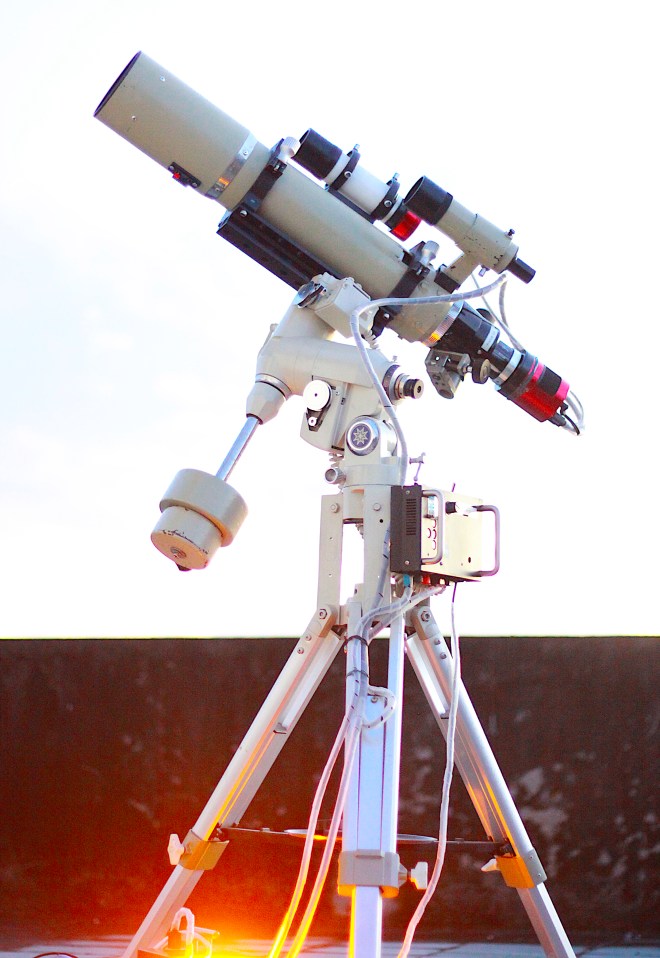
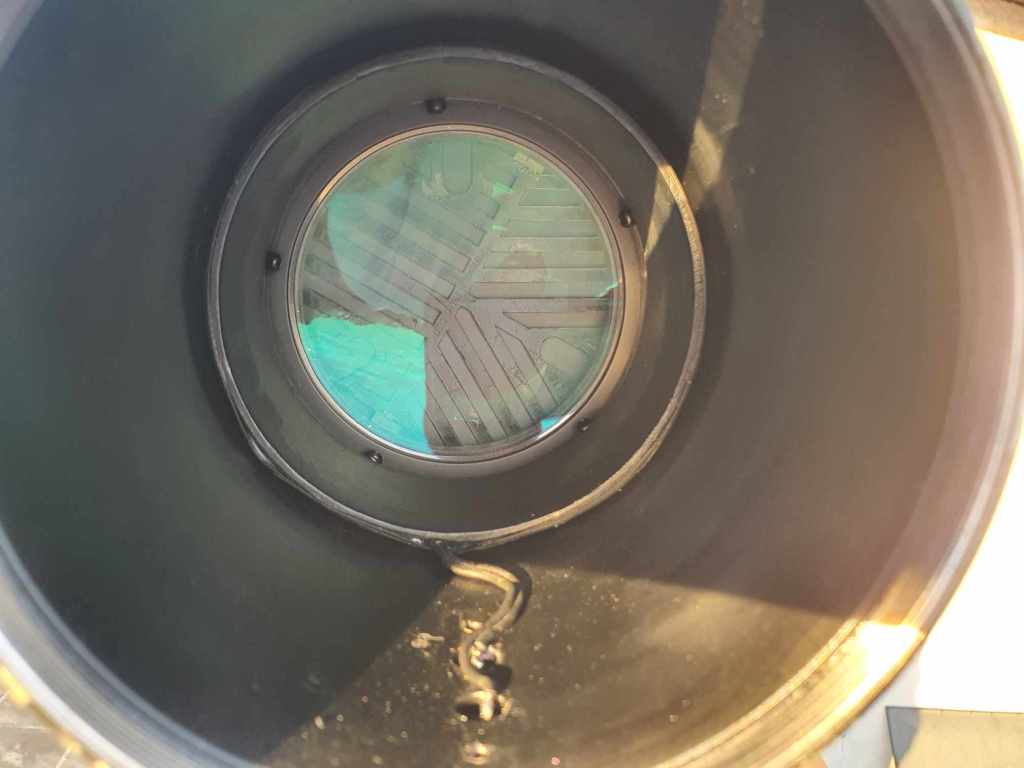
Dew heaters or heater pads are telescopes accessories used to prevent dew from forming on the telescope’s lens. During long imaging sessions, it is not uncommon for the main lens of refractors to form dew. A heater is used to keep the objective lens at a temperature a few degrees C above the dew point to prevent the formation of dew.

I used nichrome wires from a local electronics store to build several DIY heater pads for my telescope, which I find useful in keeping the lenses free from dew especially when imaging in remote observing sites. I prefer to use place the heater inside the optical tube assembly, making sure that it does not obstruct the light path.

To view posts on DIY projects and astronomical equipment, click here.

Night Sky in Focus 
© Anthony Urbano | Bacoor, Philippines
Peltier-Cooled and Filter-Modified DSLR

During an exposure, the imaging sensor of a DSLR warms up, resulting to noisy images. By cooling down the sensor, it is possible to eliminate or somehow minimize this thermal noise.

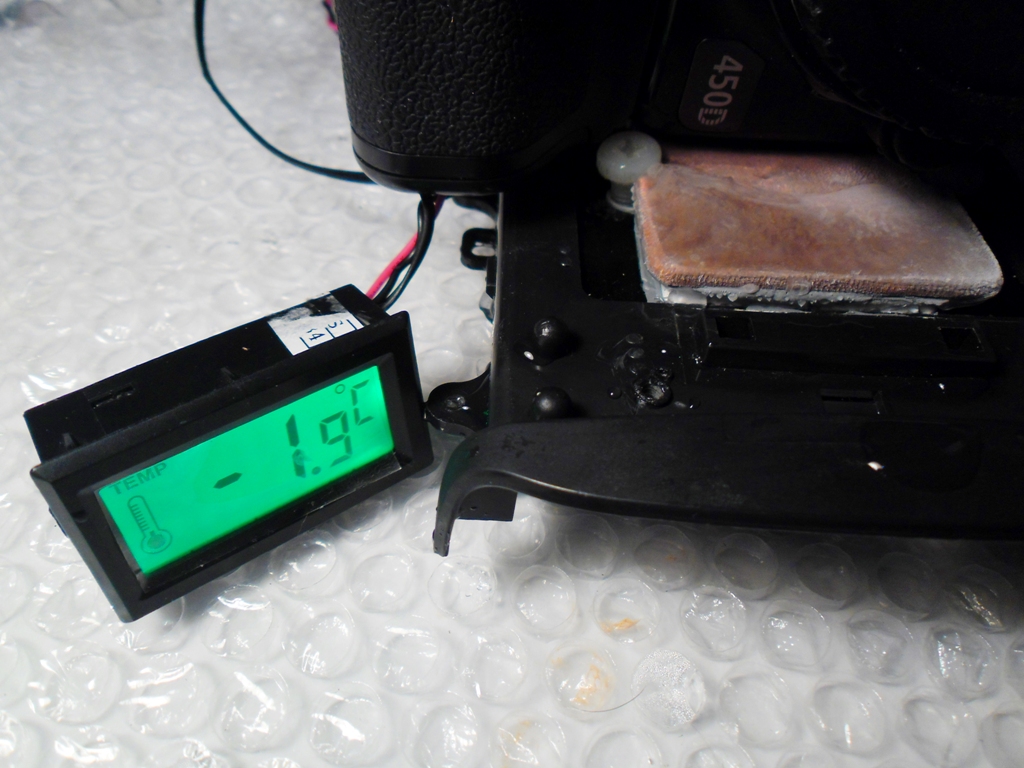
Cooling the camera’s sensor using a Peltier module

I have made a number of attempts to accomplish this with a Canon 450D and a Peltier module, however, it appears it is very difficult to implement without running into problems such as condensation and frosting.

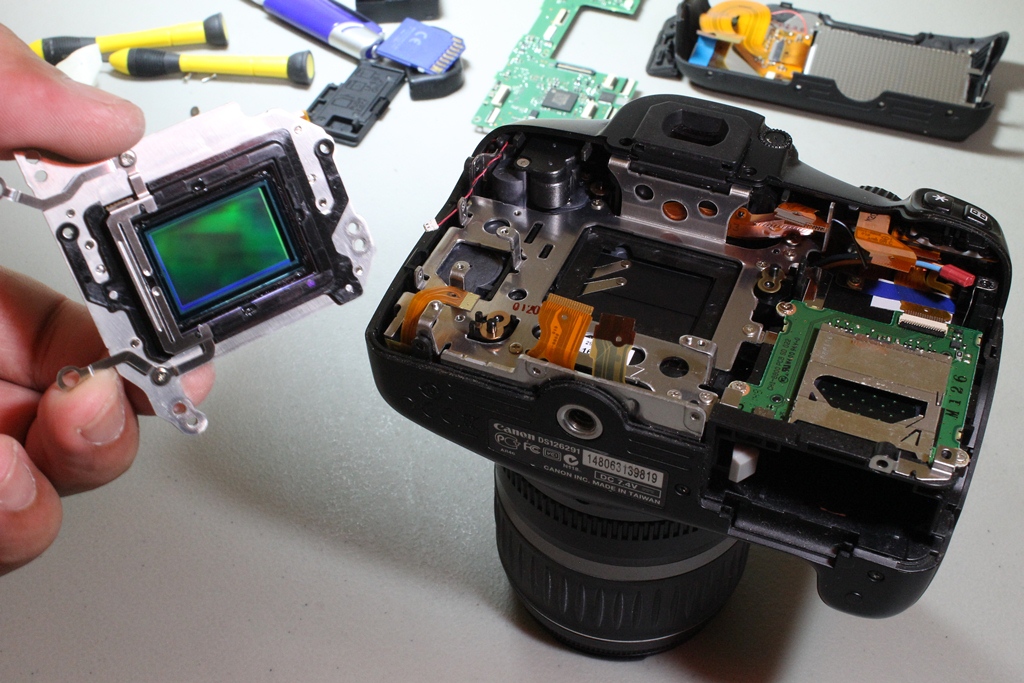
I have also performed filter modifications on a number of DSLR cameras (Canon 450D, 700D, 1200D, 500D, 1000D, 1100D, Nikon D3100, and Fuji X-A1) for me and my colleagues. It involves the removal of the stock UV-IR filter, making the camera more sensitive to H-alpha wavelengths. This modification is helpful only when shooting targets with H-alpha emissions, as most DSLR camera’s standard (stock) filter blocks this part of the spectrum.

Take note of the shift in white balance (reddish hue), which is to be expected in this type of modification. Focus will be affected, your camera may no longer focus with compatible lenses unless you add a filter between the lens and the sensor, to address the shift in focus and to filter out UV-IR. If used with telescopes, you need a DSLR-to-telescope adapter and achieve focus using the telescope’s focuser.

Related link: View all home-brewed DIY astronomy equipment

Night Sky in Focus 
© Anthony Urbano | Bacoor, Philippines
Sky-Watcher Equinox 100 ED

The 2011 Sky-Watcher Equinox 100 ED 4 in f/9 refractor is my first telescope and used both for visual observation and astrophotography. The Optical Tube Assembly (OTA) features a 4-in f/9 extra-low dispersion (ED) apochromatic (APO) lens design.

Modified Sky-Watcher Equinox 100ED at f/5.57 (100 mm aperture, 557 mm focal length)

It has a 2-inch dual-speed Crayford focuser with a thumbscrew underneath for locking the draw tube. The telescope comes with aluminum-lined wooden carrying case. It is supplied with two eyepieces: 25 mm and 5 mm. Supplied also is a 90-degree 2-inch diagonal mirror and an 8 by 50 finder scope.

The telescope has undergone various modifications including the installation of a DIY reducer, making the telescope shorter and faster (from f/9 to currently at f/5.57) and also reducing the tube length to about 55 cm. The effective focal length is now 557 mm (from the native 900 mm). When used with a Hotech 2 inch field flattener, the effective focal length is 554 mm.

Related link:
Sample corrected (flat) image taken with the modified Sky-Watcher Equinox 100ED
View all images taken with the Sky-Watcher Equinox 100ED

Night Sky in Focus 
© Anthony Urbano | Bacoor, Philippines