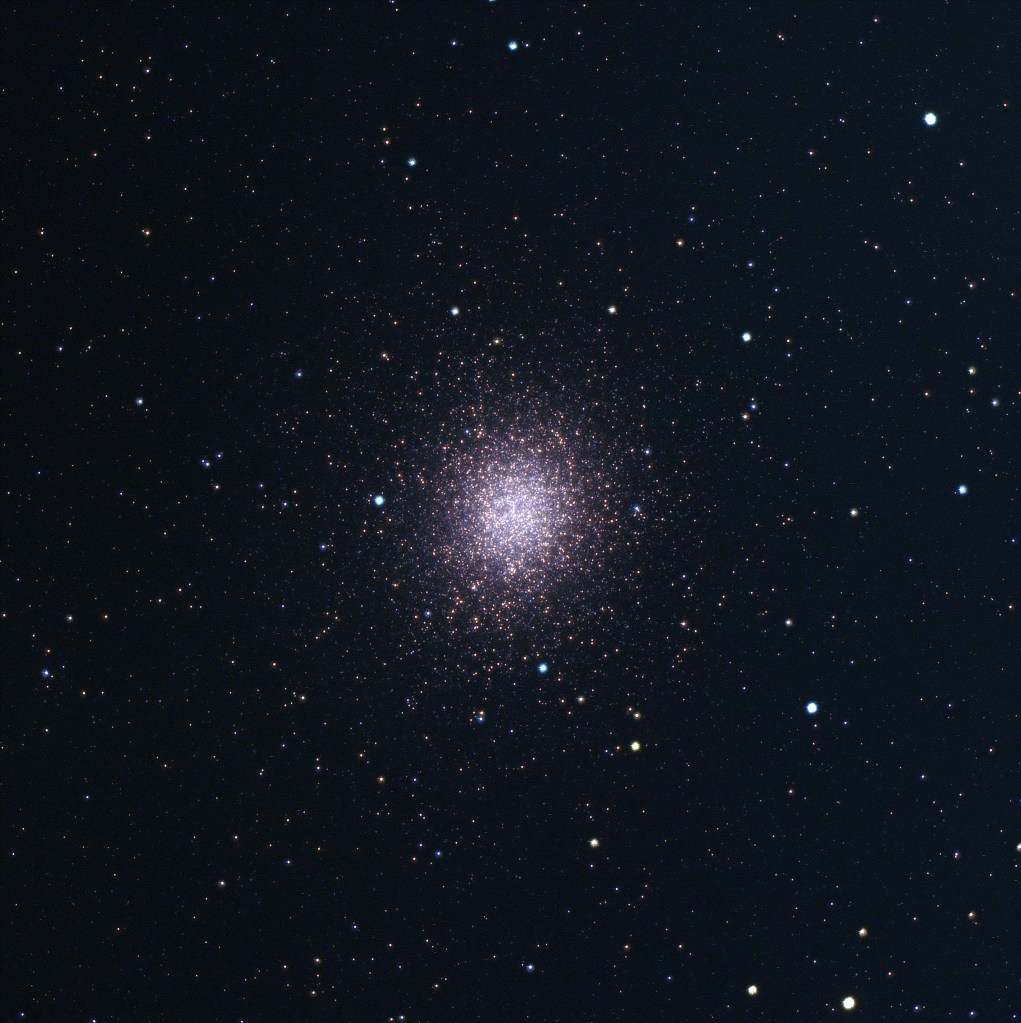
Omega Centauri (NGC 5139) imaged with a Sky-Watcher Equinox 100ED at 557 mm and an ASI 533MC astronomy camera. I used a restored Meade LXD75 mount and an off-axis guider with ASI 174MM guide camera. This image was taken with a DIY focal length reducer.
Omega Centauri, 1 hour exposure
For a complete list of astrophoto images, click here.
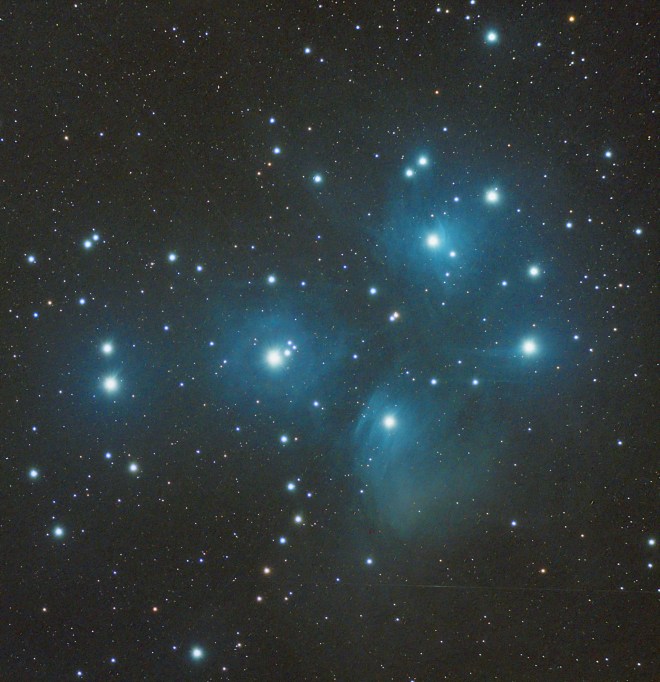
M45 Pleiades star cluster imaged with a Kenko SE 66ED refractor at 400 mm focal length, HoTech field flattener, ASI 533MC astronomy camera, ASI 174MM guide camera, and a restored Meade LXD75 tracking mount.
M45 Pleiades Star Cluster, 1 hour exposure
For a complete list of astrophoto images, click here.
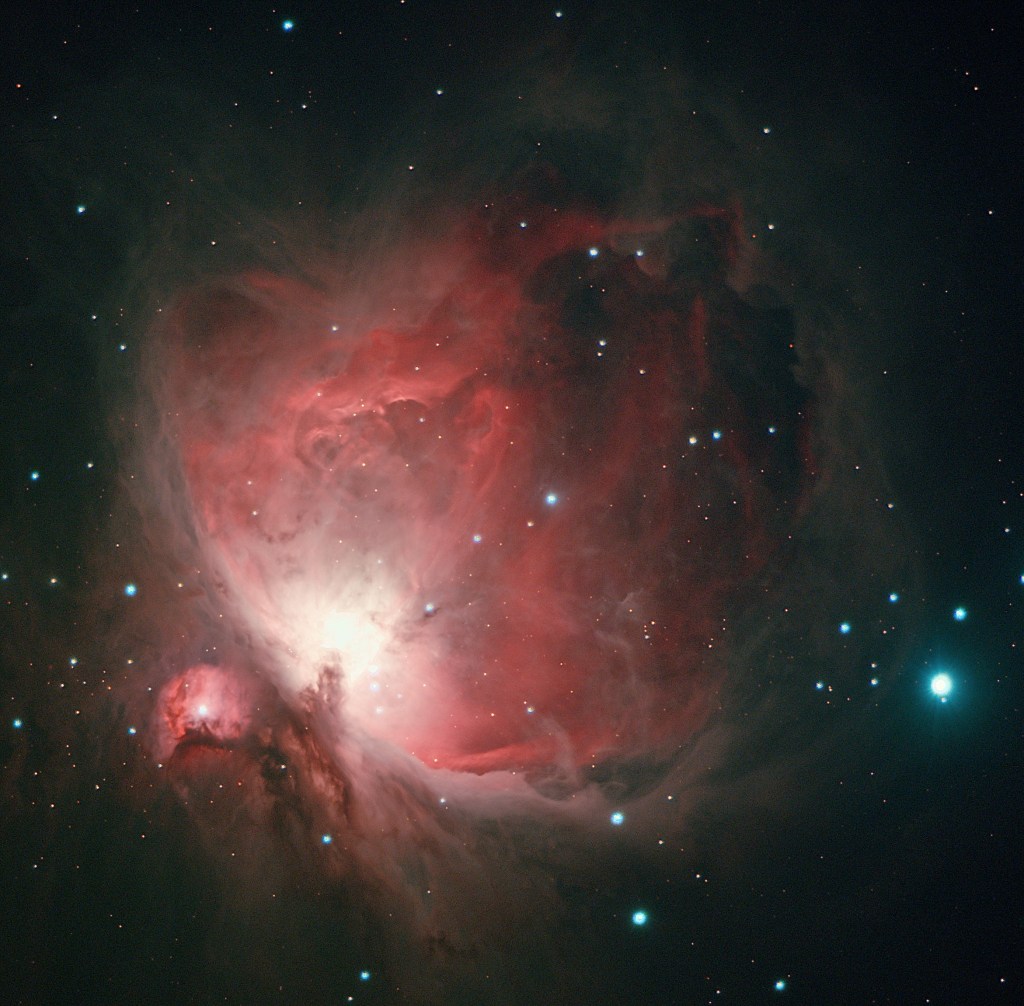
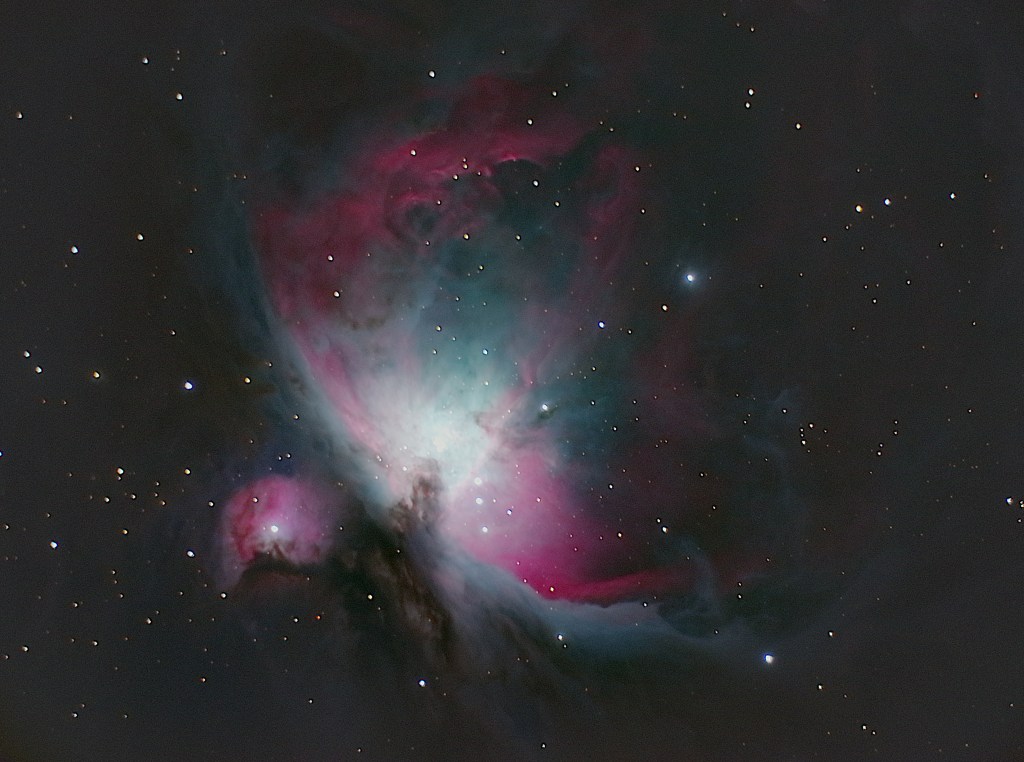
Orion Nebula M42 imaged in 5 different sessions from 2023 to 2025, with a 4 in refractor at 557 mm focal length, an ASI 533MC cooled astronomy camera, dual band H-alpha and O-III filter, with an LXD75 mount and an ASI 174MM guide camera. This image was taken with a DIY focal length reducer.
Orion Nebula, 8.5 hours exposure
For a complete list of astrophoto images, click here.
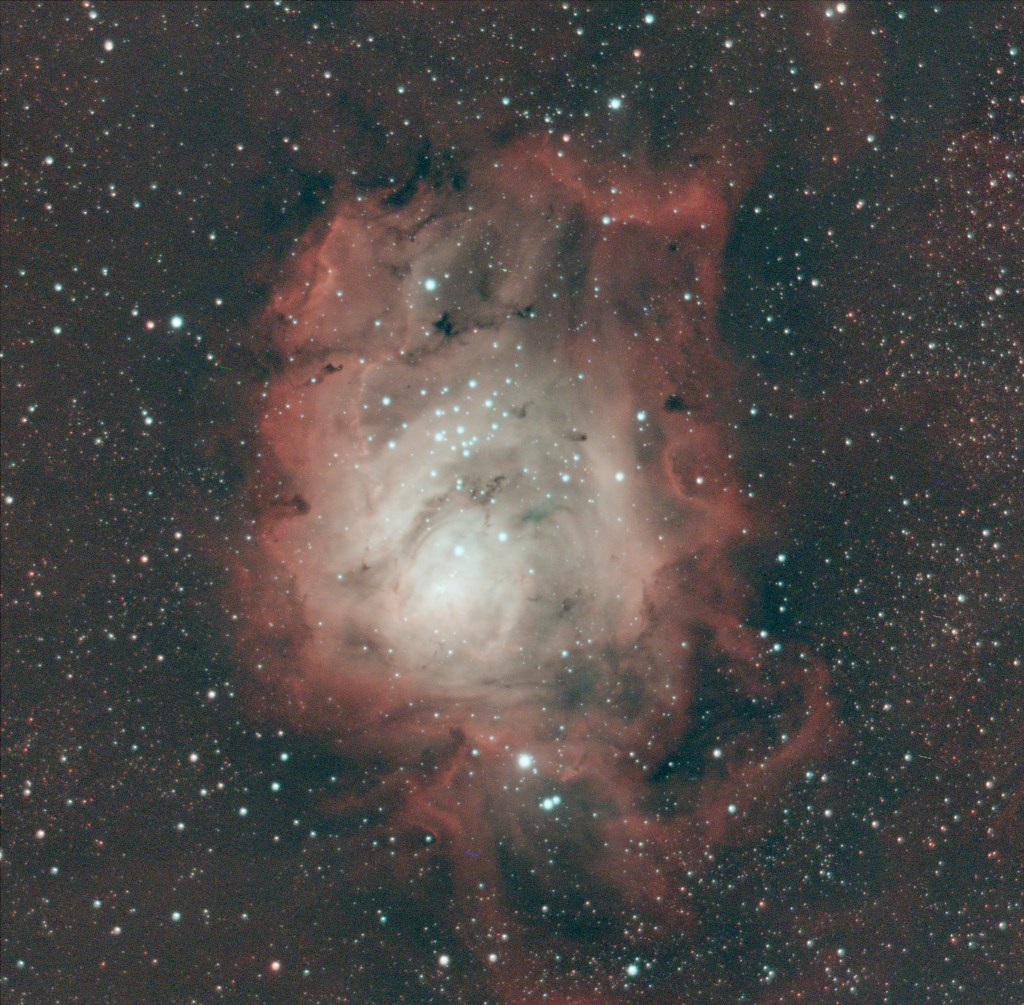
Lagoon Nebula M8 imaged with a 4 in refractor at 557 mm focal length, an ASI 533MC cooled astronomy camera, dual band H-alpha and O-III filter, with an ASI 174MM guide camera. This is a test image taken with a DIY focal length reducer.
Lagoon Nebula M8, 1 hour exposure
For a complete list of astrophoto images, click here.
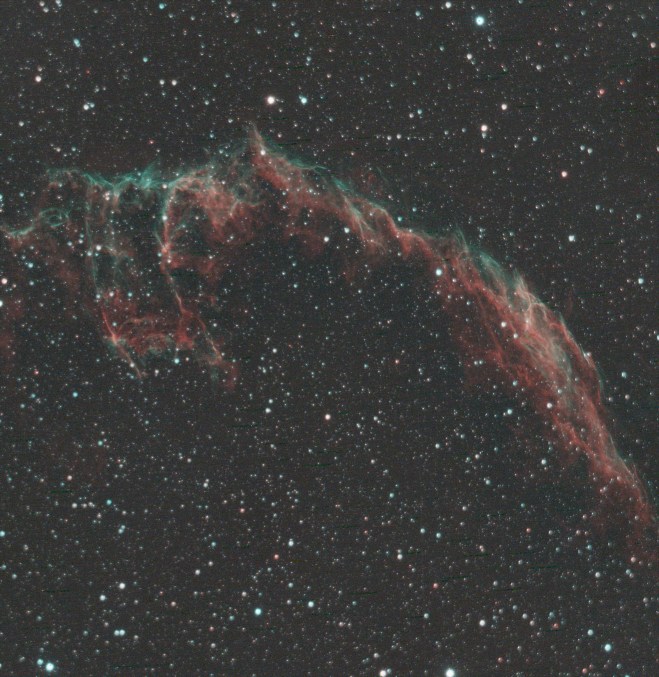
Eastern Veil Nebula imaged with a Sky-Watcher Equinox 4 in refractor at 557 mm through a DIY focal length reducer, ASI 533MC cooled astronomy camera, dual band H-alpha and O-III filter, and an ASI 174MM guide camera.
Eastern Veil Nebula, 3 hours
For a complete list of astrophoto images, click here.
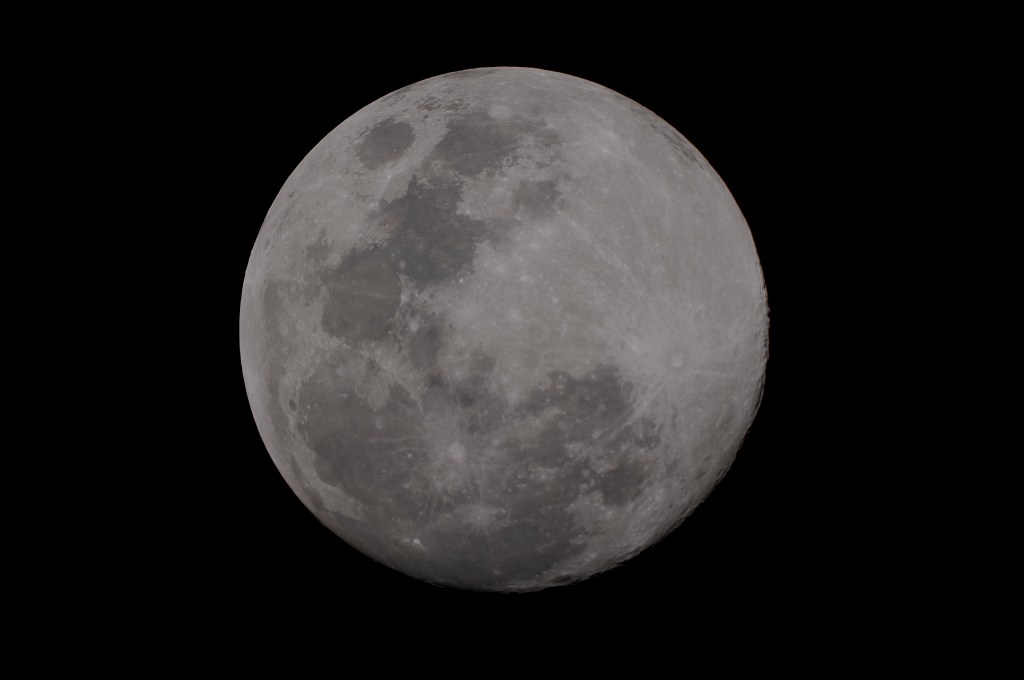
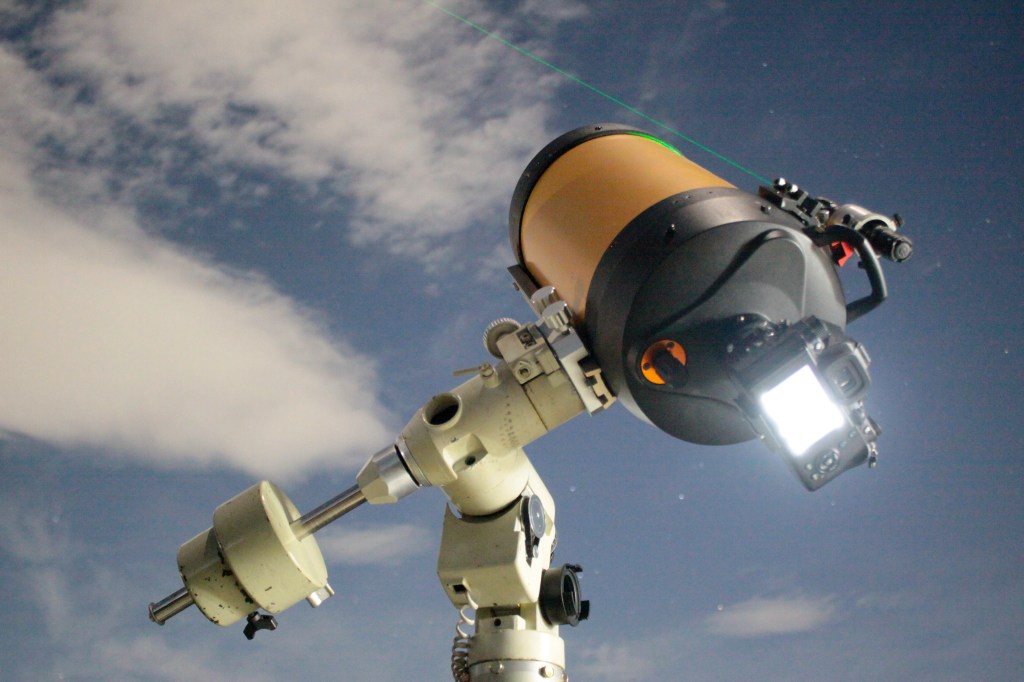
I am now using a Pentax KP as my main astrophotography DSLR. Recently I have been testing this new setup using the Pentax KP and a Celestron 8 inch SCT with DIY reducer. Here are some photos taken at with this setup at 1335 mm focal length at f/6.6. I used an improvised adapter to attach the KP to this telescope.
Orion NebulaMoonPentax on 8 inch SCT
For a complete list of astrophoto images, click here.
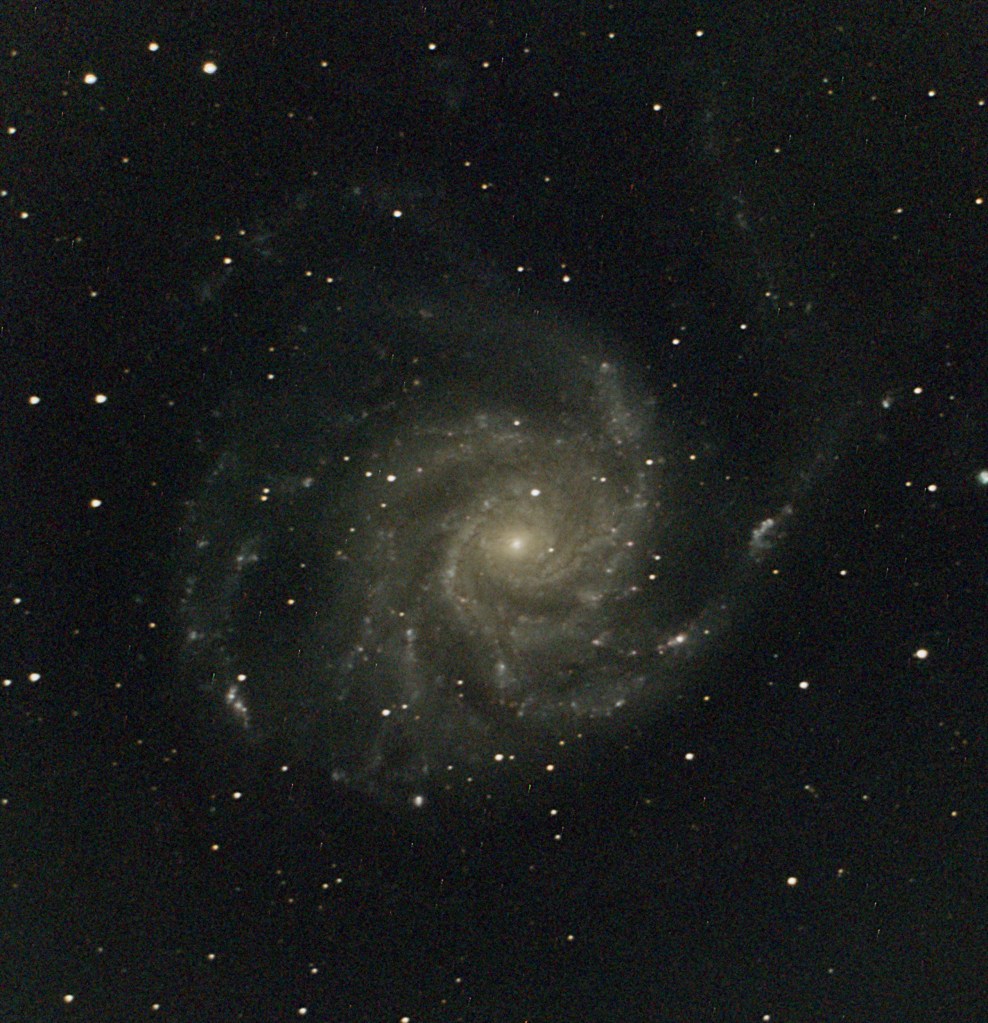
Pinwheel Galaxy M101 imaged with an 8 inch SCT at 1140 mm focal length, an ASI 533MC astronomy camera with UV-IR filter, DIY reducer, and tracked with a restored Vixen Great Polaris mount. M101 has a very low surface brightness. Use the stars near Alcor and Mizar of the Big Dipper to find M101.
Pinwheel Galaxy M101, 2 hours exposure
For a complete list of astrophoto images, click here.
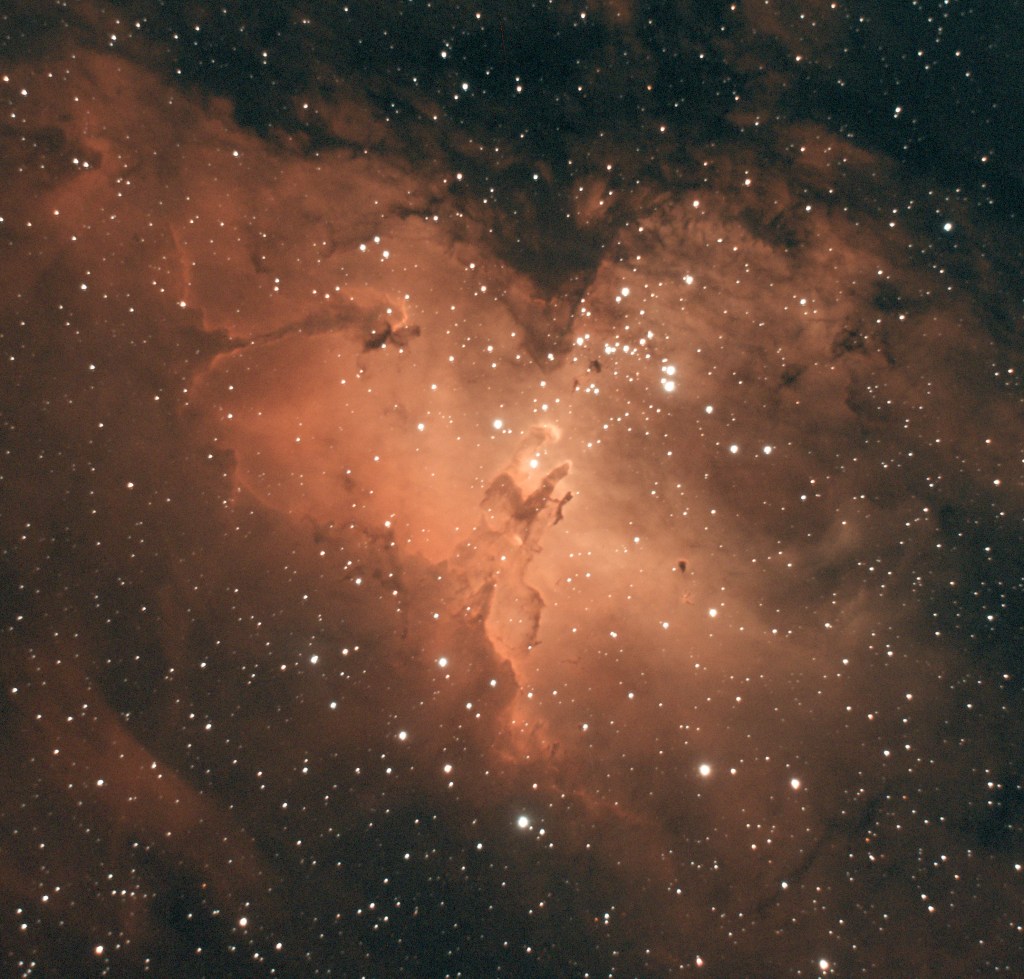
Eagle Nebula M16 imaged with an 8 inch SCT, an ASI 533MC cooled astronomy camera, and dual band H-alpha and O-III filter. I used a restored Vixen Great Polaris tracking mount and an off-axis guider with ASI 174MM guide camera. Use the bright stars of Sagittarius as pointers to find this target.
Eagle Nebula, 1 hour exposure
For a complete list of astrophoto images, click here.
Sombrero Galaxy M104 imaged with a Celestron 8 inch SCT at 1140 mm, and an ASI 533MC astronomy camera. I used a restored Vixen Great Polaris mount and an off-axis guider with ASI 174MM guide camera. M104 is in the constellation Virgo, near the bright stars of Corvus. This galaxy is relatively bright and easy to find.
Sombrero Galaxy M104, 1 hour exposure
For a complete list of astrophoto images, click here.
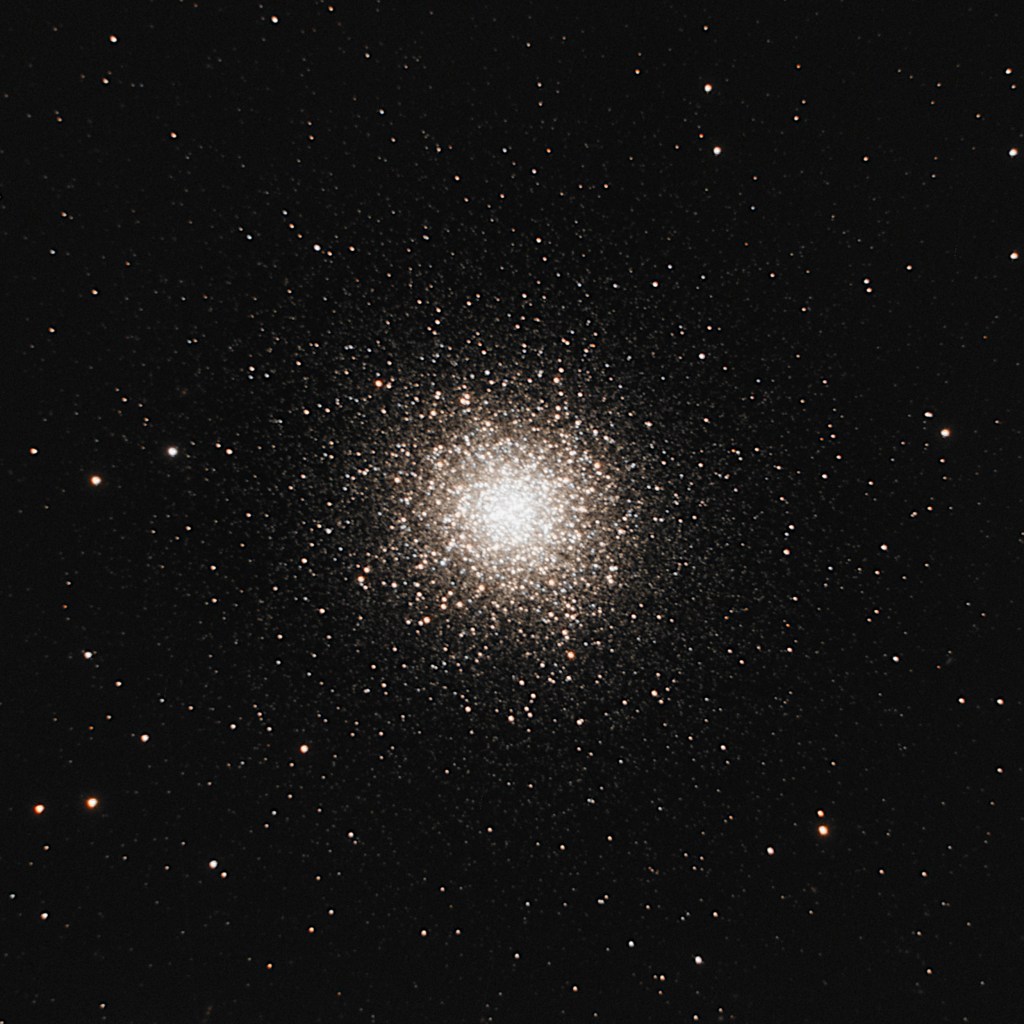
M13 Globular Cluster in Hercules imaged with a Celestron 8 inch SCT at 1140 mm, and an ASI 533MC astronomy camera. I used a restored Vixen Great Polaris mount and an off-axis guider with ASI 174MM guide camera. This target is bright and easy to find with just a finder scope.
M13 Globular Cluster, 3 hours exposure
For a complete list of astrophoto images, click here.
Trifid Nebula M20 imaged with a Celestron 8 inch SCT, an ASI 533MC cooled astronomy camera, dual band H-alpha and O-III filter, with an ASI 174MM on an off-axis guider. The dark dust lanes that divide the nebula into three sections are visible in this photo. This photo was imaged and tracked using a restored Vixen Great Polaris mount.
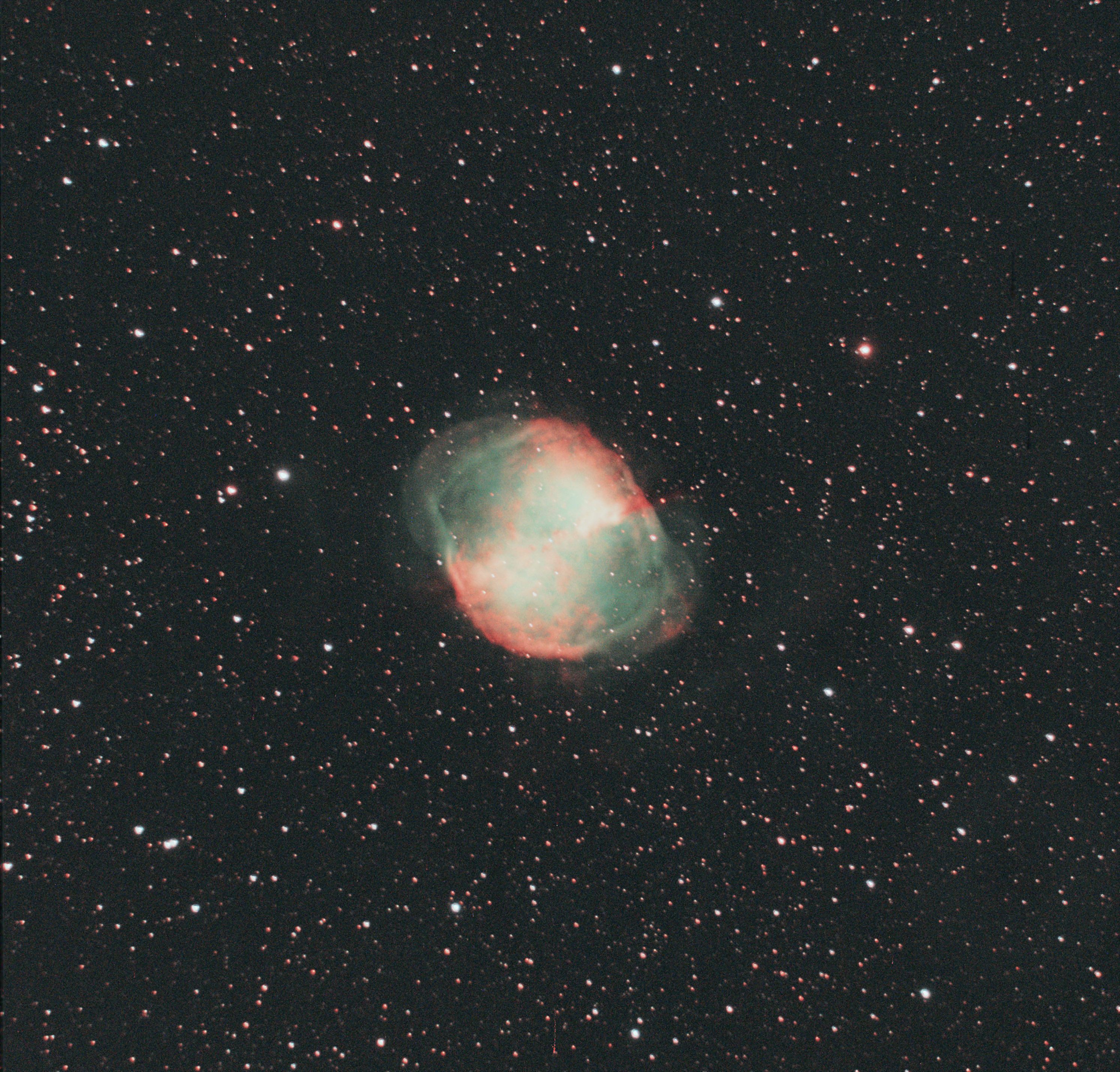
Dumbbell Nebula M27 imaged with a Celestron 8 inch SCT at 1140 mm focal length, OIII and H-alpha dual band filter, and an ASI 533MC astronomy camera. I used a restored Vixen Great Polaris mount and an off-axis guider with ASI 174MM guide camera. To find M27, use the bright stars of Aquila and Cygnus as pointer stars. This target is bright, easy to find, and should be visible even with small telescopes.
Dumbbell Nebula, 1 hour exposure
For a complete list of astrophoto images, click here.
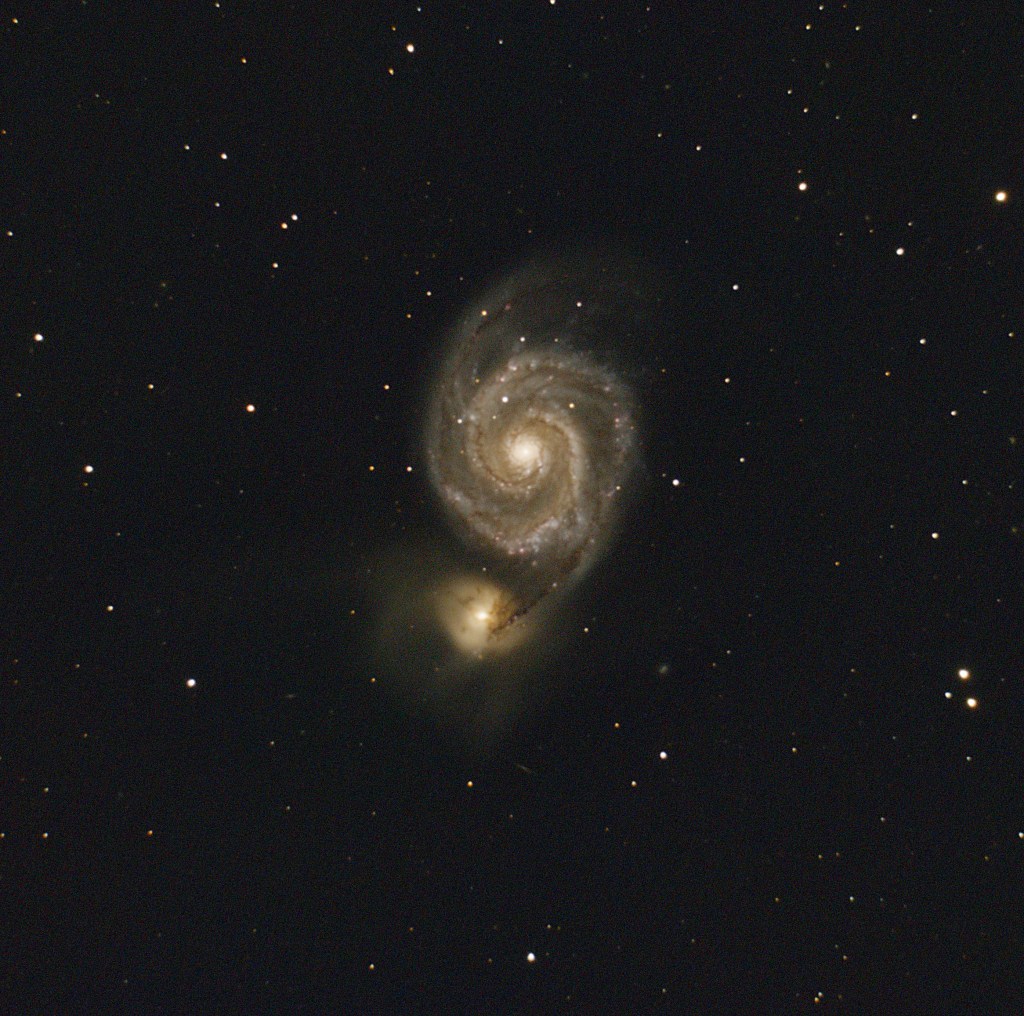
Whirlpool Galaxy M51 imaged with an 8 inch SCT at 1140 mm focal length, an ASI 533MC astronomy camera with UV-IR filter, DIY reducer, and tracked with a restored Meade LXD75 mount. M51 is relatively bright and may be visible through a small telescope. Use the stars of the Big Dipper to find M51.
M51, 2 hours exposure
For a complete list of astrophoto images, click here.
To find the Crab Nebula, locate Auriga first and then scan the region south of Auriga, near the bright star in Taurus. A narrowband filter helps in increasing the contrast between the nebula and the sky (such as using a 12 nm OIII for visual use, or 6 nm dual-band OIII and H-alpha for photography). Due to the nebula’s small angular size, a telescope with 4 inch aperture or larger with relatively long focal length is recommended for this target.
Crab Nebula M1, unguided image with an 8 inch SCT at 1140 mm focal length on a DIY reducer, an ASI533MC cooled astronomy camera, dual-band H-alpha and O-III filter, and a Meade LXD75 mount.
Crab Nebula, 1140 mm, 1 hour unguided exposure
For a complete list of astrophoto images, click here.
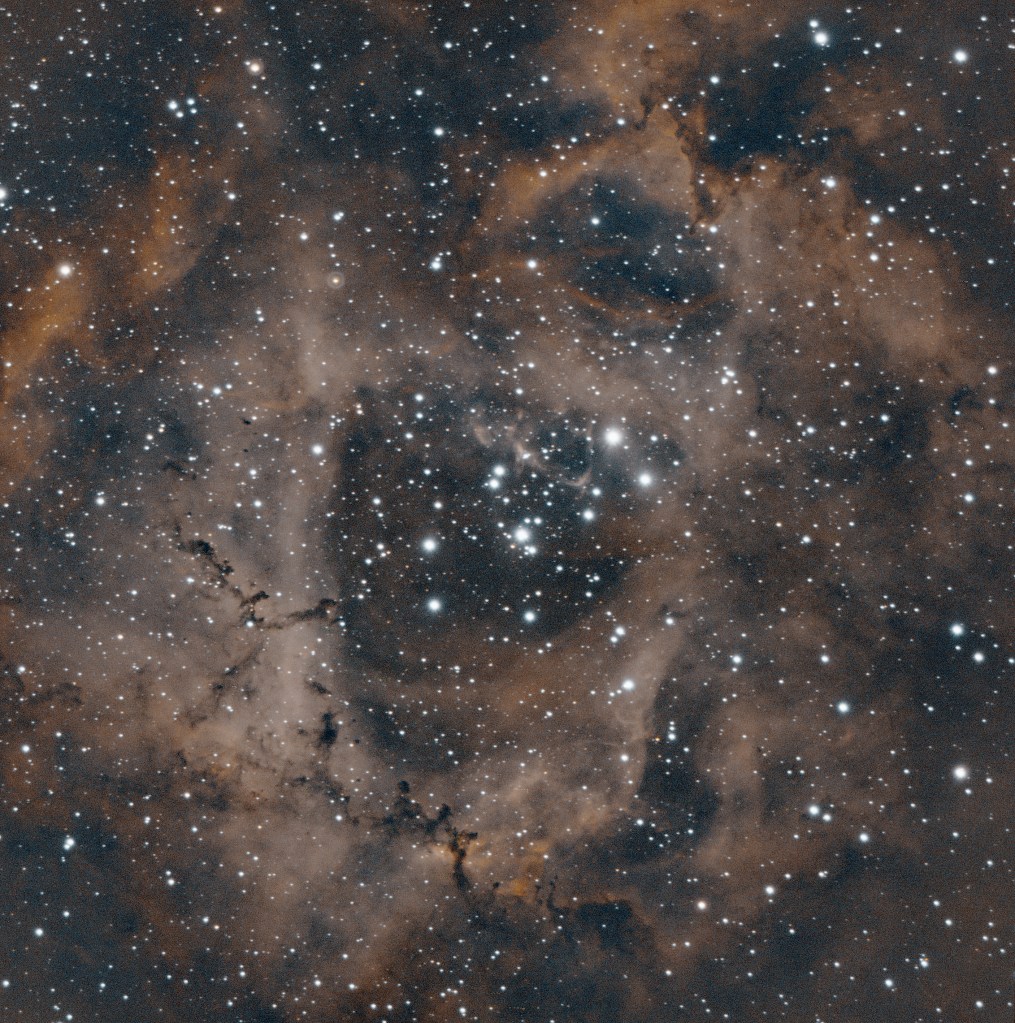
Rosette Nebula imaged with a Sky-Watcher 100ED with a DIY focal reducer, ASI 533MC cooled astronomy camera, dual band H-alpha and O-III filter. Guided tracking using an ASI 174MM with 50 mm f/4 guide scope and a Meade LXD75 mount.
Rosette Nebula, 1 hour exposure
For a complete list of astrophoto images, click here.
Flame and Horsehead Nebula in the constellation Orion imaged with a Sky-Watcher Equinox 100ED refractor at 608 mm focal length on DIY reducer, an ASI 533MC cooled astronomy camera, a dual band H-alpha and O-III filter, and an ASI 174MM guide camera. Tracking was done using a Meade LXD75 mount with DIY controller.
Flame and Horsehead Nebula M8, 4 hours exposure
For a complete list of astrophoto images, click here.
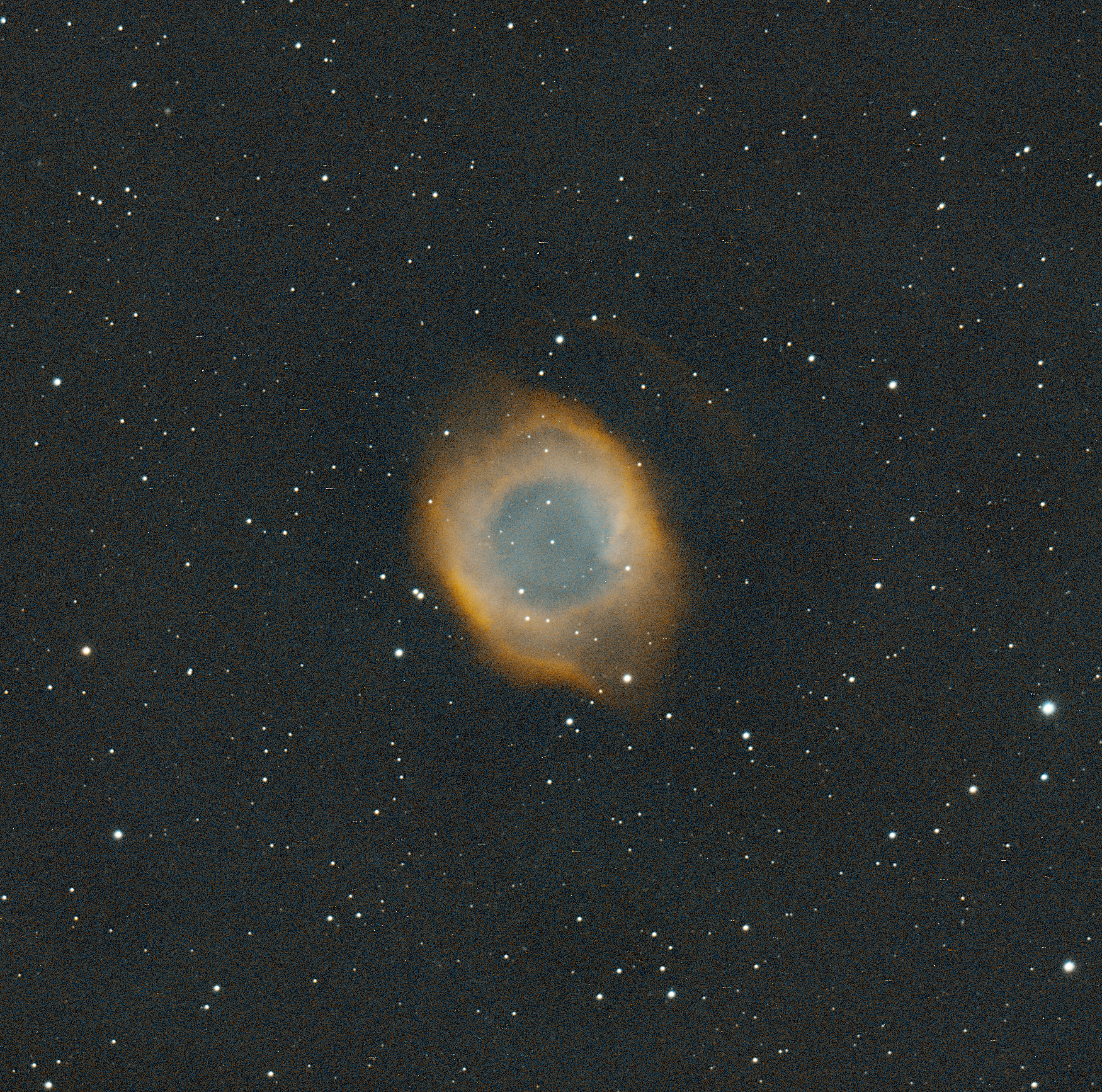
Helix Nebula imaged with a modified Sky-Watcher Equinox 100ED, ZWO duo nebula filter, and an ASI 533 astronomy camera at 608 mm focal length using a 0.67x DIY focal reducer, guided with a 50 mm guide scope and an ASI 174MM guide camera.
Helix Nebula imaged with 100 mm aperture at f/6, with DIY 0.67x focal reducer, 2 hours exposure
For a complete list of astrophoto images, click here.
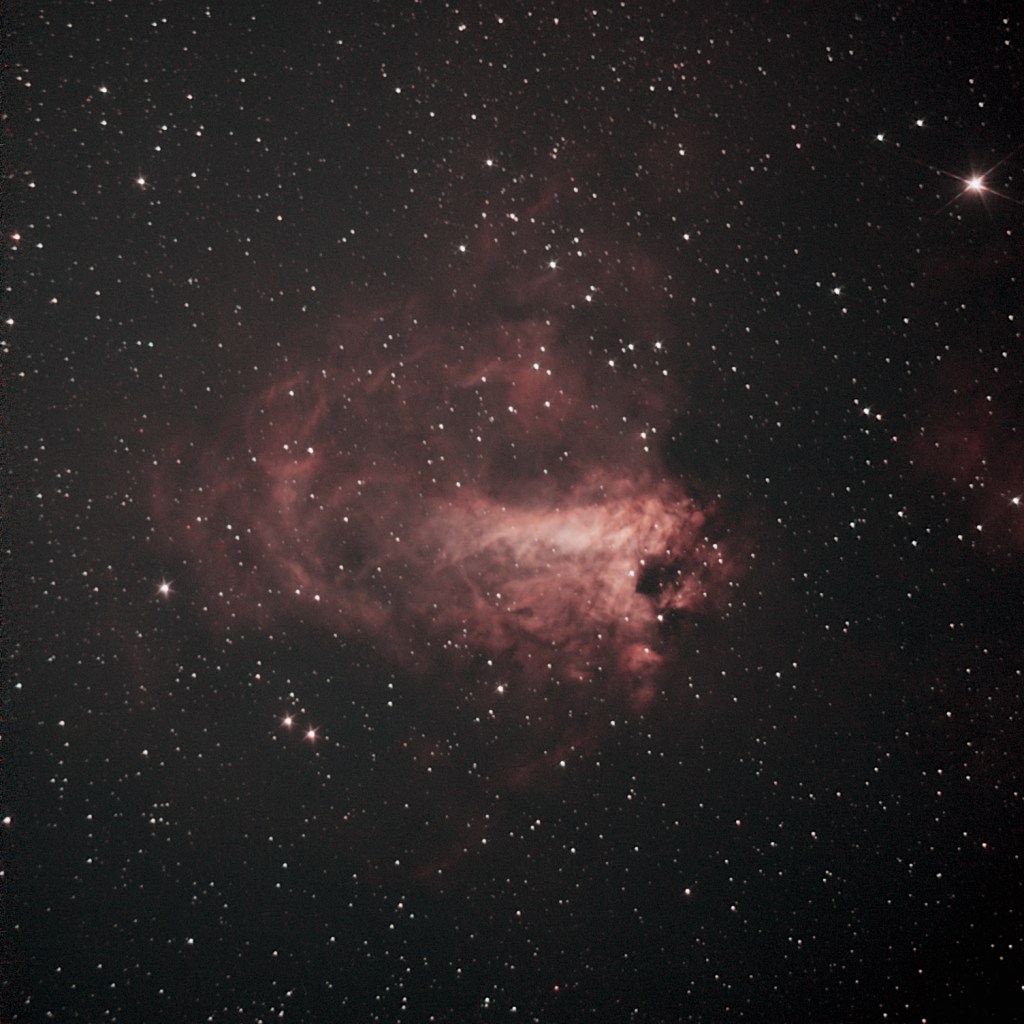
Omega Nebula M17 imaged with a Vixen R114 reflector, an ASI 533MC cooled astronomy camera, dual band H-alpha and O-III filter, with an ASI 174MM guide camera on a 60 mm guide scope. This is one of the brightest deep-sky objects in the Milky Way region, in the part of the sky where you can also find the Eagle Nebula. M17 is visible even with binoculars or small telescopes. You may use the bright stars of Sagittarius to find this target.
Omega Nebula M17, 40 min exposure
For a complete list of astrophoto images, click here.




 Night Sky in Focus