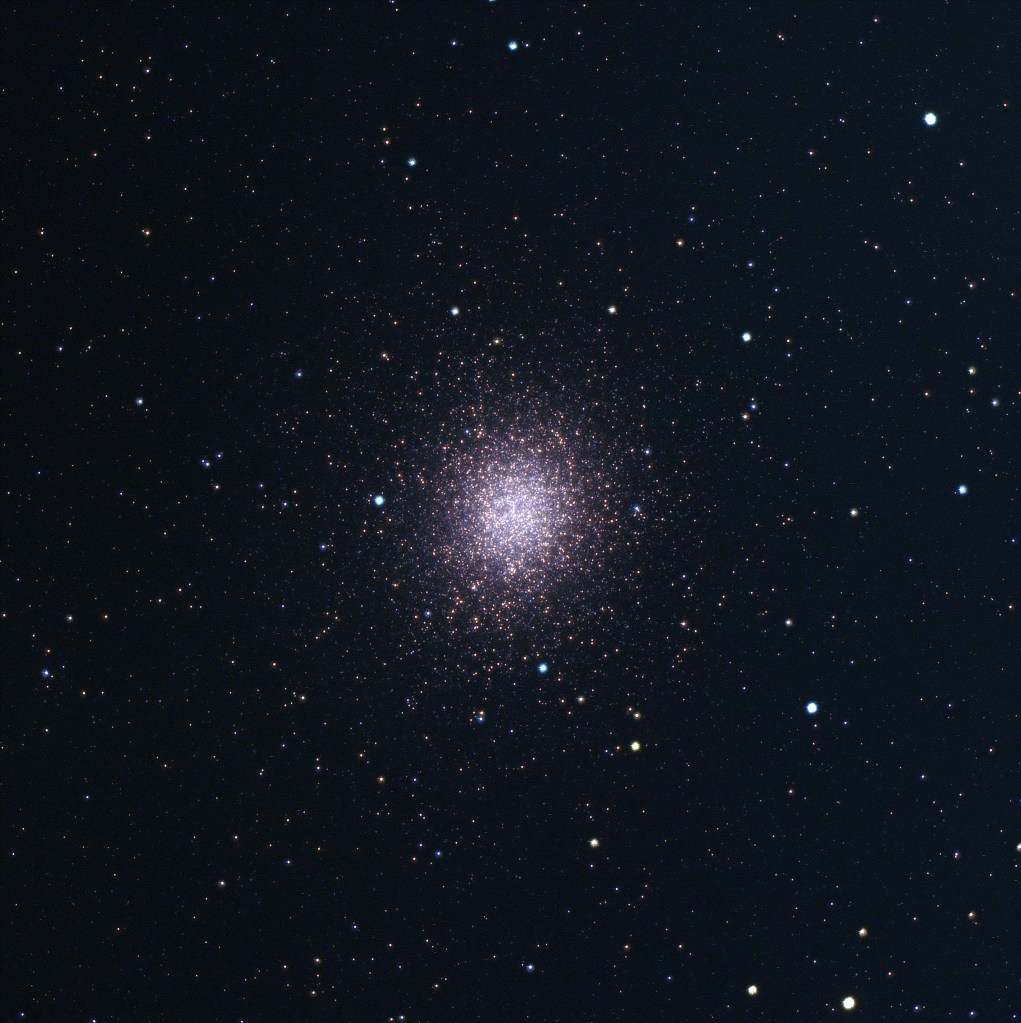
Omega Centauri (NGC 5139) imaged with a Sky-Watcher Equinox 100ED at 557 mm and an ASI 533MC astronomy camera. I used a restored Meade LXD75 mount and an off-axis guider with ASI 174MM guide camera. This image was taken with a DIY focal length reducer.
Omega Centauri, 1 hour exposure
For a complete list of astrophoto images, click here.
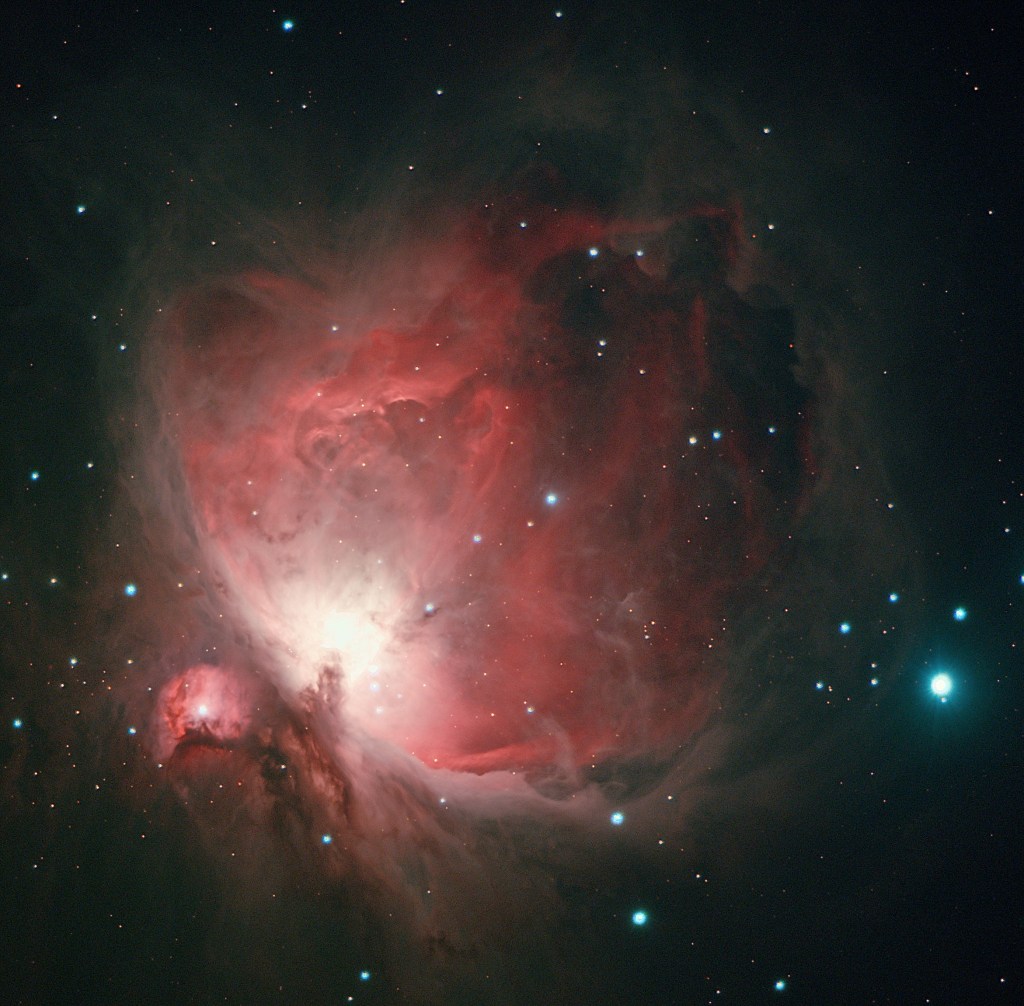
Orion Nebula M42 imaged in 5 different sessions from 2023 to 2025, with a 4 in refractor at 557 mm focal length, an ASI 533MC cooled astronomy camera, dual band H-alpha and O-III filter, with an LXD75 mount and an ASI 174MM guide camera. This image was taken with a DIY focal length reducer.
Orion Nebula, 8.5 hours exposure
For a complete list of astrophoto images, click here.
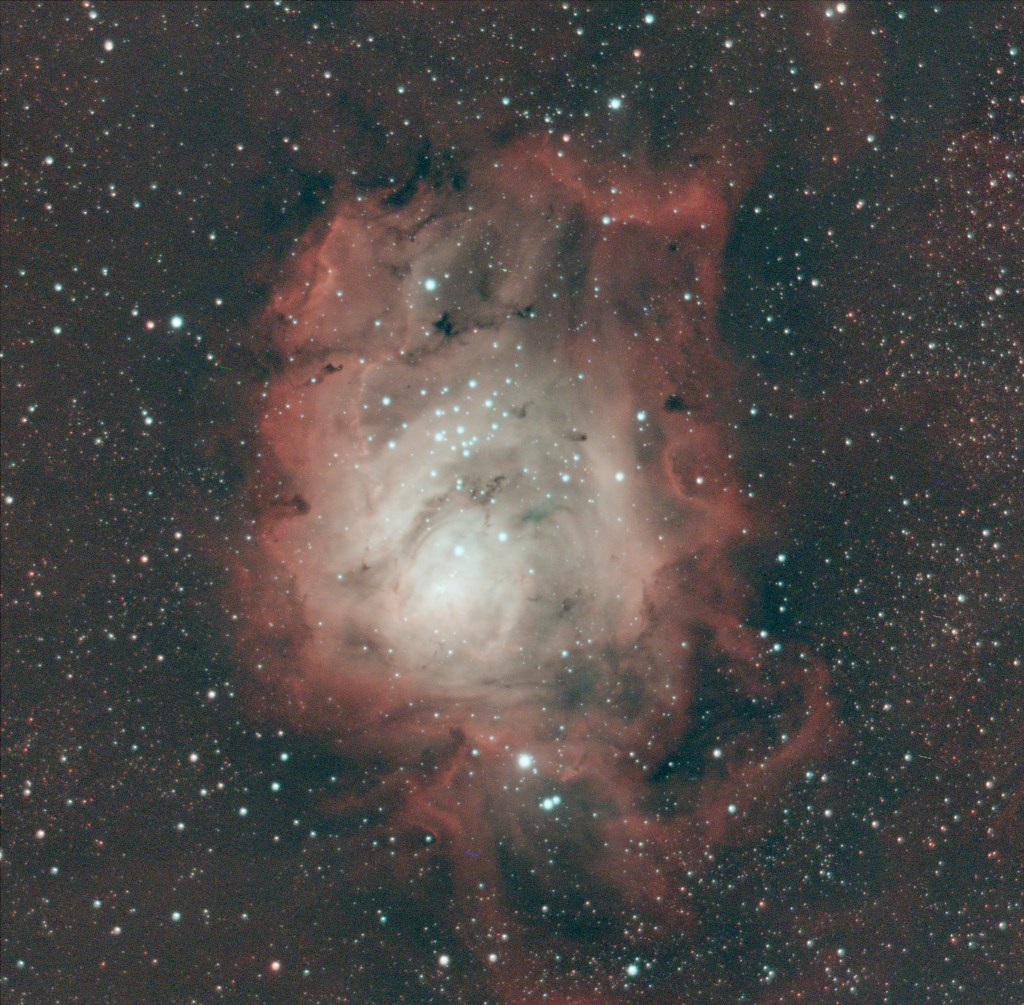
Lagoon Nebula M8 imaged with a 4 in refractor at 557 mm focal length, an ASI 533MC cooled astronomy camera, dual band H-alpha and O-III filter, with an ASI 174MM guide camera. This is a test image taken with a DIY focal length reducer.
Lagoon Nebula M8, 1 hour exposure
For a complete list of astrophoto images, click here.
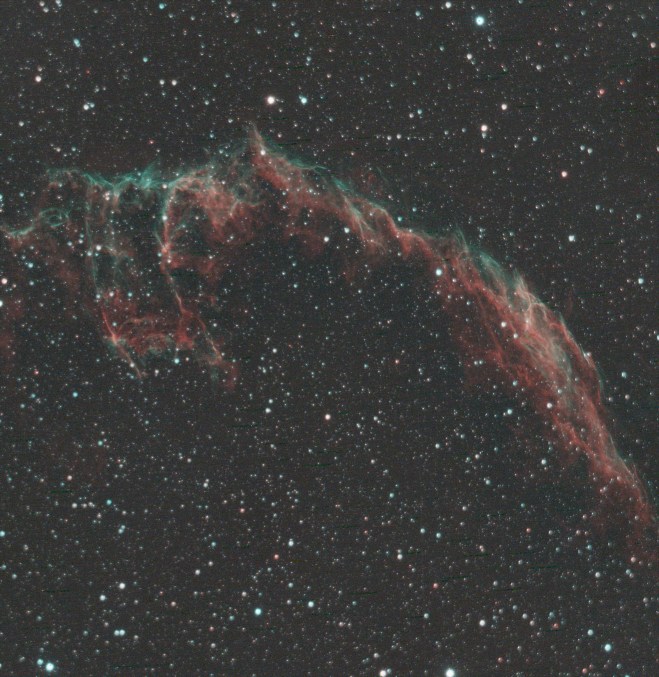
Eastern Veil Nebula imaged with a Sky-Watcher Equinox 4 in refractor at 557 mm through a DIY focal length reducer, ASI 533MC cooled astronomy camera, dual band H-alpha and O-III filter, and an ASI 174MM guide camera.
Eastern Veil Nebula, 3 hours
For a complete list of astrophoto images, click here.
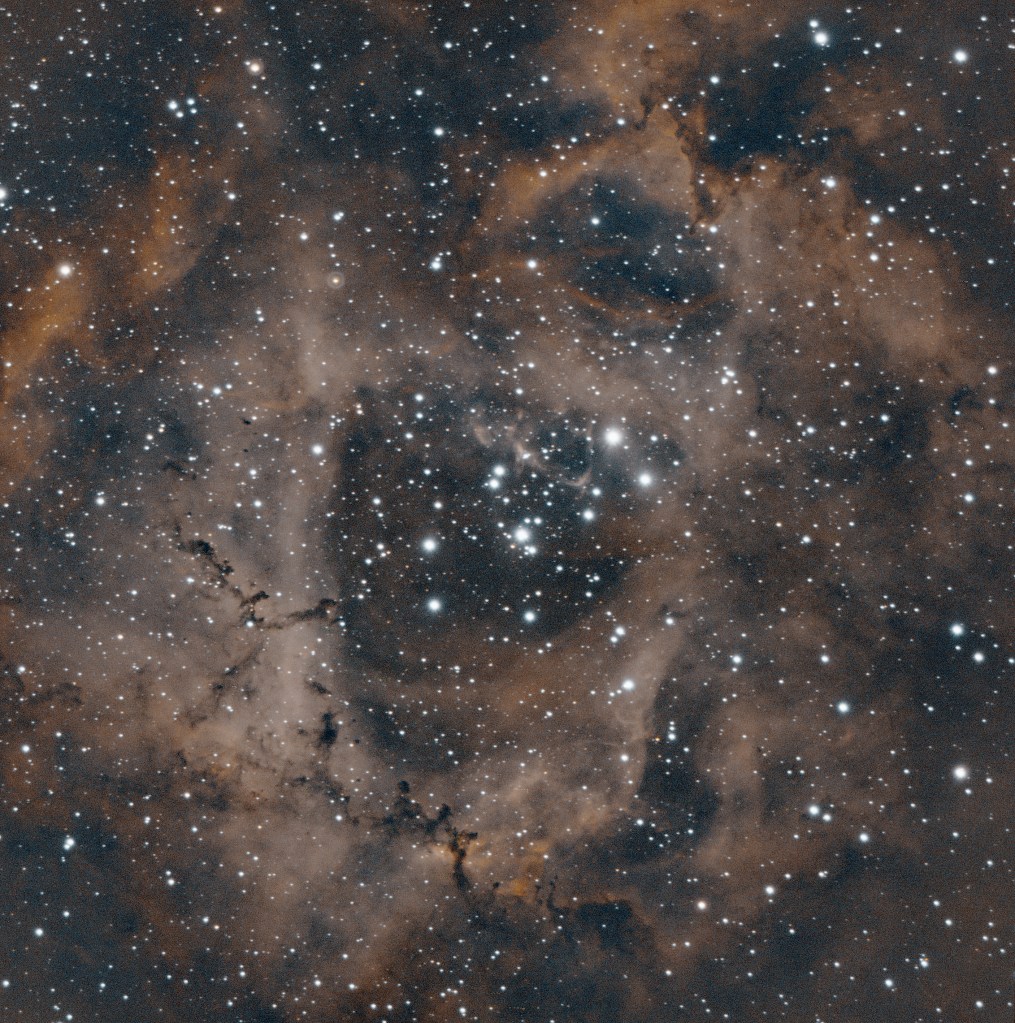
Rosette Nebula imaged with a Sky-Watcher 100ED with a DIY focal reducer, ASI 533MC cooled astronomy camera, dual band H-alpha and O-III filter. Guided tracking using an ASI 174MM with 50 mm f/4 guide scope and a Meade LXD75 mount.
Rosette Nebula, 1 hour exposure
For a complete list of astrophoto images, click here.
The moon’s darker surface becomes visible as it gets illuminated by sunlight reflected off the Earth. This phenomenon is called earthshine. This earthshine photo was imaged with a Sky-Watcher Equinox 100ED and an ASI 533MC astronomy camera on a Meade LXD75 tracking mount.
Flame and Horsehead Nebula in the constellation Orion imaged with a Sky-Watcher Equinox 100ED refractor at 608 mm focal length on DIY reducer, an ASI 533MC cooled astronomy camera, a dual band H-alpha and O-III filter, and an ASI 174MM guide camera. Tracking was done using a Meade LXD75 mount with DIY controller.
Flame and Horsehead Nebula M8, 4 hours exposure
For a complete list of astrophoto images, click here.
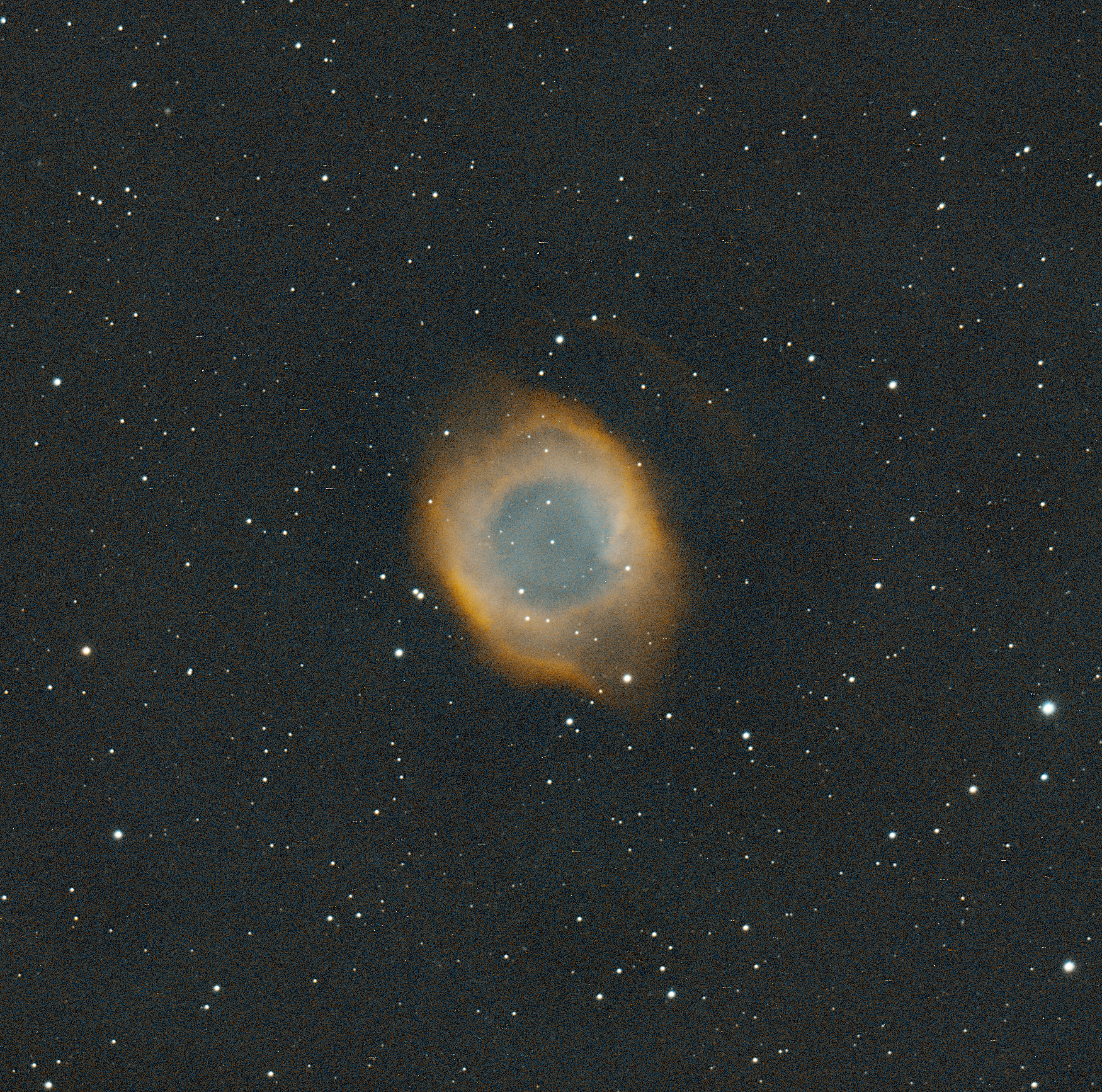
Helix Nebula imaged with a modified Sky-Watcher Equinox 100ED, ZWO duo nebula filter, and an ASI 533 astronomy camera at 608 mm focal length using a 0.67x DIY focal reducer, guided with a 50 mm guide scope and an ASI 174MM guide camera.
Helix Nebula imaged with 100 mm aperture at f/6, with DIY 0.67x focal reducer, 2 hours exposure
For a complete list of astrophoto images, click here.
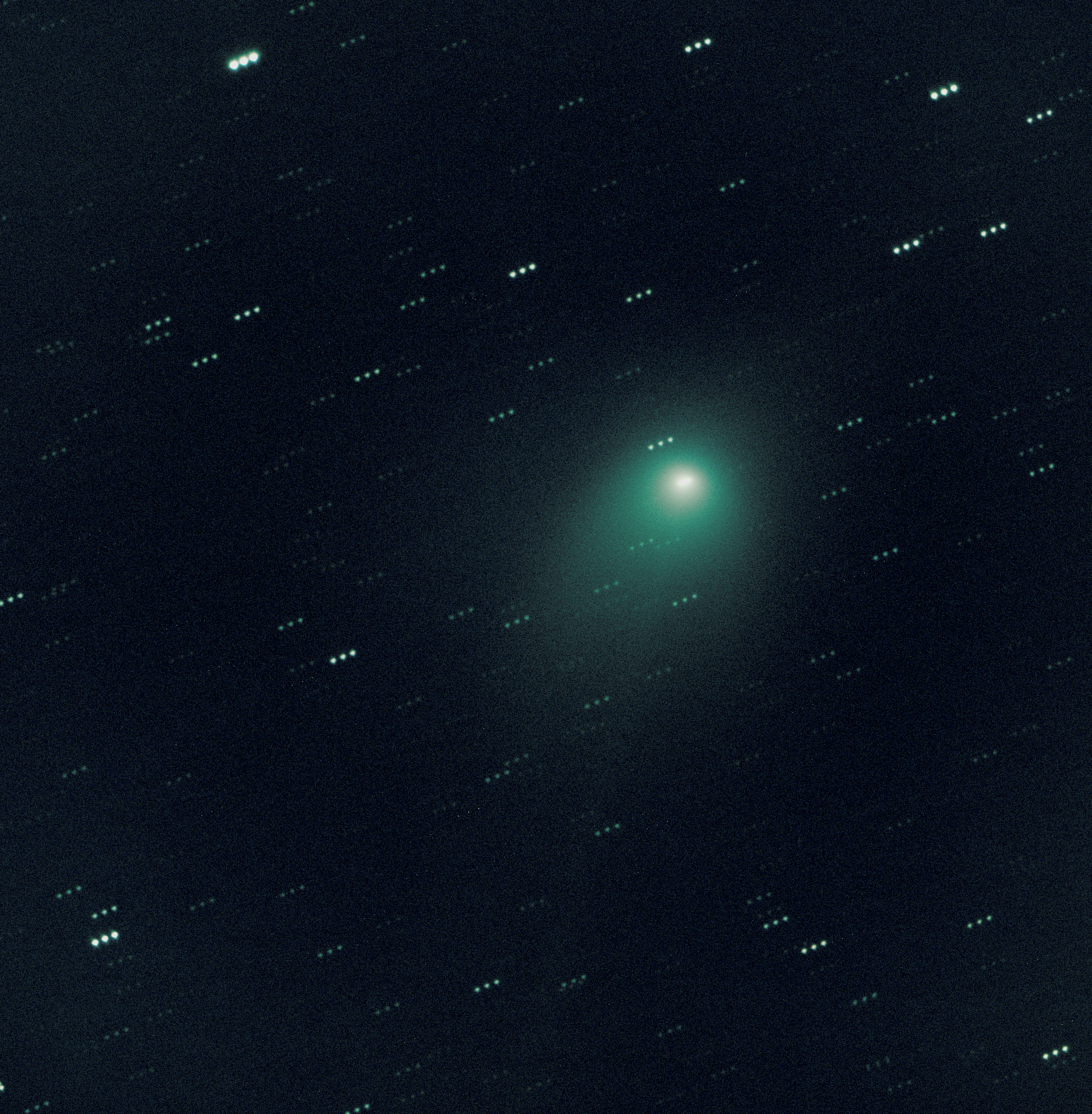
C/2022 E3 (ZTF) imaged in January 24, 2023 from Bacoor, Cavite, using a Sky-Watcher 100ED with a DIY focal reducer, ASI 533MC cooled astronomy camera, a UV-IR filter, and a motorized Vixen Grand Polaris mount. I have observed this comet to be at about the same surface brightness and apparent angular size with the M51 galaxy. It is barely detectable visually using a 10 by 50 binoculars or 8 by 50 finder scope.
C/2022 E3 (ZTF), stack of 3 images at 180 sec each
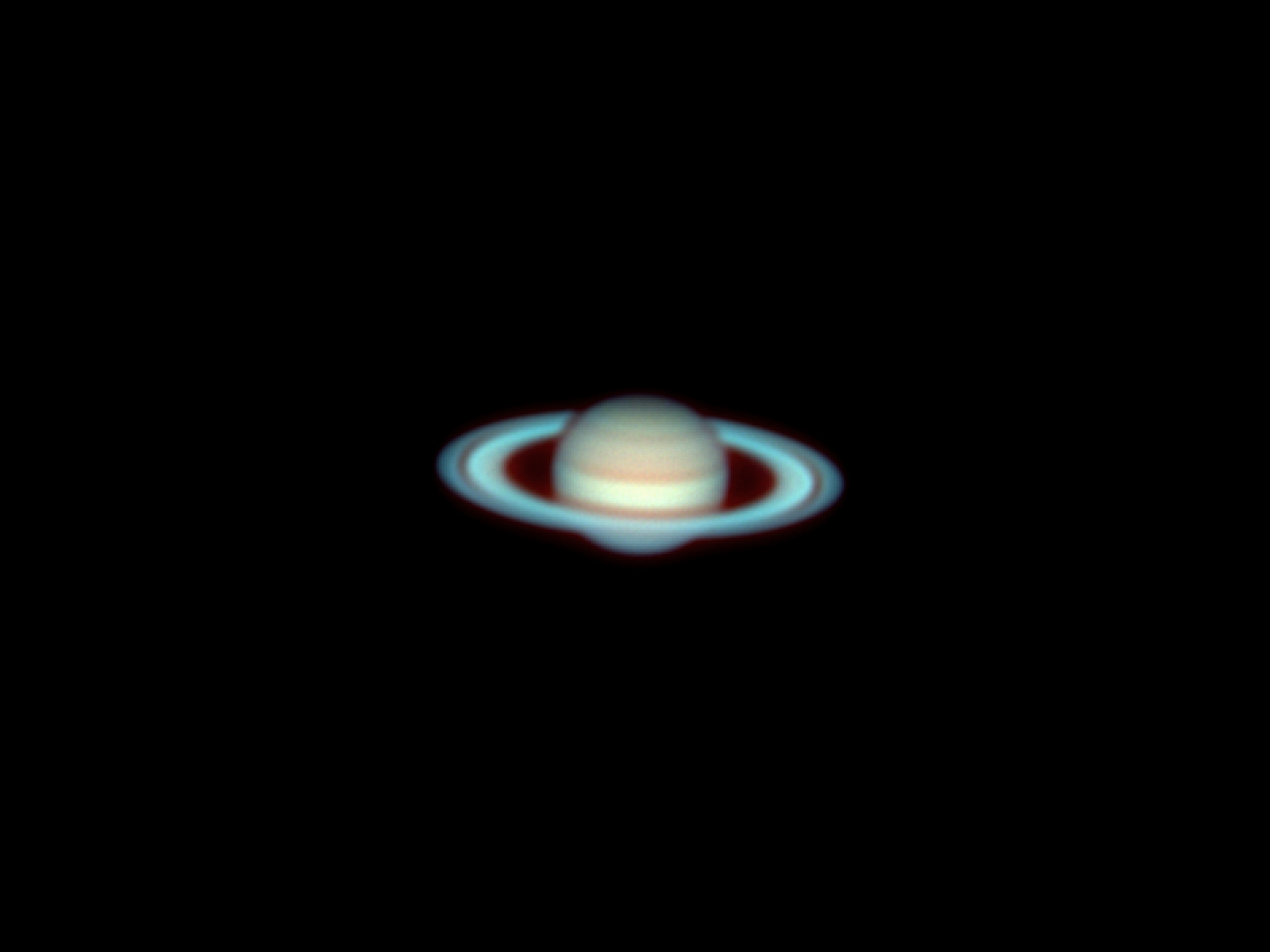
In this Saturn photo, I used a Sky-Watcher Equinox 100ED refractor and a 25 mm eyepiece to project an image onto the sensor of ASI 533 astronomy camera. The magnification of the image depends on the focal length of the telescope, the focal length of the eyepiece, and separation between the eyepiece and the camera’s sensor. While longer telescopes, higher-power eyepieces, and wider separation between the eyepiece and the camera will produce more magnified images, the amount of detail that can be resolved will still depend on the aperture or the diameter of the telescope’s objective mirror or lens.
Saturn imaged through eyepiece projection during the August 2021 opposition
For a complete list of astrophoto images, click here.
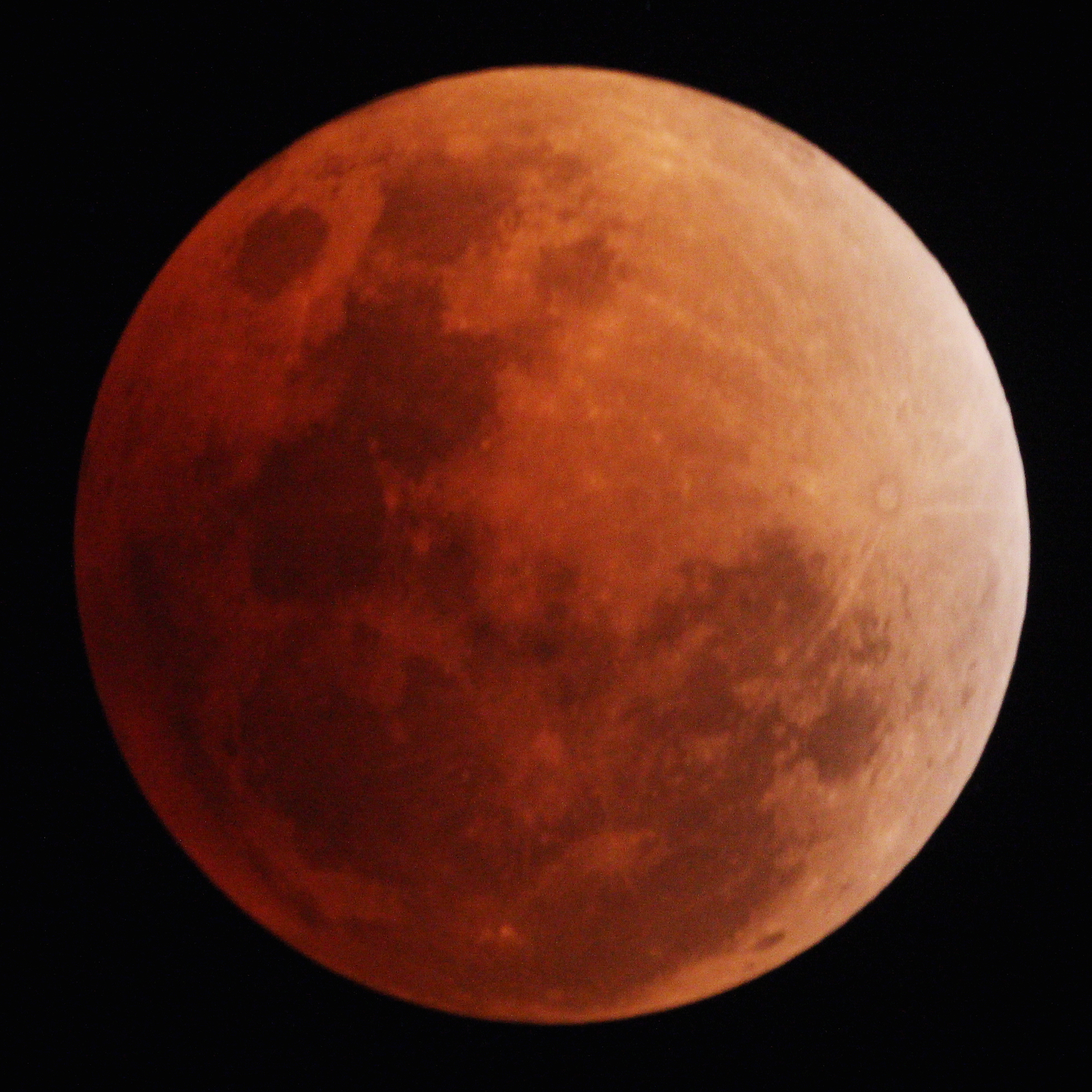
Total Lunar Eclipse taken with a Sky-Watcher Equinox 100ED and a DSLR camera on January 31, 2018 at the PAGASA Observatory in UP Diliman, Quezon City, Philippines
Total Lunar Eclipse on January 31, 2018
For a complete list of astrophoto images, click here.
This image of Mars was taken during one of its closest approaches to Earth, revealing the dark and light patches on its surface, along with white clouds in its atmosphere. I used an SPC900NC web camera to capture this image.
Mars imaged with a telescope and a web camera
For a complete list of astrophoto images, click here.
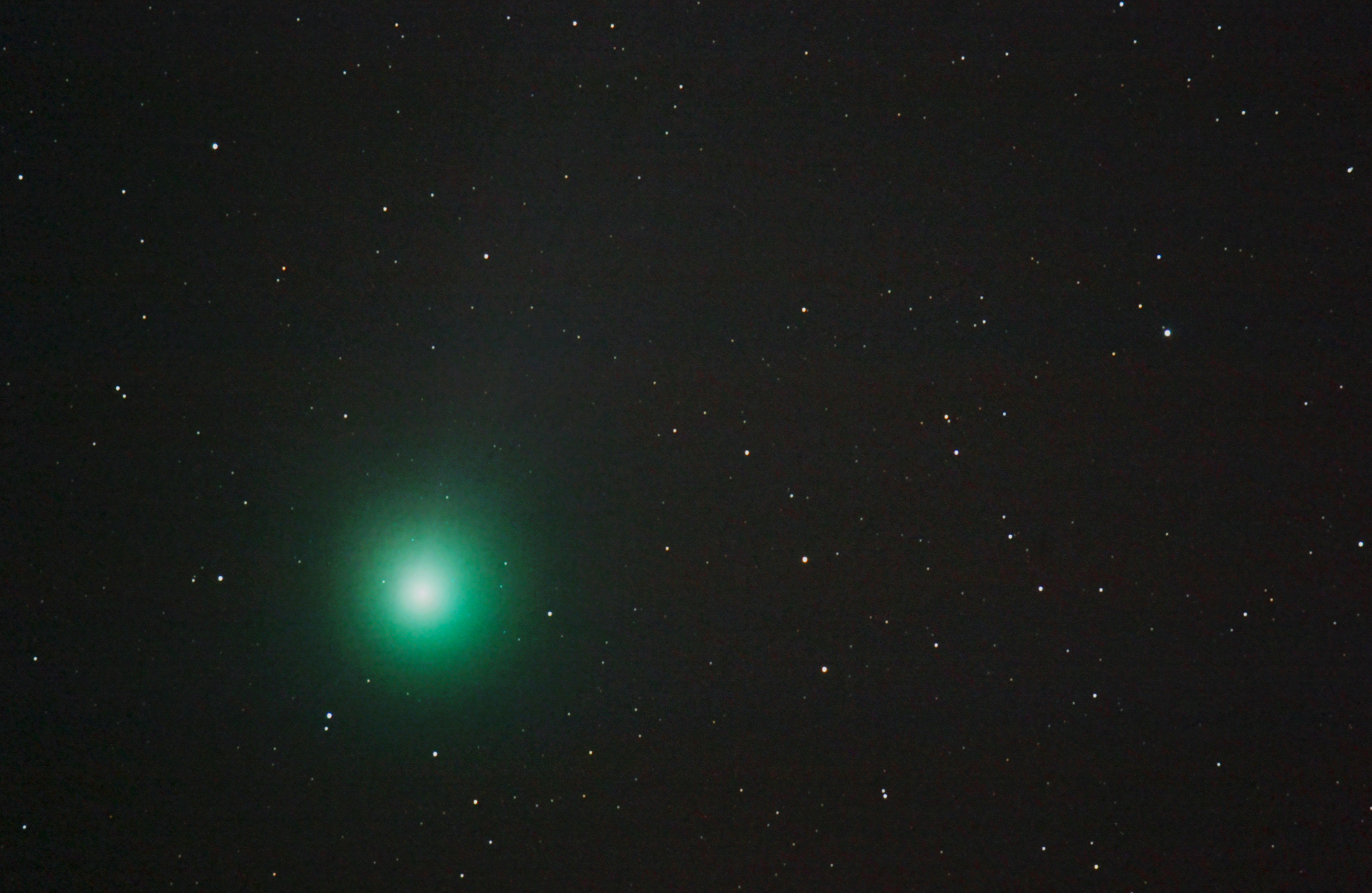
Comet Lovejoy C2014 Q2 taken with a Sky-Watcher Equinox 100ED and a tracking mount. The comet’s green coma and hint of its tail, are visible in this photo. Comets are difficult to image because they move relative to the stars, producing a trail. Processing software corrects for this drift and stacks the image of the comet without producing a trail.
Comet Lovejoy C2014 Q2
For a complete list of astrophoto images, click here.




 Night Sky in Focus