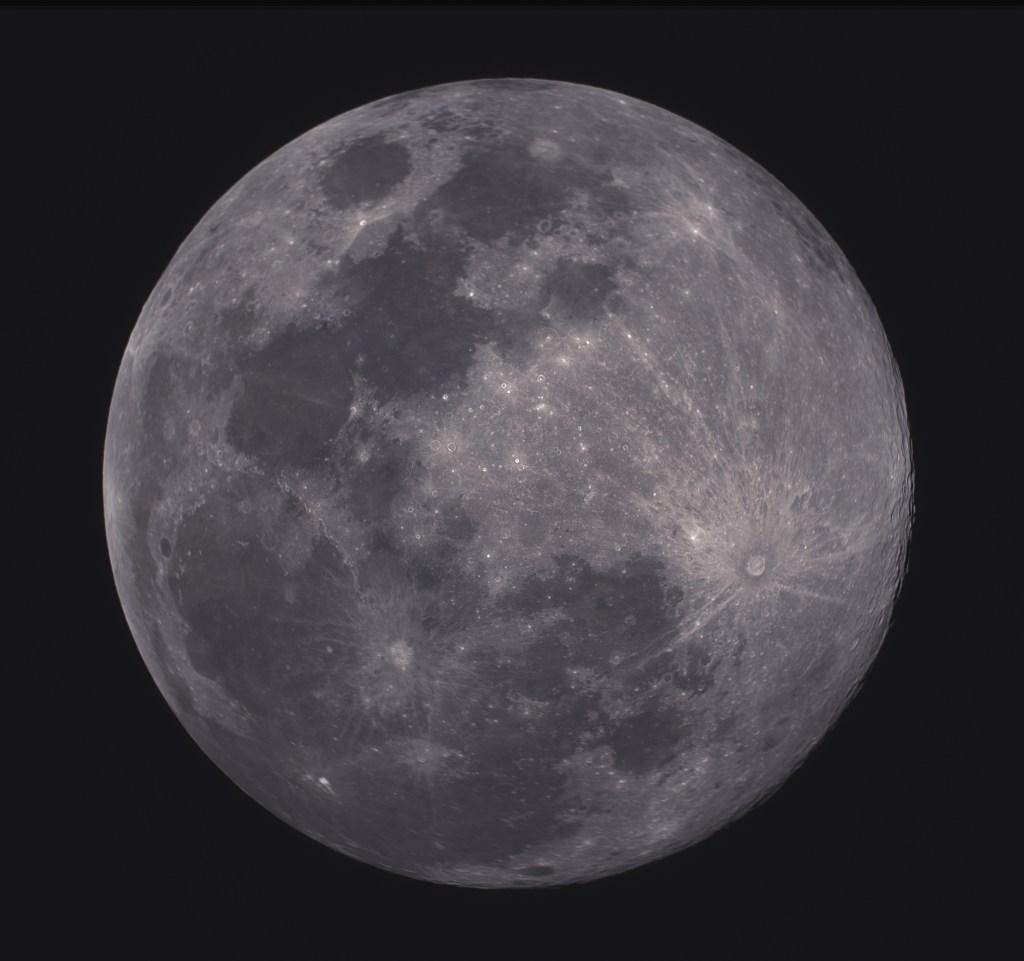
The moon imaged with an 8 in SCT with 0.75x DIY reducer and a Canon 50D camera. Registering and stacking done in SIRIL.
For a complete list of astrophoto images, click here.
Night Sky in Focus
© Anthony Urbano | Bacoor, Philippines
The moon imaged with an 8 in SCT with 0.75x DIY reducer and a Canon 50D camera. Registering and stacking done in SIRIL.
For a complete list of astrophoto images, click here.
Night Sky in Focus
© Anthony Urbano | Bacoor, Philippines
This a test image of Jupiter using a Celestron 8 inch SCT on a Meade LXD75 tracking mount. This is a stack of 1500 frames imaged with an ASI 533 camera and a UV-IR filter through 4x Barlow lens. Sharpcap was used in recording RGB24 AVI file. Stacking done with AutoStakkert and wavelets adjustment in SIRIL.
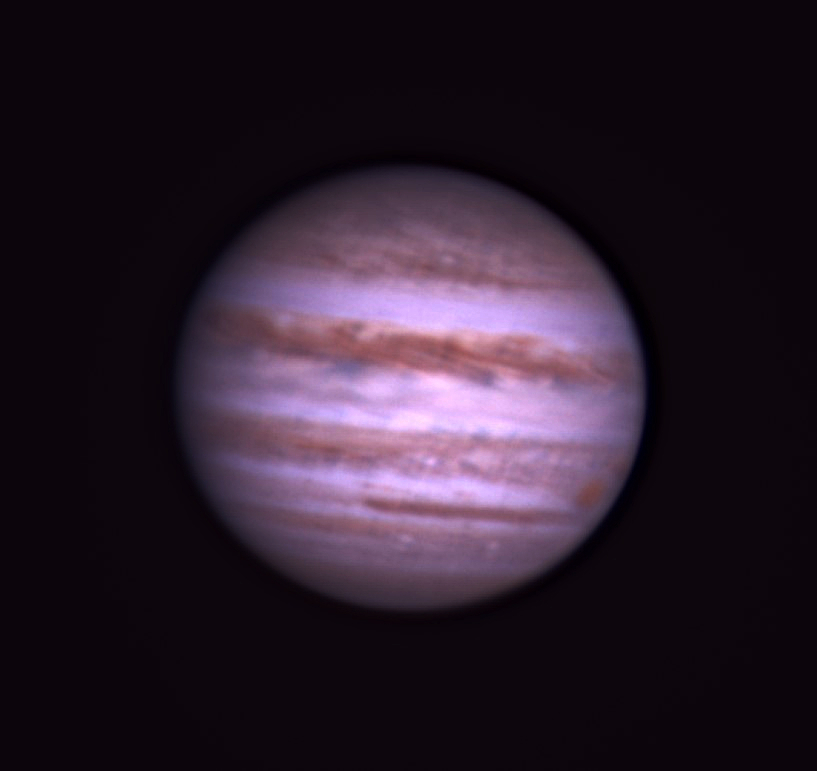
Jupiter imaged with a Celestron C8, 1500 frames
Related link: Jupiter video with Celestron 8 inch SCT at 1440p
Night Sky in Focus
© Anthony Urbano | Bacoor, Philippines
The moon’s darker surface becomes visible as it gets illuminated by sunlight reflected off the Earth. This phenomenon is called earthshine. This earthshine photo was imaged with a Sky-Watcher Equinox 100ED and an ASI 533MC astronomy camera on a Meade LXD75 tracking mount.

Related link: Moon imaged with a Celestron C8 SCT
Night Sky in Focus
© Anthony Urbano | Bacoor, Philippines
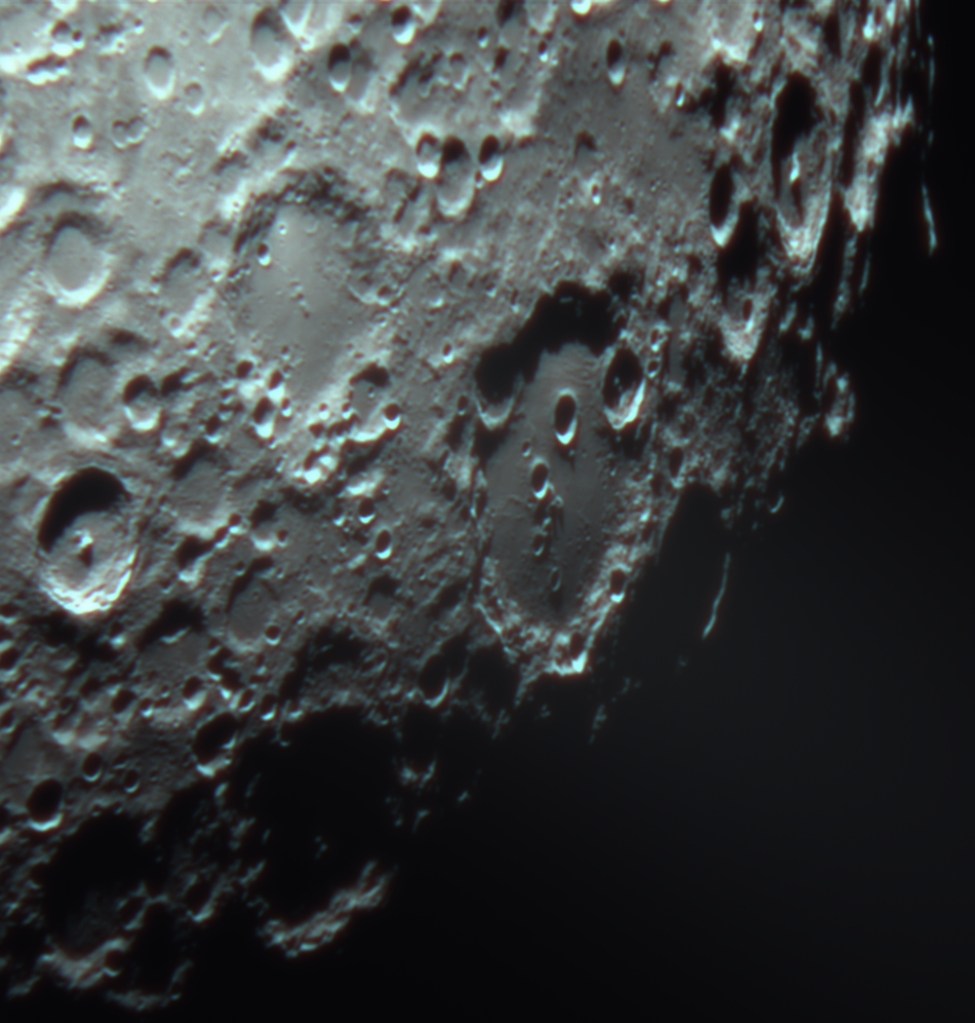
Clavius crater imaged with a Sky-Watcher 4 in f/9 refractor, 25 mm eyepiece, and an ASI 533 camera. Registering and stacking done in SIRIL.
For a complete list of astrophoto images, click here.
Night Sky in Focus
© Anthony Urbano | Bacoor, Philippines
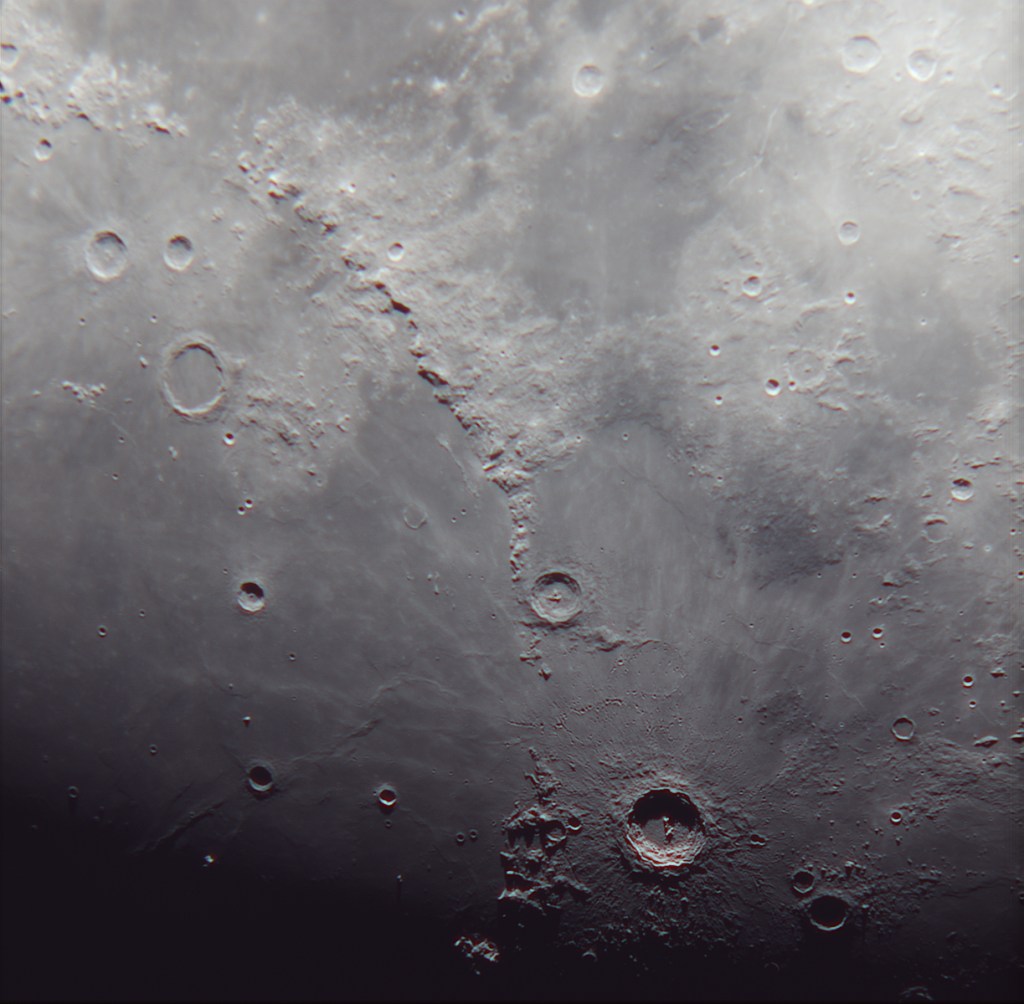
Copernicus crater and the Montes Apenninus mountain range imaged with a Sky-Watcher 4 in f/9 refractor, 25 mm eyepiece, and an ASI 533 camera.
For a complete list of astrophoto images, click here.
Night Sky in Focus
© Anthony Urbano | Bacoor, Philippines
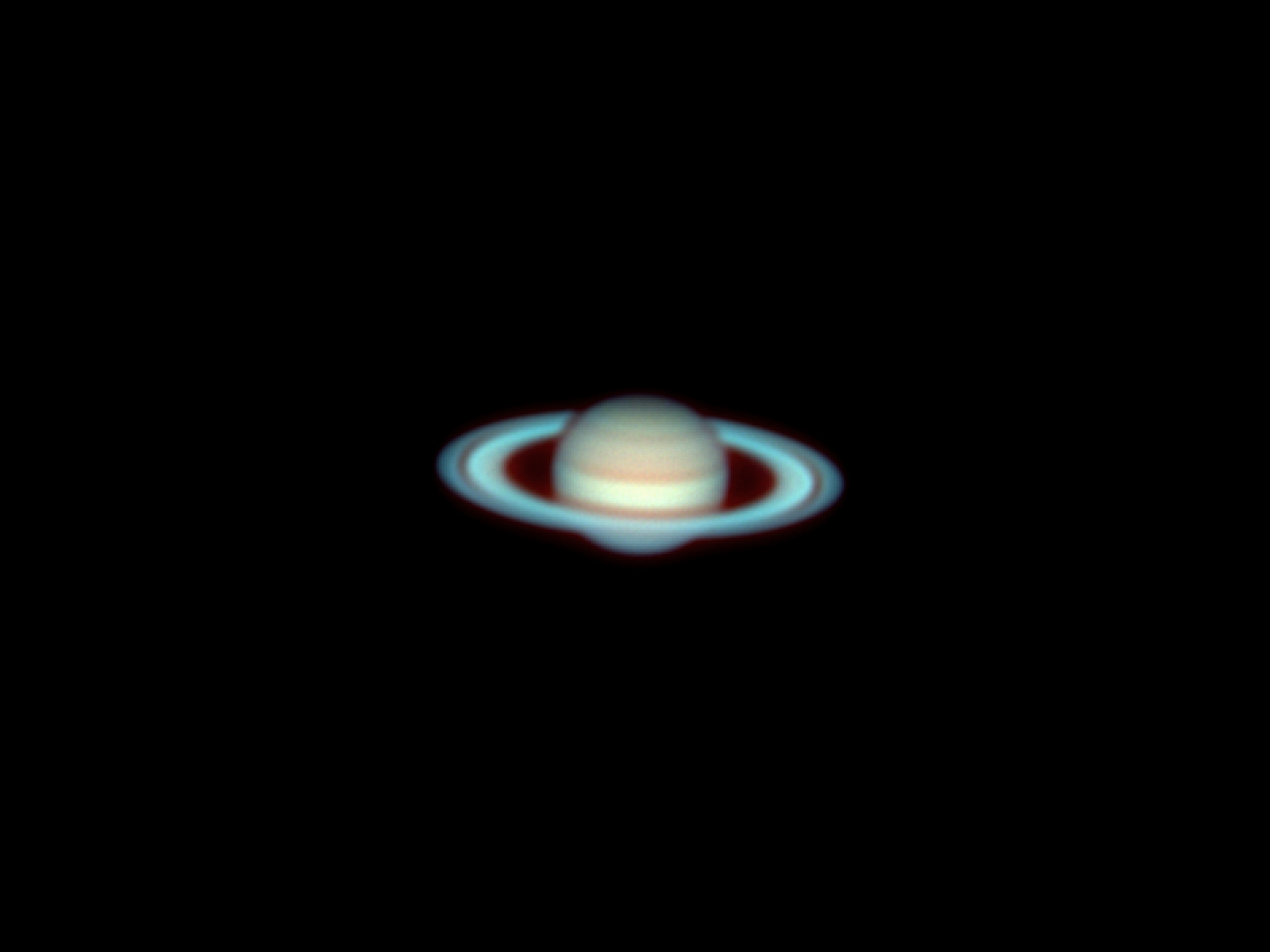
In this Saturn photo, I used a Sky-Watcher Equinox 100ED refractor and a 25 mm eyepiece to project an image onto the sensor of ASI 533 astronomy camera. The magnification of the image depends on the focal length of the telescope, the focal length of the eyepiece, and separation between the eyepiece and the camera’s sensor. While longer telescopes, higher-power eyepieces, and wider separation between the eyepiece and the camera will produce more magnified images, the amount of detail that can be resolved will still depend on the aperture or the diameter of the telescope’s objective mirror or lens.
For a complete list of astrophoto images, click here.
Night Sky in Focus
© Anthony Urbano | Bacoor, Philippines
Among all the planets, Venus is the brightest. It is usually seen an hour before sunrise, or an hour after sunset. The phases of Venus may be observed and photographed with a small telescope. This image of the crescent Venus was taken with a Canon 1100D and a 4 inch f/9 refractor.

For a complete list of astrophoto images, click here.
Night Sky in Focus
© Anthony Urbano | Bacoor, Philippines
This image of Mars was taken during one of its closest approaches to Earth, revealing the dark and light patches on its surface, along with white clouds in its atmosphere. I used an SPC900NC web camera to capture this image.

Mars imaged with a telescope and a web camera
For a complete list of astrophoto images, click here.
Night Sky in Focus
© Anthony Urbano | Bacoor, Philippines
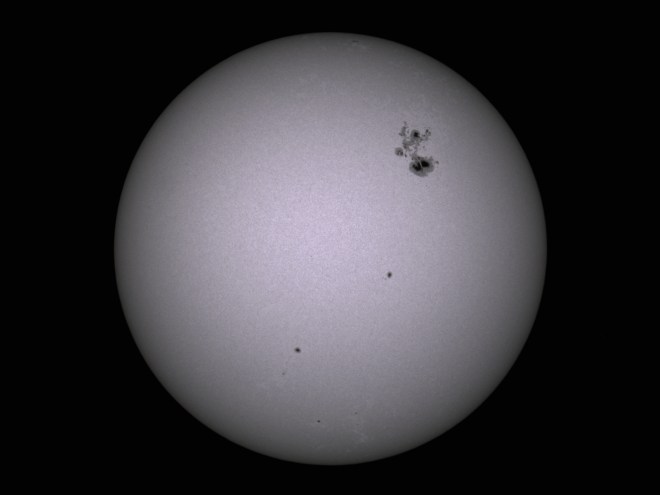
This is an image of the Sun showing the sunspot AR 12192, the largest sunspot of the solar cycle 2010 to 2020. This image was taken at solar maximum when the sun is most active during a cycle. It was imaged in October 2014 in Quezon City using a Sky-Watcher Equinox 100ED and a Baader ND 5 solar filter. Never observe or image the Sun without the proper solar filters.
For a complete list of astrophoto images, click here.
Night Sky in Focus © Anthony Urbano | Bacoor, Philippines
 Night Sky in Focus