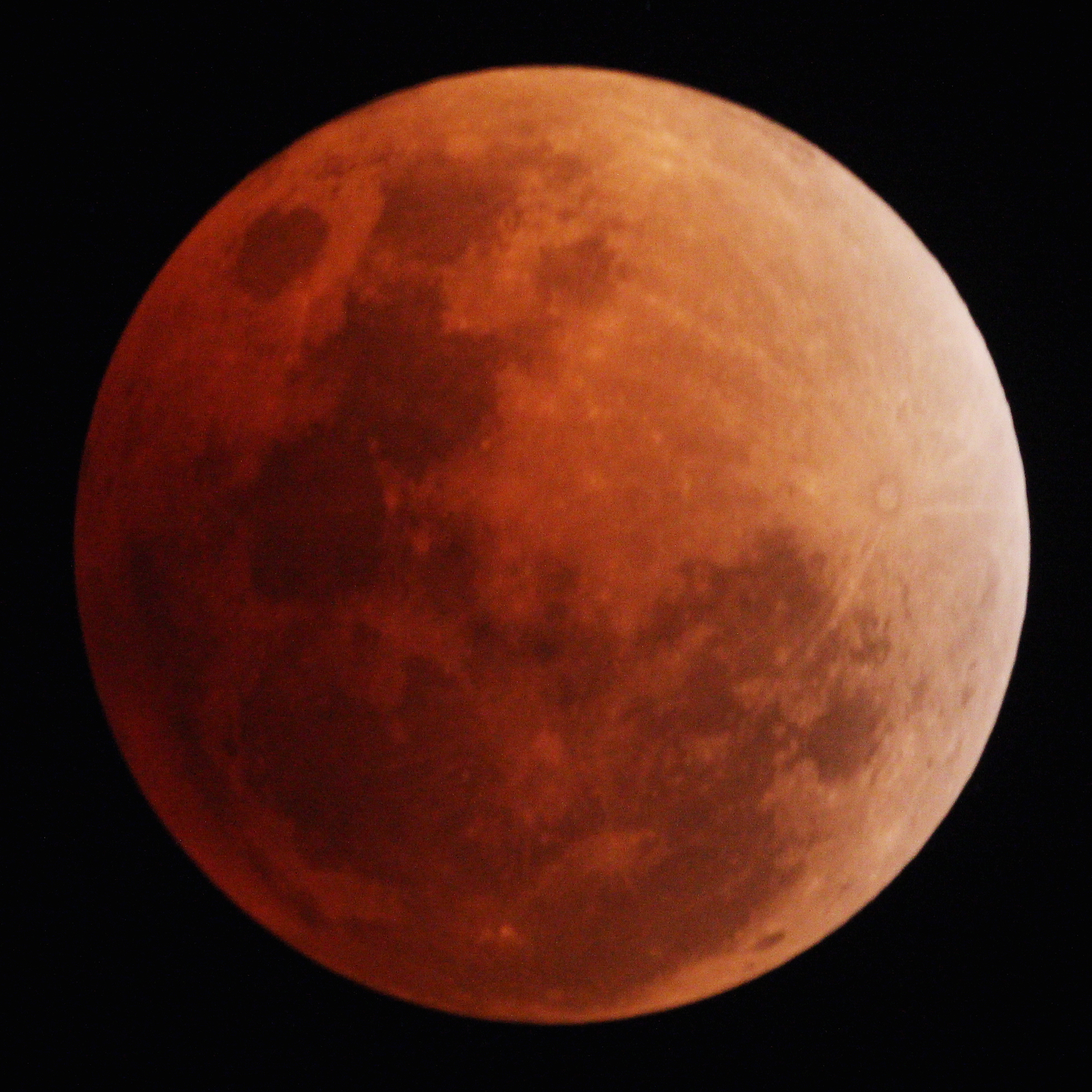
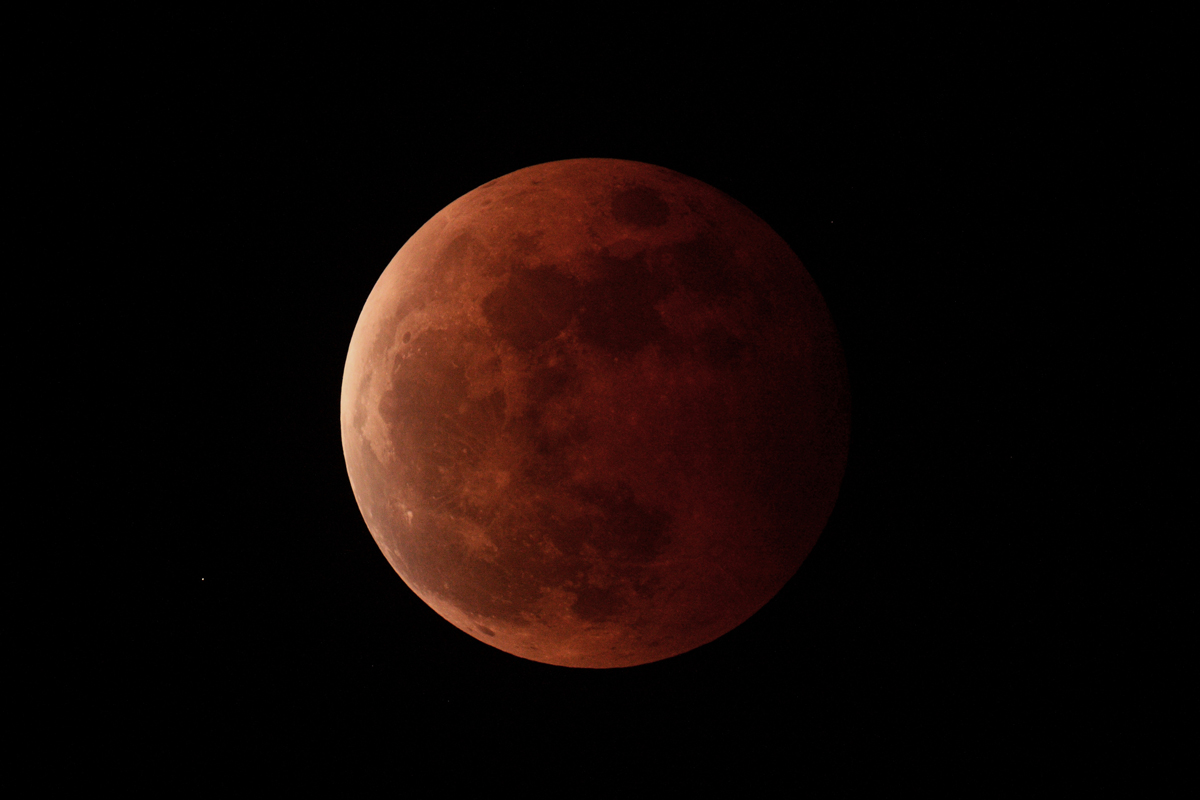
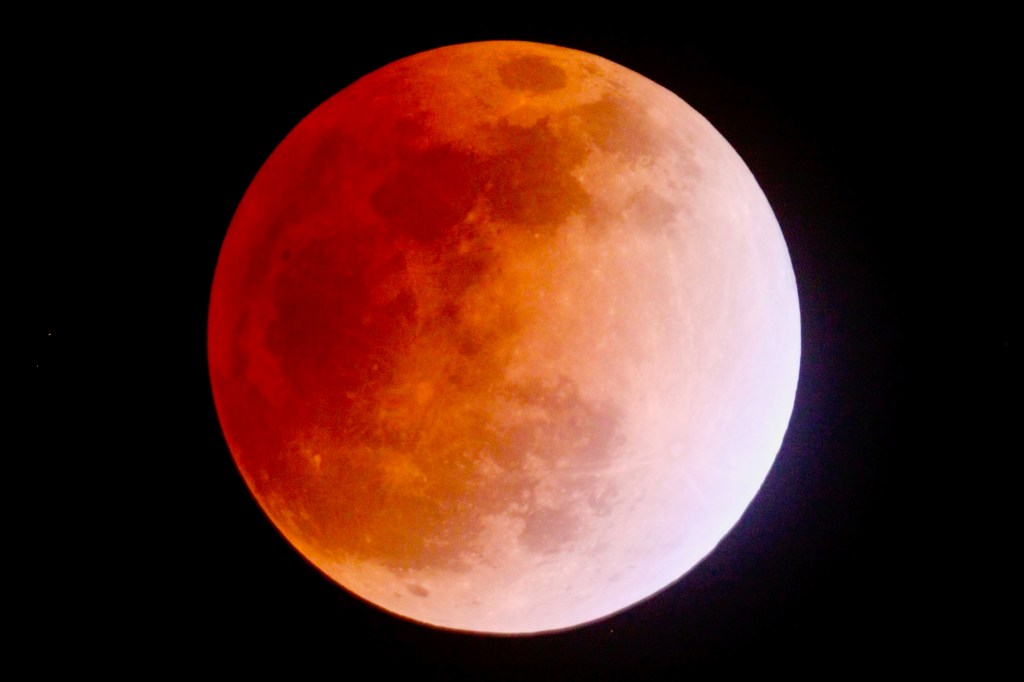
Total Lunar Eclipse taken with a Sky-Watcher Equinox 100ED and a DSLR camera on January 31, 2018 at the PAGASA Observatory in UP Diliman, Quezon City, Philippines
Total Lunar Eclipse on January 31, 2018
For a complete list of astrophoto images, click here.
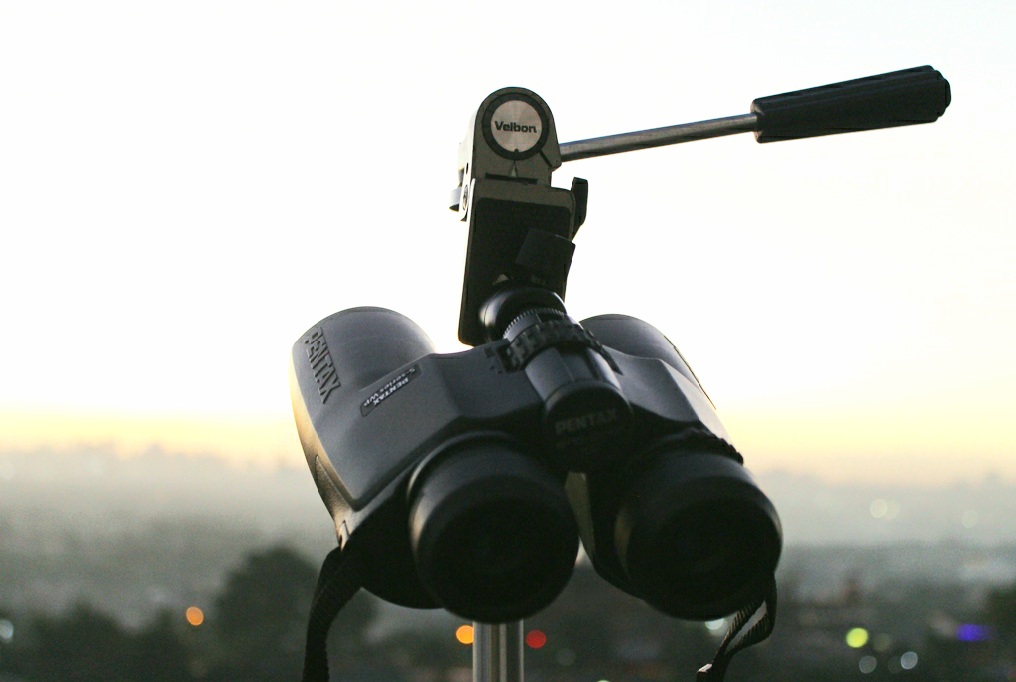
This is a Pentax 10 by 50 S-series waterproof binoculars for terrestrial and astronomical use. It features high quality multi-coated optics, waterproof build, multi-coated lens, internal focusing mechanism with focus lock, diopter adjustment to accommodate variations in focusing of the eyes, and equipped with socket for mounting with a tripod.
Pentax 10 by 50 binoculars
To view posts on DIY projects and astronomical equipment, click here.
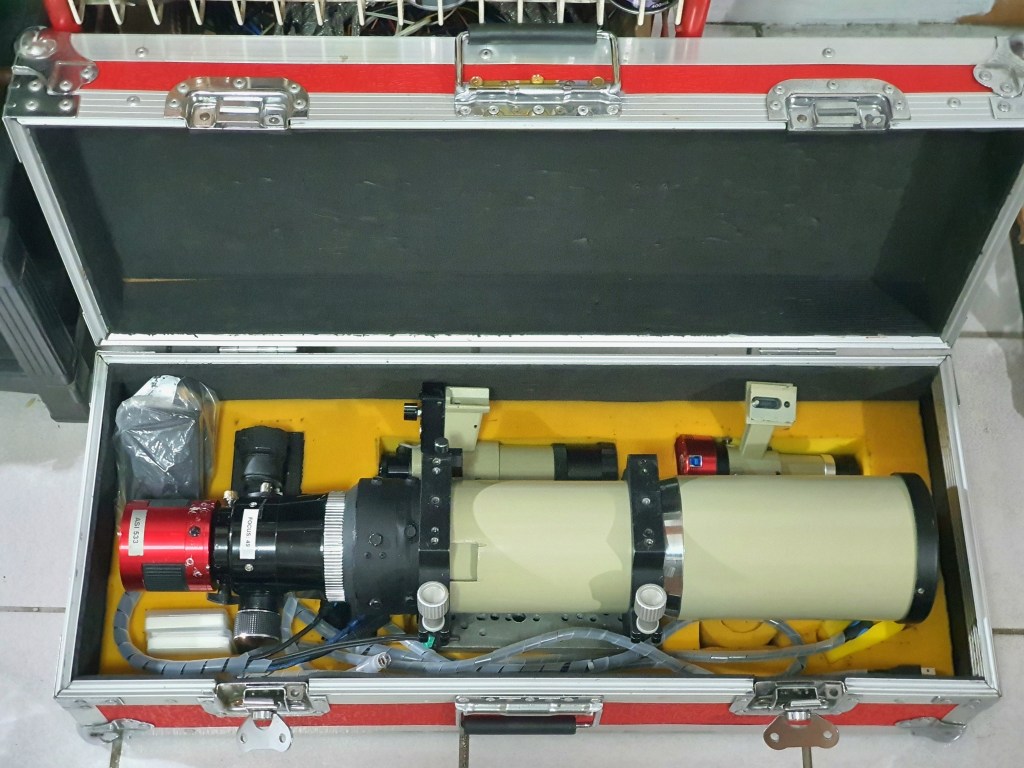
Here are some of the hard travel cases I use in moving my telescope and its accessories, especially when travelling to remote observing sites. These are repurposed standard cases for audio equipment. The dimensions in length, width, and height are within the allowable limit for local air travel.
Modified Sky-Watcher Equinox 100ED on an improvised telescope hard case. I’ve customized the foam paddings using improvised nichrome hot-wire cutter. I also use egg crate shaped foam paddings from a local foam supplier. Recently, we went to a dark sky site with these hard cases protecting the telescope.
To view posts on DIY projects and astronomical equipment, click here.
This image of Mars was taken during one of its closest approaches to Earth, revealing the dark and light patches on its surface, along with white clouds in its atmosphere. I used an SPC900NC web camera to capture this image.
Mars imaged with a telescope and a web camera
For a complete list of astrophoto images, click here.
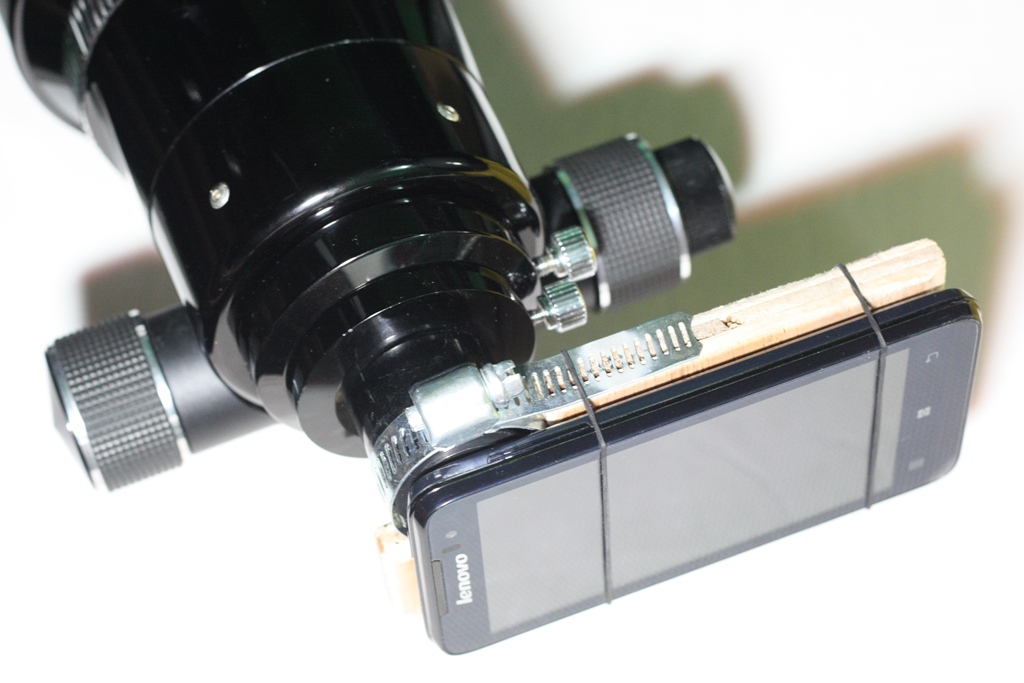
Smartphones can be used to image the moon by holding it next to the eyepiece of a telescope. For smart phone cameras, a mid-power eyepiece such as a 25 mm eyepiece yields good results. This imaging method is called afocal imaging, in which a camera with its lens is mounted next to another image-forming optical system such as a telescope or a pair of binoculars. An inexpensive smartphone-to-telescope may be built using inexpensive materials using a piece of plywood, hose clamp, screw, and rubber bands. Secure the hose clamp onto the plywood using screws. Use the hose clamp to hold the eyepiece in place. Use rubber bands to hold the smart phone camera and adjust as necessary.
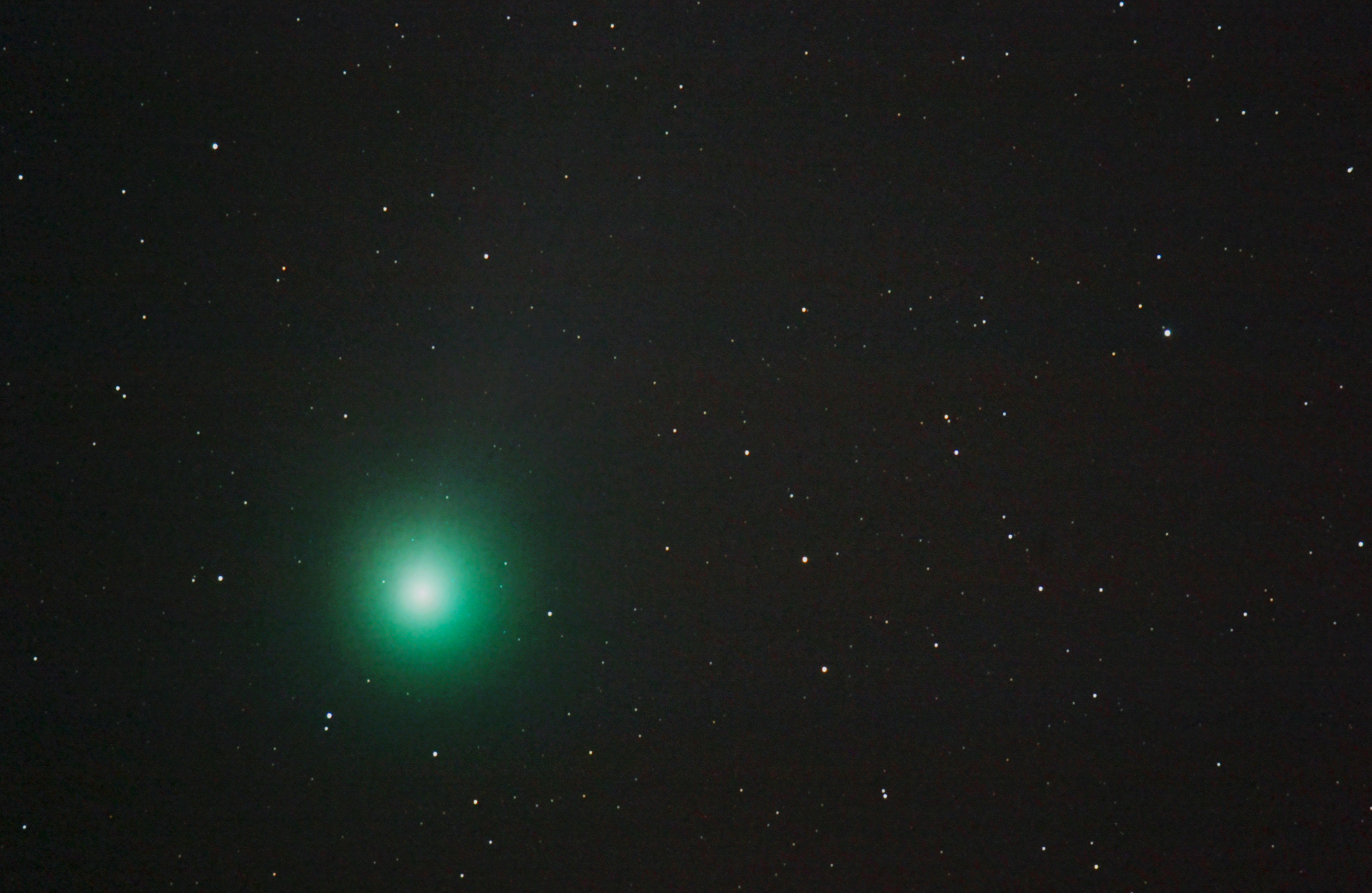
Comet Lovejoy C2014 Q2 taken with a Sky-Watcher Equinox 100ED and a tracking mount. The comet’s green coma and hint of its tail, are visible in this photo. Comets are difficult to image because they move relative to the stars, producing a trail. Processing software corrects for this drift and stacks the image of the comet without producing a trail.
Comet Lovejoy C2014 Q2
For a complete list of astrophoto images, click here.
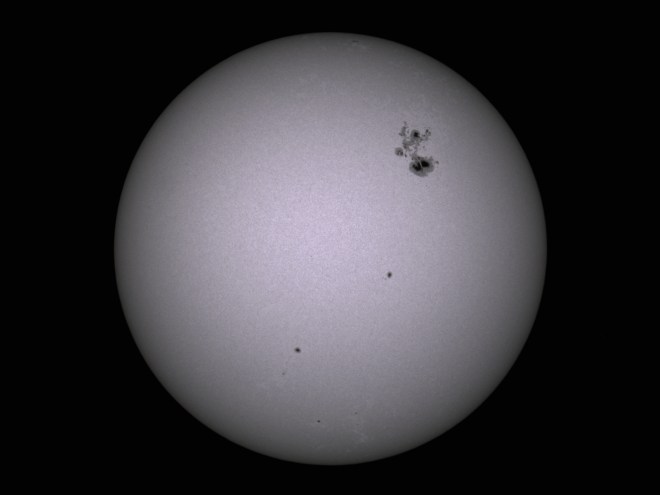
This is an image of the Sun showing the sunspot AR 12192, the largest sunspot of the solar cycle 2010 to 2020. This image was taken at solar maximum when the sun is most active during a cycle. It was imaged in October 2014 in Quezon City using a Sky-Watcher Equinox 100ED and a Baader ND 5 solar filter. Never observe or image the Sun without the proper solar filters.
Sunspot AR12192 imaged with a Sky-Watcher Equinox 100ED
For a complete list of astrophoto images, click here.
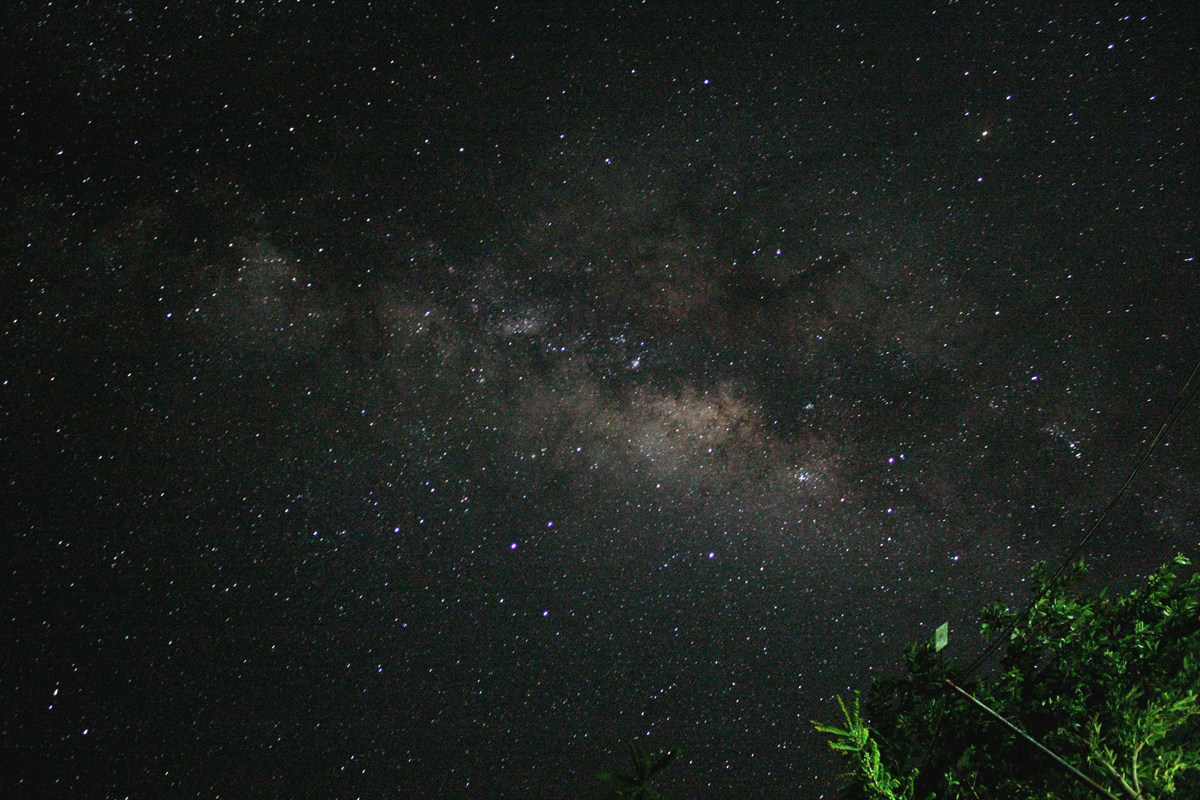
Milky Way galaxy imaged with a Canon 450D DSLR camera, 18-55 mm lens set at 18 mm, f/3.5, 30 sec exposure, ISO 1600, August 23, 2014, Camarines Norte, Philippines.
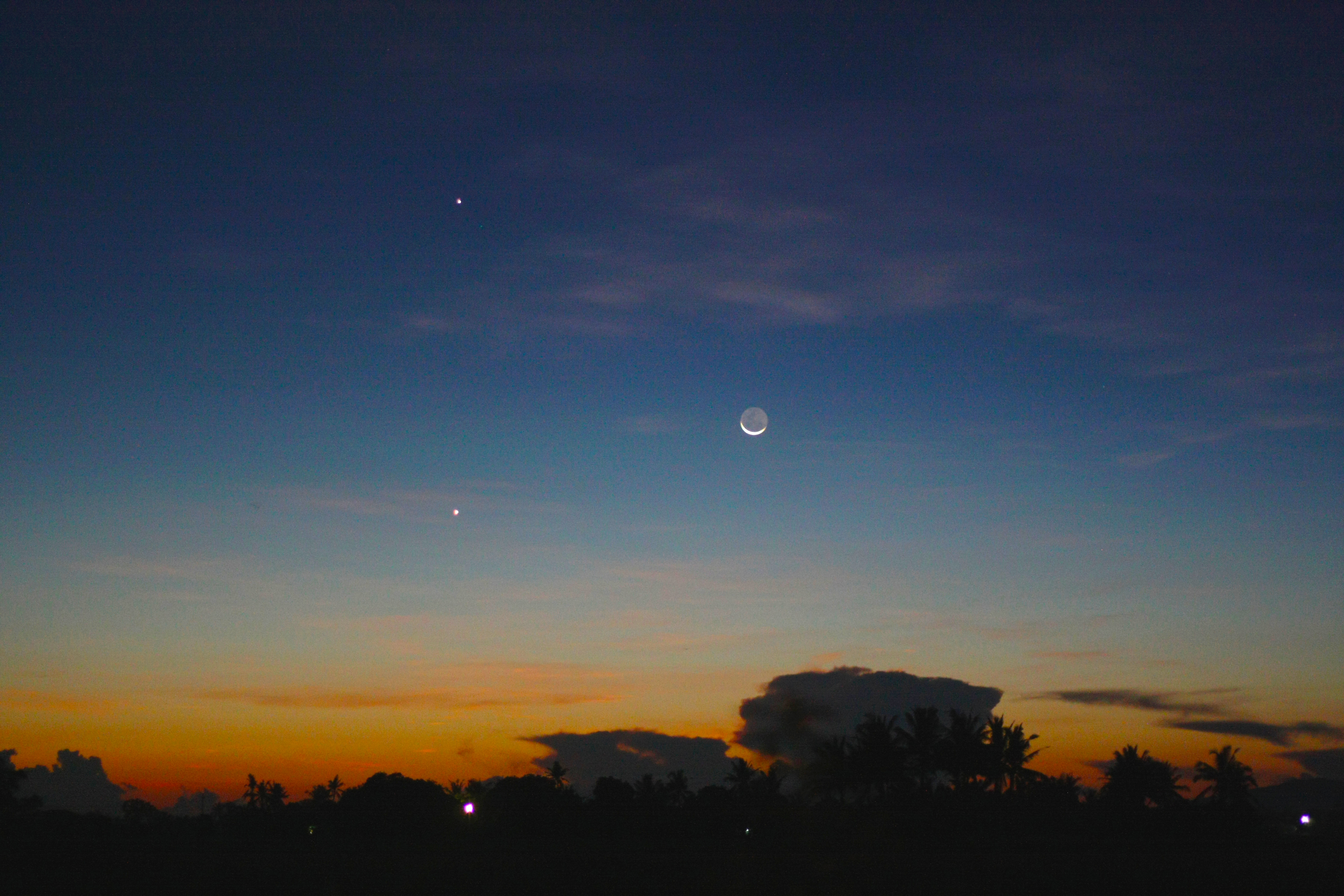
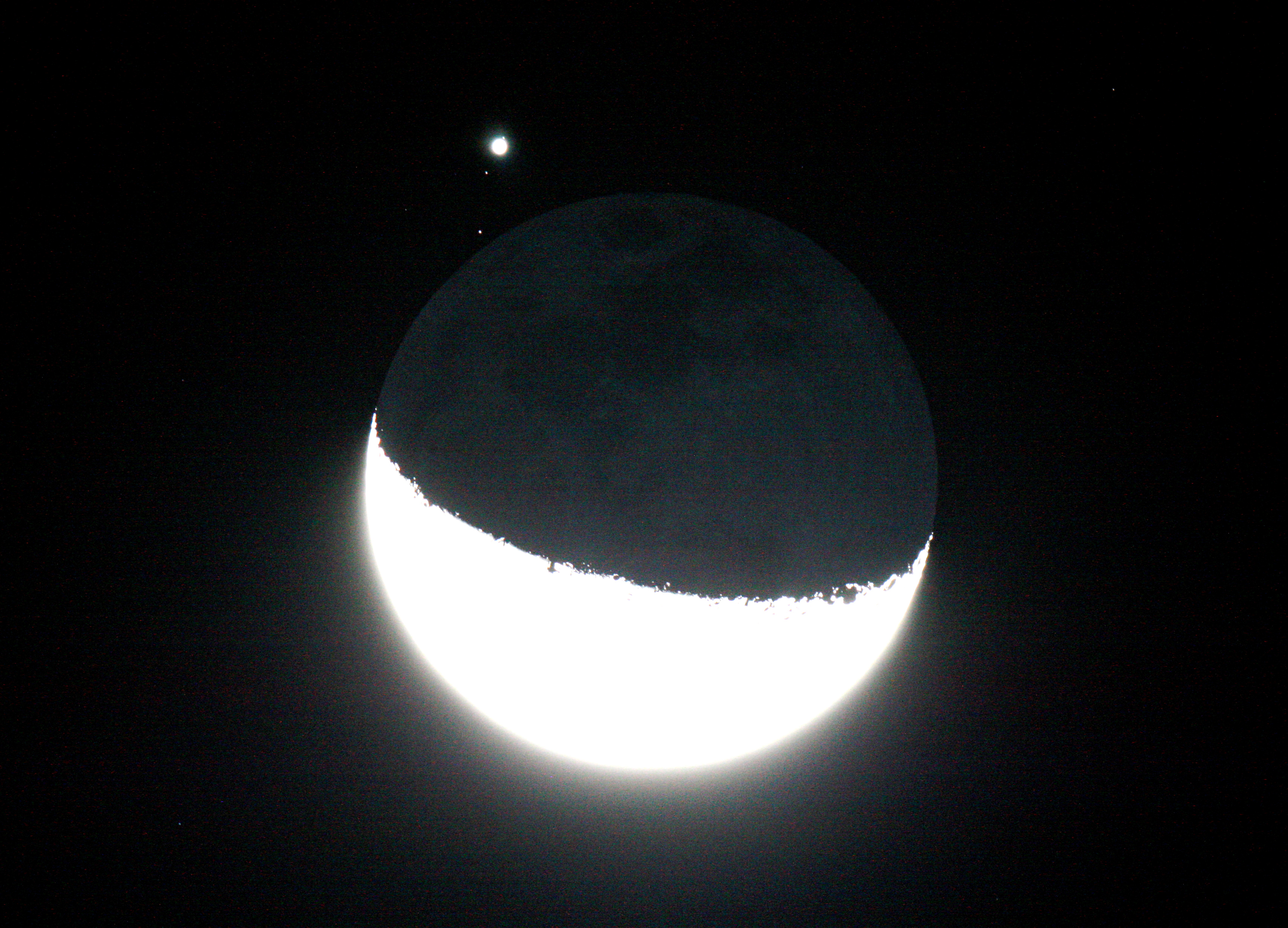
Jupiter (top left), Venus (lower left), and the moon form a celestial triangle on August 24, 2014 at 5 am local time, imaged with a Canon 450D and a 50 mm f/1.8 lens on a tripod
Imaged with a Canon 450D and a 50 mm f/1.8 lens on a tripod
For a complete list of astrophoto images, click here.
Dew heaters or heater pads are telescopes accessories used to prevent dew from forming on the telescope’s lens. During long imaging sessions, it is not uncommon for the main lens of refractors to form dew. A heater is used to keep the objective lens at a temperature a few degrees C above the dew point to prevent the formation of dew.
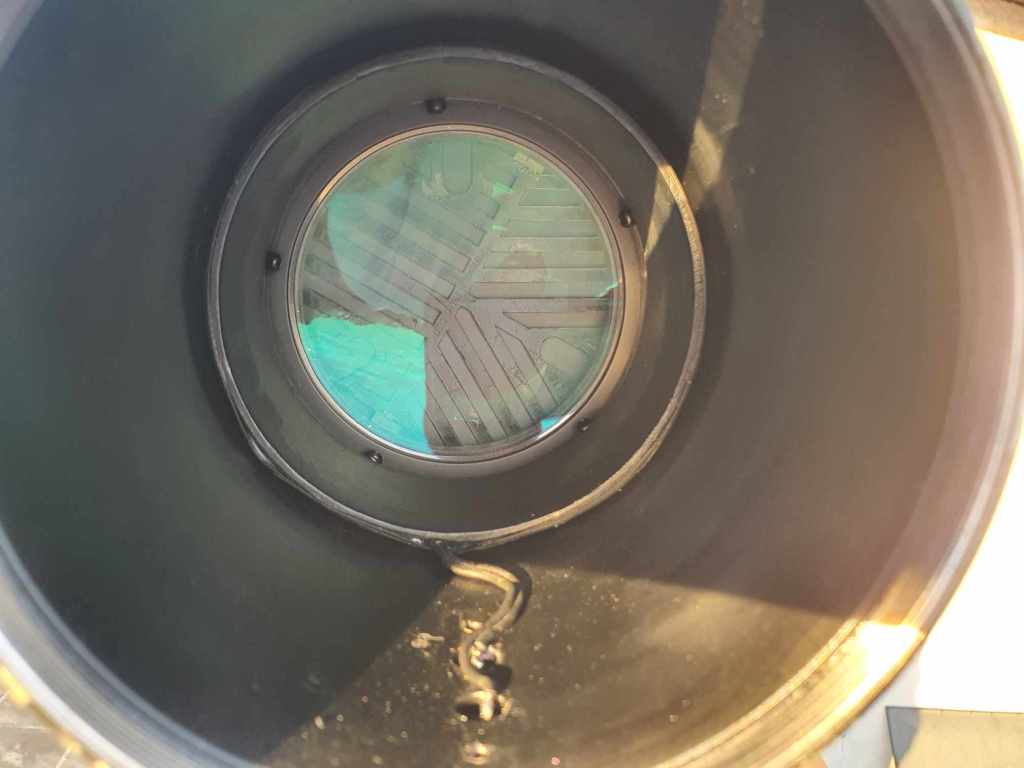
I used nichrome wires from a local electronics store to build several DIY heater pads for my telescope, which I find useful in keeping the lenses free from dew especially when imaging in remote observing sites. I prefer to use place the heater inside the optical tube assembly, making sure that it does not obstruct the light path.
To view posts on DIY projects and astronomical equipment, click here.
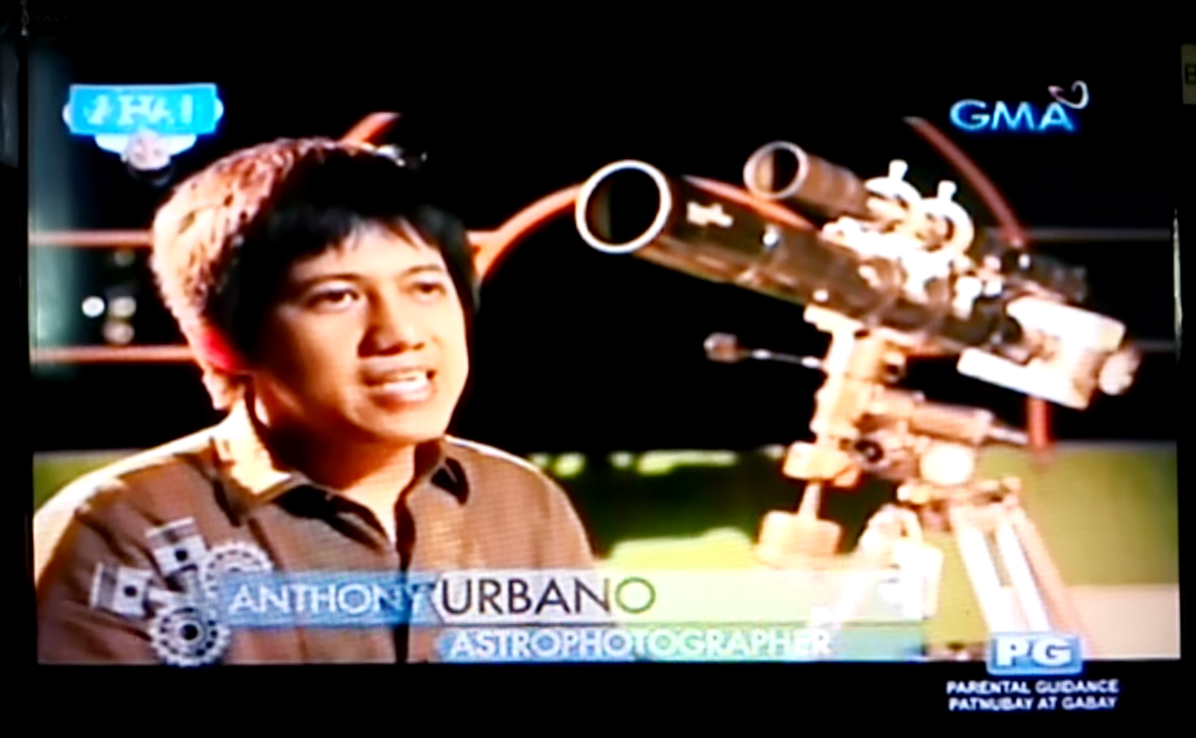
I had an interview with GMA 7 on imaging planets, galaxies, and nebula using a telescope, as part of a feature on various types of photography. The segment was aired last March 2, 2014, at AHA
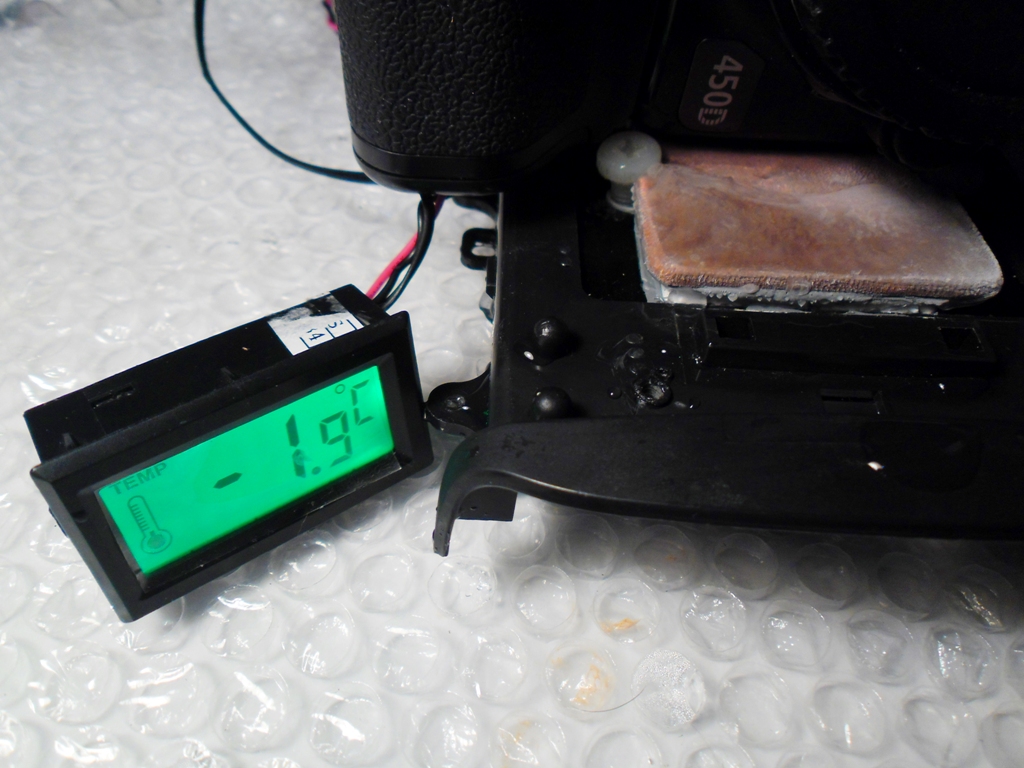
During an exposure, the imaging sensor of a DSLR warms up, resulting to noisy images. By cooling down the sensor, it is possible to eliminate or somehow minimize this thermal noise.
Cooling the camera’s sensor using a Peltier module
I have made a number of attempts to accomplish this with a Canon 450D and a Peltier module, however, it appears it is very difficult to implement without running into problems such as condensation and frosting.
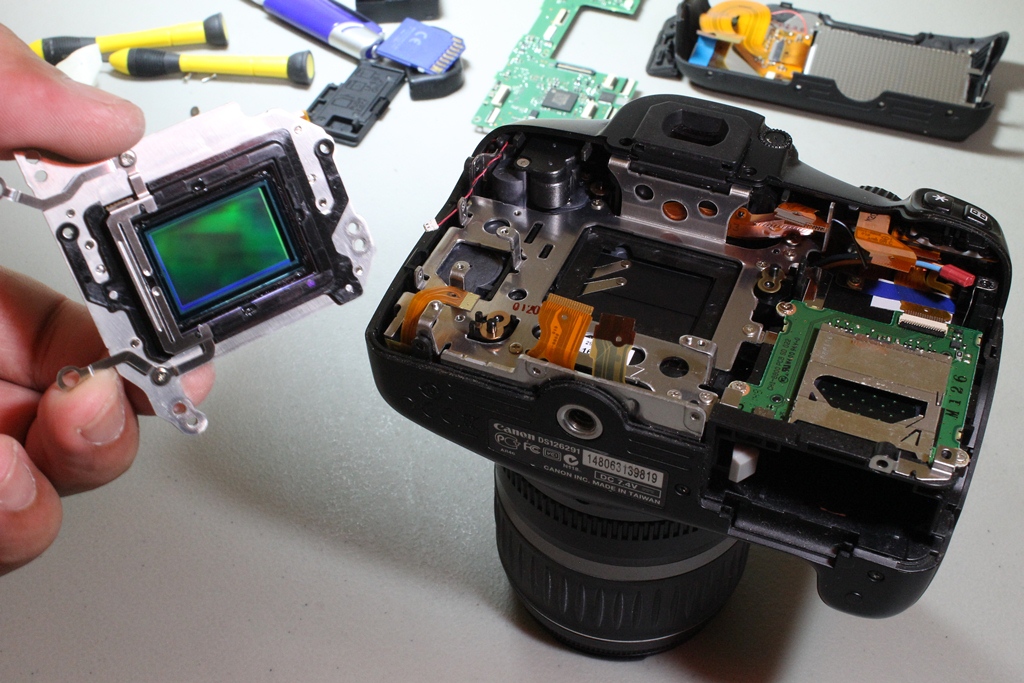
I have also performed filter modifications on a number of DSLR cameras (Canon 450D, 700D, 1200D, 500D, 1000D, 1100D, Nikon D3100, and Fuji X-A1) for me and my colleagues. It involves the removal of the stock UV-IR filter, making the camera more sensitive to H-alpha wavelengths. This modification is helpful only when shooting targets with H-alpha emissions, as most DSLR camera’s standard (stock) filter blocks this part of the spectrum.
Take note of the shift in white balance (reddish hue), which is to be expected in this type of modification. Focus will be affected, your camera may no longer focus with compatible lenses unless you add a filter between the lens and the sensor, to address the shift in focus and to filter out UV-IR. If used with telescopes, you need a DSLR-to-telescope adapter and achieve focus using the telescope’s focuser.
The moon is also known to eclipse planets, and one such event involving Jupiter happened in August 2012. This event is called the lunar occultation of Jupiter, and is a relatively rare astronomical event. The event was visible throughout the country. I was able to observe and photograph it from Quezon City, Philippines, using a Sky-Watcher Equinox 100ED and a DSLR camera.
Lunar Occultation of Jupiter, August 2012
For a complete list of astrophoto images, click here.
A rare astronomical event called the Venus Transit of the Sun occurred in June 2012, visible in the Philippines. The planet Venus, appearing as a small dot, is observed to transit or move across the disk of the Sun, imaged with a Sky-Watcher Equinox 100ED, a DSLR camera, and a Baader ND 5.0 solar filter. Venus and a number of sunspots are visible in the photo.
Venus Transit of 2012
For a complete list of astrophoto images, click here.
This photo was taken in December 2011, in Antipolo, Philippines, during a total lunar eclipse. The moon appears red during totality and as it dims (in contrast to a bright full moon), the faint stars surrounding the moon becomes visible!
2011 Total Lunar Eclipse | Sky-Watcher 4 in f/9 refractor
For a complete list of astrophoto images, click here.
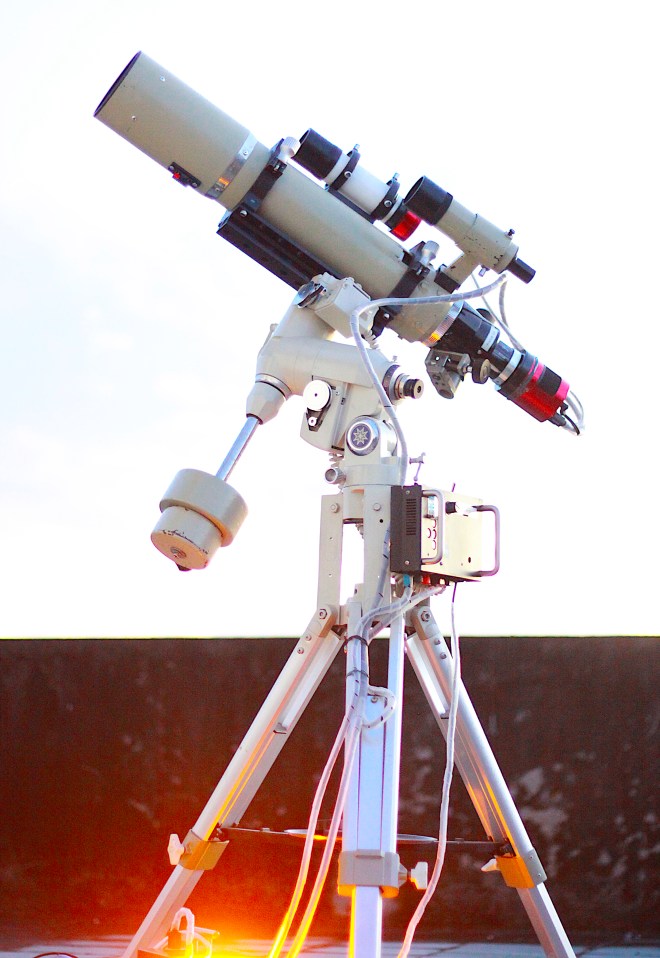
The 2011 Sky-Watcher Equinox 100 ED 4 in f/9 refractor is my first telescope and used both for visual observation and astrophotography. The Optical Tube Assembly (OTA) features a 4-in f/9 extra-low dispersion (ED) apochromatic (APO) lens design.
Modified Sky-Watcher Equinox 100ED at f/5.57 (100 mm aperture, 557 mm focal length)
It has a 2-inch dual-speed Crayford focuser with a thumbscrew underneath for locking the draw tube. The telescope comes with aluminum-lined wooden carrying case. It is supplied with two eyepieces: 25 mm and 5 mm. Supplied also is a 90-degree 2-inch diagonal mirror and an 8 by 50 finder scope.
The telescope has undergone various modifications including the installation of a DIY reducer, making the telescope shorter and faster (from f/9 to currently at f/5.57) and also reducing the tube length to about 55 cm. The effective focal length is now 557 mm (from the native 900 mm). When used with a Hotech 2 inch field flattener, the effective focal length is 554 mm.




 Night Sky in Focus