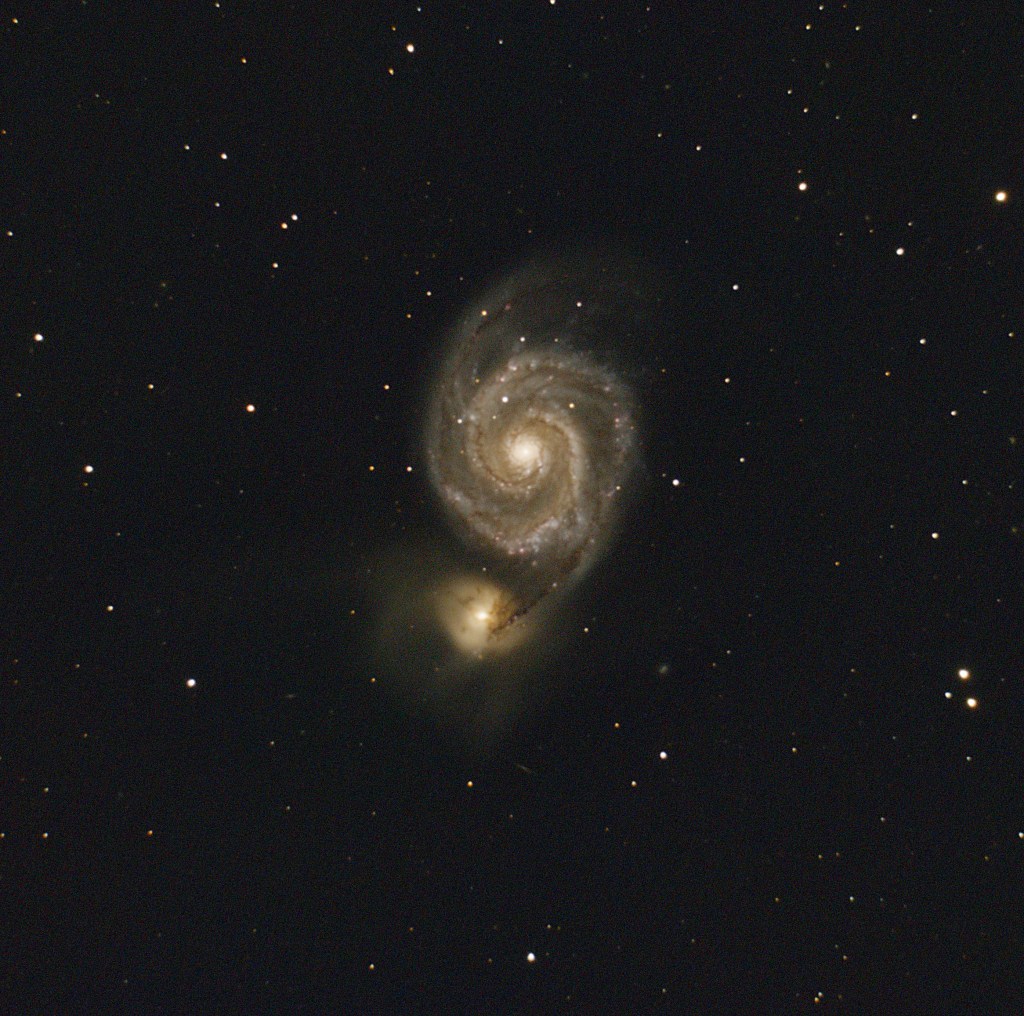
Whirlpool Galaxy M51 imaged with an 8 inch SCT at 1140 mm focal length, an ASI 533MC astronomy camera with UV-IR filter, DIY reducer, and tracked with a restored Meade LXD75 mount. M51 is relatively bright and may be visible through a small telescope. Use the stars of the Big Dipper to find M51.
M51, 2 hours exposure
For a complete list of astrophoto images, click here.
To find the Crab Nebula, locate Auriga first and then scan the region south of Auriga, near the bright star in Taurus. A narrowband filter helps in increasing the contrast between the nebula and the sky (such as using a 12 nm OIII for visual use, or 6 nm dual-band OIII and H-alpha for photography). Due to the nebula’s small angular size, a telescope with 4 inch aperture or larger with relatively long focal length is recommended for this target.
Crab Nebula M1, unguided image with an 8 inch SCT at 1140 mm focal length on a DIY reducer, an ASI533MC cooled astronomy camera, dual-band H-alpha and O-III filter, and a Meade LXD75 mount.
Crab Nebula, 1140 mm, 1 hour unguided exposure
For a complete list of astrophoto images, click here.
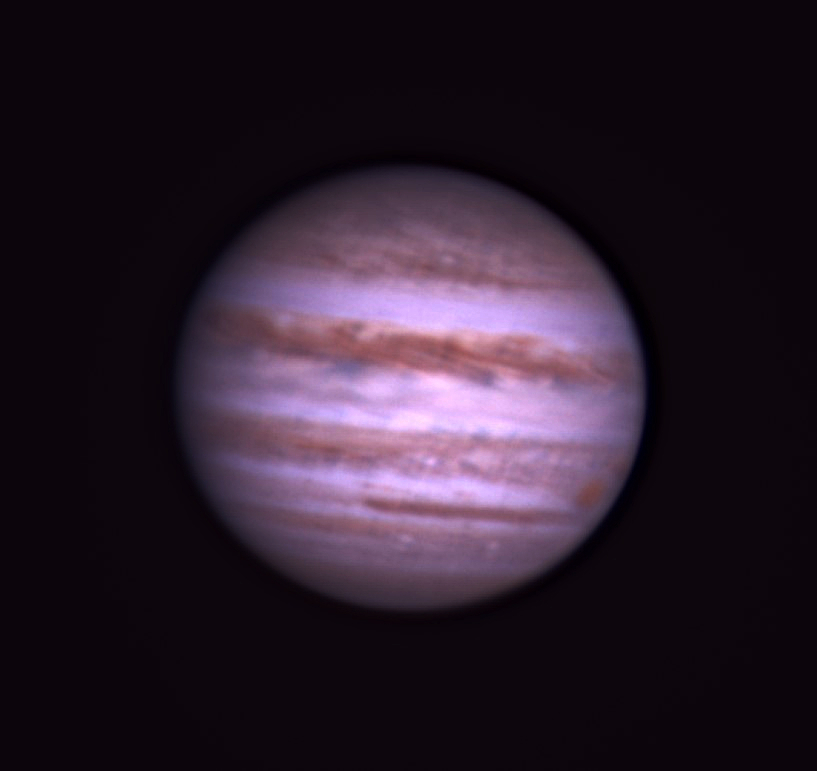
This a test image of Jupiter using a Celestron 8 inch SCT on a Meade LXD75 tracking mount. This is a stack of 1500 frames imaged with an ASI 533 camera and a UV-IR filter through 4x Barlow lens. Sharpcap was used in recording RGB24 AVI file. Stacking done with AutoStakkert and wavelets adjustment in SIRIL.
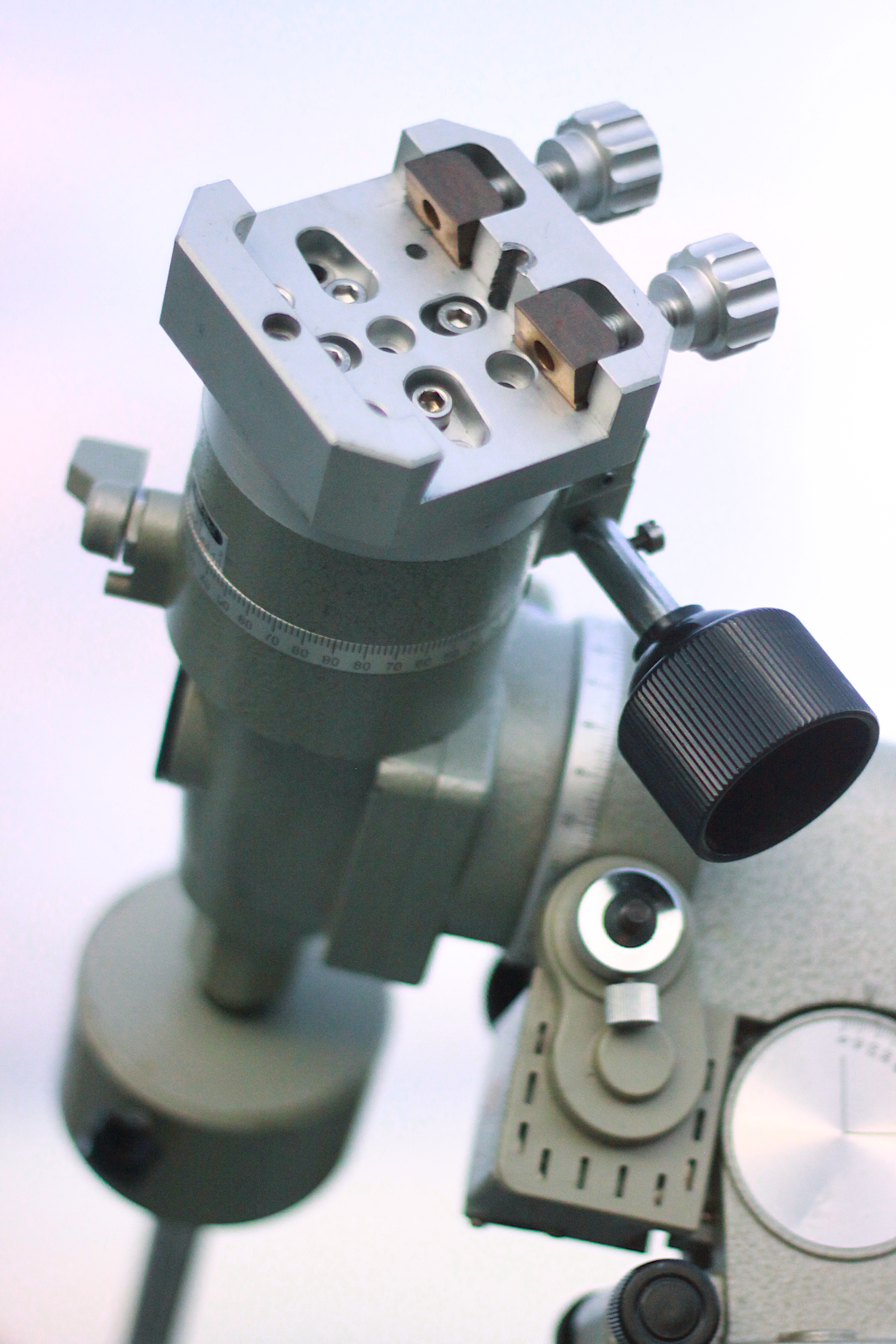
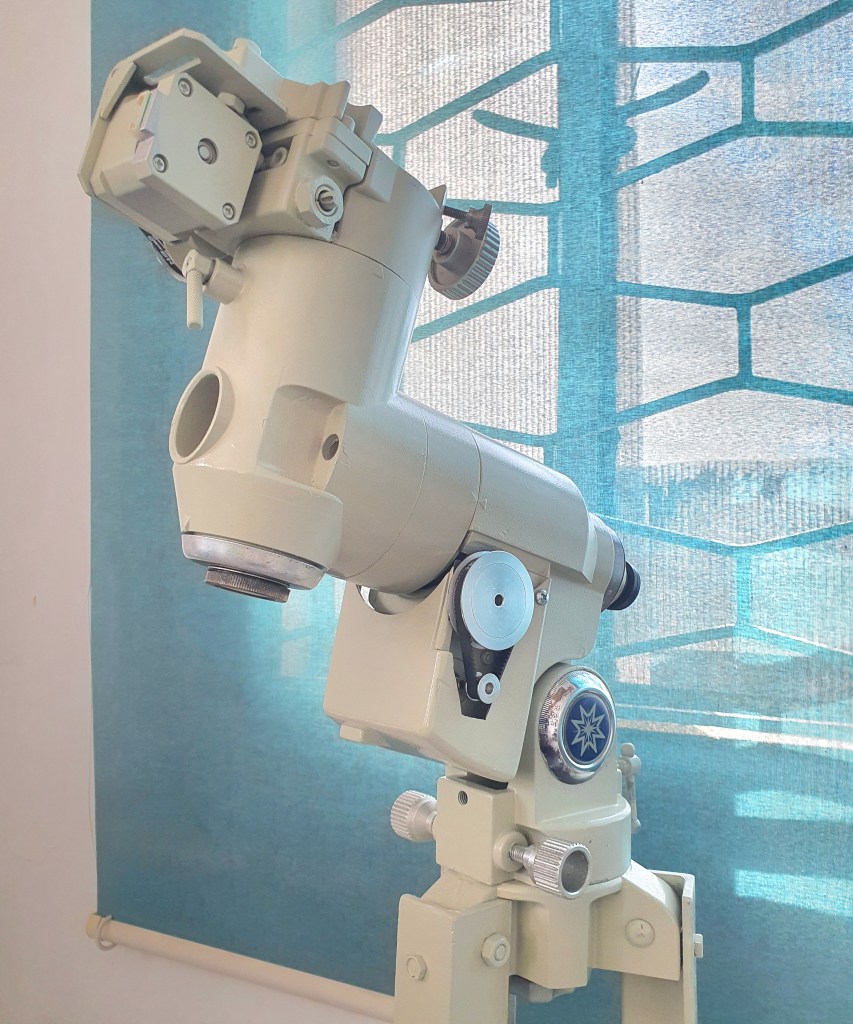
I have installed a dovetail clamp to my Vixen Super Polaris mount. This modification allows easier swapping between mounts and telescopes, since my two other telescope mounts (Meade LXD75 and Vixen Great Polaris) both have Vixen-style dovetail clamps.
Dovetail clamp
I removed the bar that the telescope’s saddle originally attaches to then drilled and tapped holes to fasten the dovetail clamp to the mount with screws. This clamp will be carrying a very light payload.
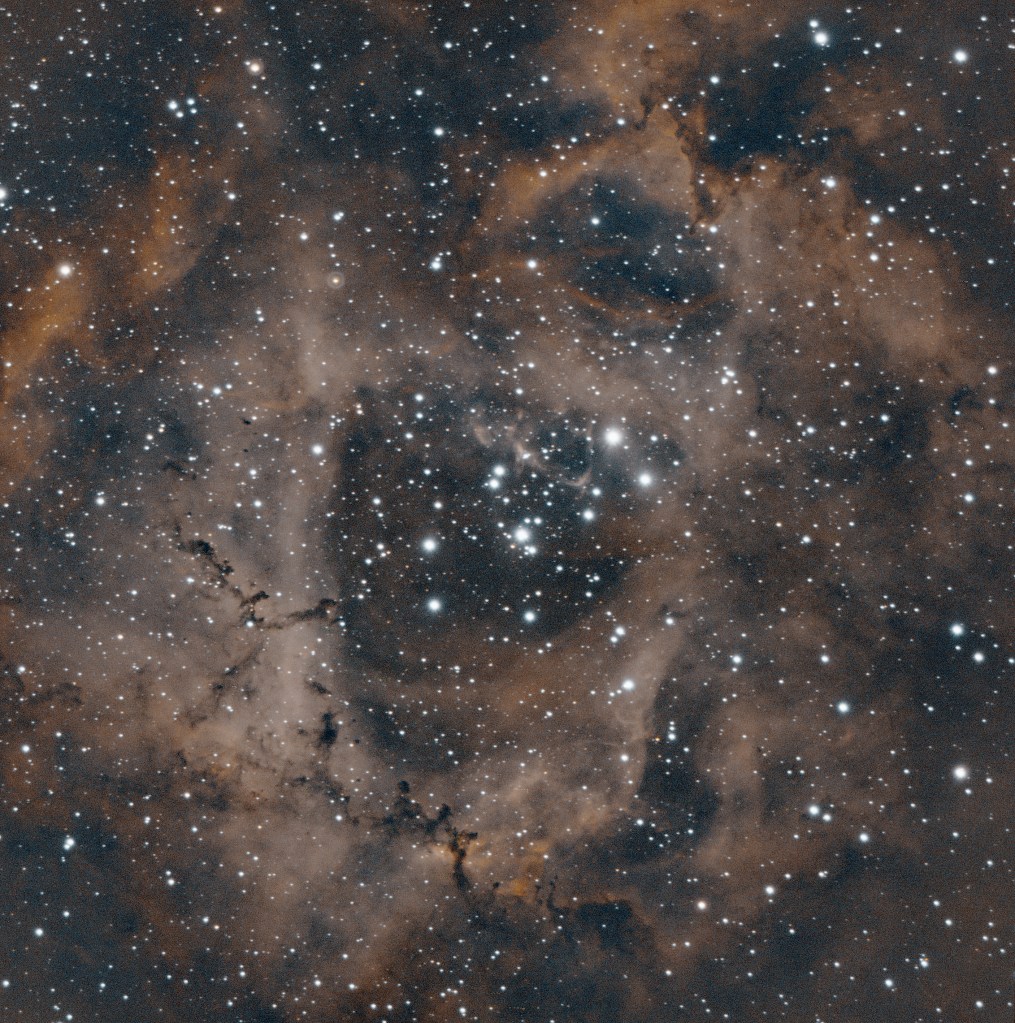
Rosette Nebula imaged with a Sky-Watcher 100ED with a DIY focal reducer, ASI 533MC cooled astronomy camera, dual band H-alpha and O-III filter. Guided tracking using an ASI 174MM with 50 mm f/4 guide scope and a Meade LXD75 mount.
Rosette Nebula, 1 hour exposure
For a complete list of astrophoto images, click here.
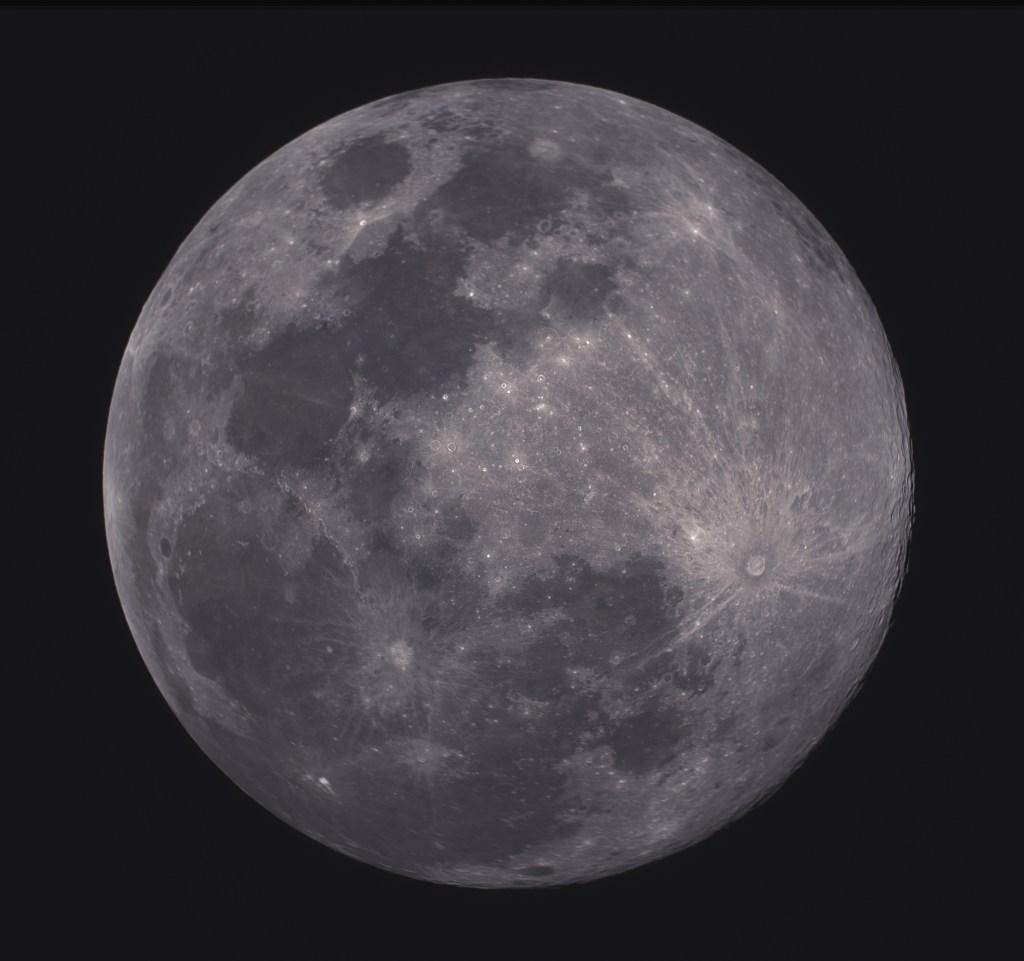
The moon’s darker surface becomes visible as it gets illuminated by sunlight reflected off the Earth. This phenomenon is called earthshine. This earthshine photo was imaged with a Sky-Watcher Equinox 100ED and an ASI 533MC astronomy camera on a Meade LXD75 tracking mount.
Flame and Horsehead Nebula in the constellation Orion imaged with a Sky-Watcher Equinox 100ED refractor at 608 mm focal length on DIY reducer, an ASI 533MC cooled astronomy camera, a dual band H-alpha and O-III filter, and an ASI 174MM guide camera. Tracking was done using a Meade LXD75 mount with DIY controller.
Flame and Horsehead Nebula M8, 4 hours exposure
For a complete list of astrophoto images, click here.
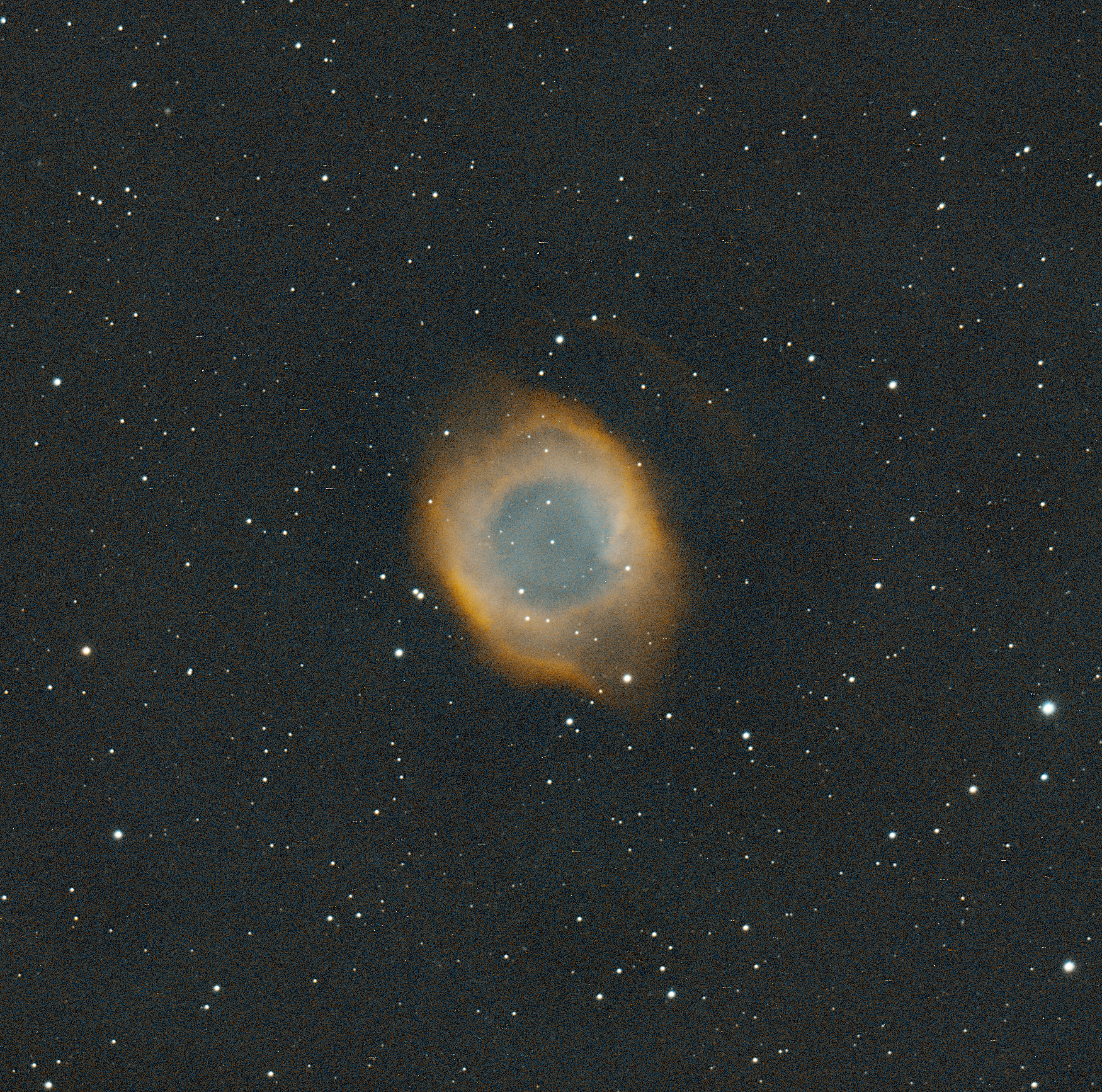
Helix Nebula imaged with a modified Sky-Watcher Equinox 100ED, ZWO duo nebula filter, and an ASI 533 astronomy camera at 608 mm focal length using a 0.67x DIY focal reducer, guided with a 50 mm guide scope and an ASI 174MM guide camera.
Helix Nebula imaged with 100 mm aperture at f/6, with DIY 0.67x focal reducer, 2 hours exposure
For a complete list of astrophoto images, click here.
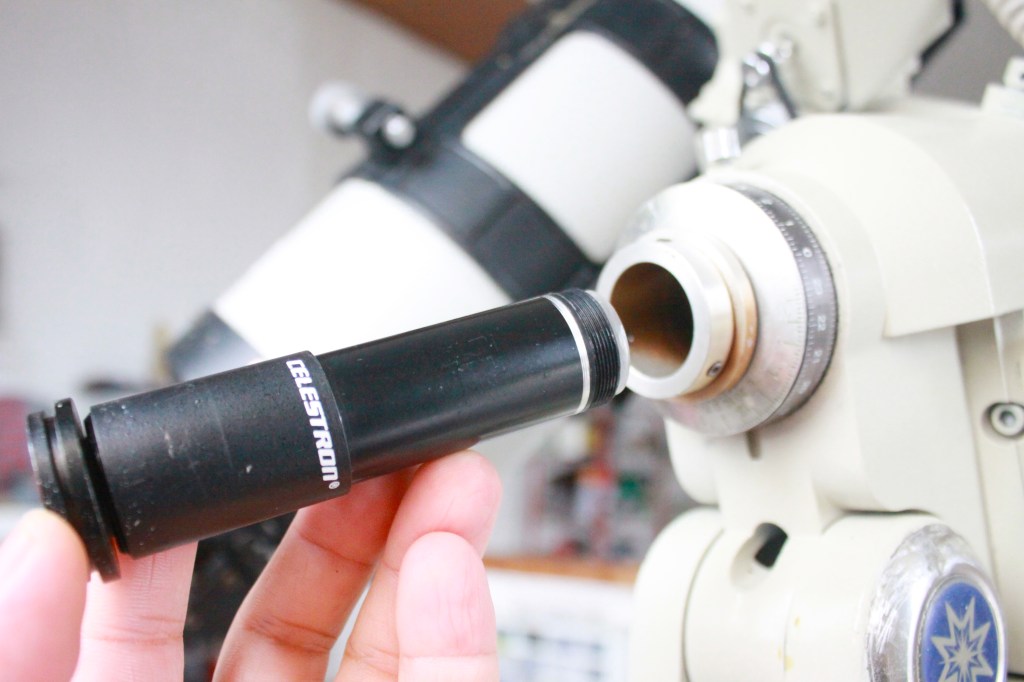
I have recently acquired a Meade LXD75 mount without a polar scope. I noticed that a small finder scope could fit in the polar scope slot, thus, serve as an improvised polar scope. I looked for a small finder scope and it so happened that an 8 x 20 Celestron finder fits the slot. I have made some modification in the finder scope’s barrel to make sure it clears the polar scope slot. Notice that the finder scope’s barrel has been modified, with a smaller barrel diameter towards the objective lens, otherwise it would not fit all the way through and protrude too much.
A repurposed 8 x 20 Celestron finder scope used as a polar scope
I tested the improvised polar scope on a clear night to see if I would be able to spot Polaris and roughly polar-align the telescope. While it lacks a star map overlay, a usual feature in a standard polar scope, it has a cross hair for tracking the position of Polaris relative to the position of the mount’s RA axis.
For astrophotography, a more accurate polar alignment method is needed such as the drift alignment method. In drift alignment method, when the telescope is pointed and tracking a star in the east, minimize the north-south drift in the eyepiece by moving the polar axis higher or lower (altitude adjustment). When the telescope is pointed and tracking a star in the celestial equator (near meridian), minimize the north-south drift by moving the polar axis to the left or to the right (azimuth adjustment).
The original controller of this Meade LXD75 mount has failed and a DIY OnStep controller was used to repair the mount and restore its tracking and go-to capability. I have installed RA and declination motors and used an Arduino microcontroller to control the motors. Just like the mounts typical of this class and era, it has a 144:1 main shaft gear reduction, and looks very similar to the Vixen Great Polaris mount. It takes 144 full rotations of the worm to rotate the RA or declination shaft 360 degrees.
I used NEMA 17 stepper motors on an L-brackets with 16-teeth and 60-teeth pulley and belt drive system for each axis. The total steps are 200 steps * 60/16 reduction * 144/1 teeth worm drive with 1/64 micro-stepping, at 6, 912, 000 per 360 degrees, or 19,200 per degree.
The mount uses an Arduino Mega 2560 as the main controller board, a pair of LV8729 stepper motor driver, and an HC-05 Bluetooth module (which connects to the OnStep Android app). It is powered by a 12V 12A power supply. To watch a video of this Meade LDX75 OnStep conversion during testing, click here.
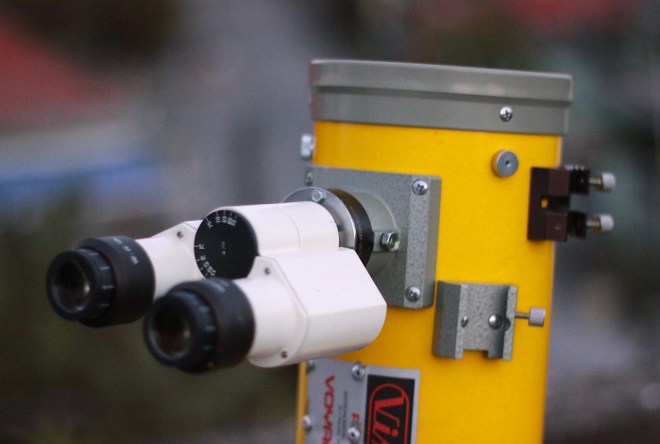
I attached a binocular eyepiece (or binoviewer) repurposed from an old microscope to a reflecting telescope. A beam splitter prism splits the light and send it to two eyepieces. The image viewed on each eyepiece will be less bright (half brightness), but since both eyes see the image, the view appears to have an enhanced perception of depth.
I’ve built a simple binocular parallelogram mount for my 10×50 binoculars, to provide precise and smooth motion during extended visual observations. A repurposed desktop lamp mount was sturdy enough to support the weight of a small binoculars. It can be moved around freely yet remain in place when pointed at a specific part of the sky.
The parallelogram mount attaches to a Vixen altitude-azimuth mount. It allows coarse and fine adjustments through the motion control knobs. The DIY mount connects directly to a standard binocular mount. It uses springs to provide balance instead of a counterweight, with short parallelogram bars and tighter fastening screws for better stability.
I’ve tested the parallelogram mount for lunar observations and for scanning the Milky Way. With this DIY mount, the binoculars can be pointed at any target from horizon to zenith with comfort and ease, eliminating the strain on the hand and unsteadiness associated with unmounted binoculars.
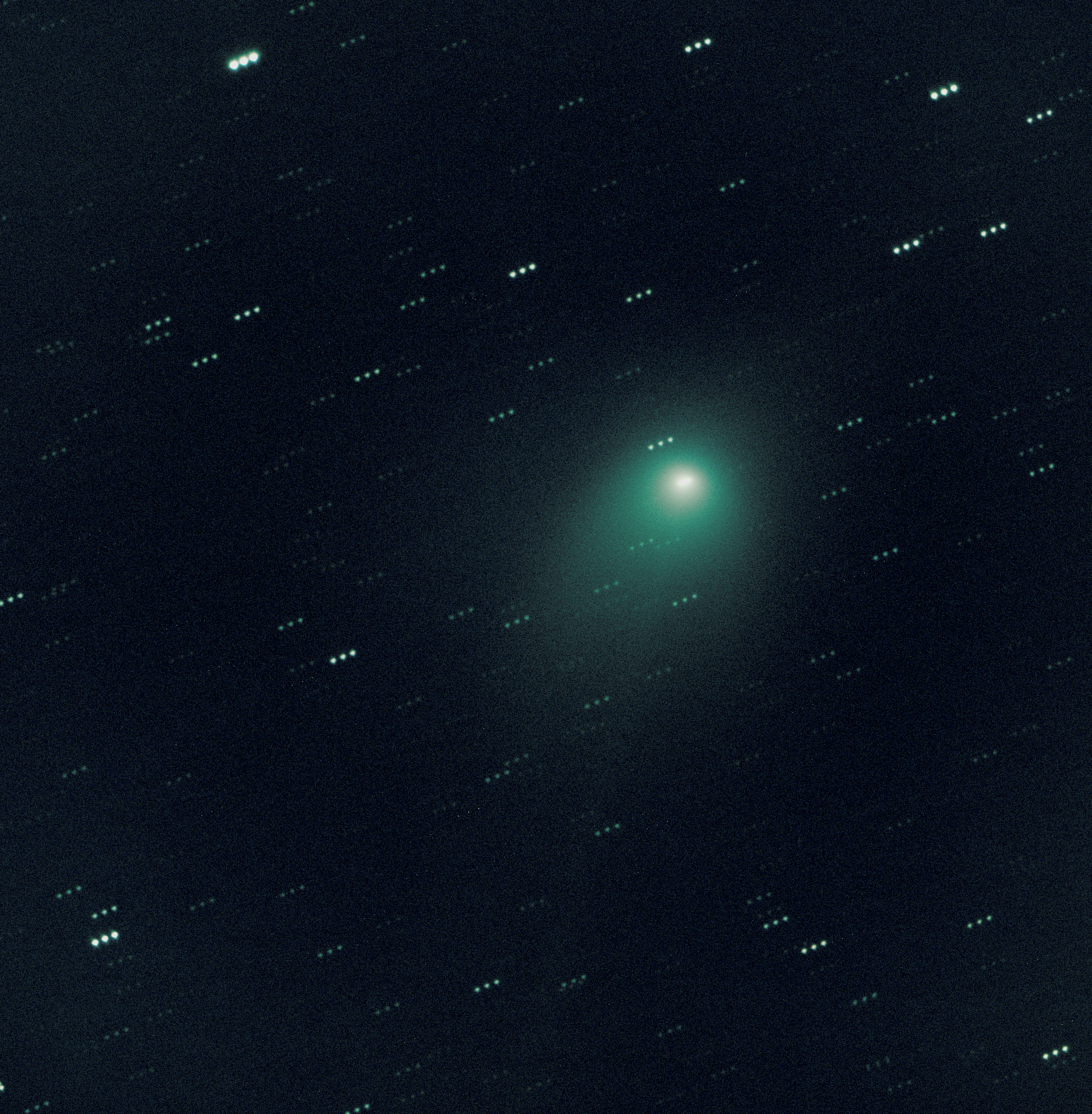
C/2022 E3 (ZTF) imaged in January 24, 2023 from Bacoor, Cavite, using a Sky-Watcher 100ED with a DIY focal reducer, ASI 533MC cooled astronomy camera, a UV-IR filter, and a motorized Vixen Grand Polaris mount. I have observed this comet to be at about the same surface brightness and apparent angular size with the M51 galaxy. It is barely detectable visually using a 10 by 50 binoculars or 8 by 50 finder scope.
C/2022 E3 (ZTF), stack of 3 images at 180 sec each
Totally-eclipsed moon imaged with a 114 mm f/7.8 reflector and an ASI 533MC astronomy camera on 08 November 2022 in Bacoor City, Philippines. The bright object near the moon is the planet Uranus during its conjunction with the moon coinciding with the total lunar eclipse. The moon and Uranus appear close together in this photo due to a chance alignment of Uranus, the moon, and the Earth. Uranus is much farther behind the moon, by a distance of about 2.7 billion kilometers.
Totally-eclipsed moon with Uranus imaged with a 114 mm f/7.8 reflector and an ASI 533MC astronomy camera on 08 November 2022 in Bacoor City, Philippines. To watch our guided lunar eclipse observation (livestream), click here.
For a complete list of astrophoto images, click here.
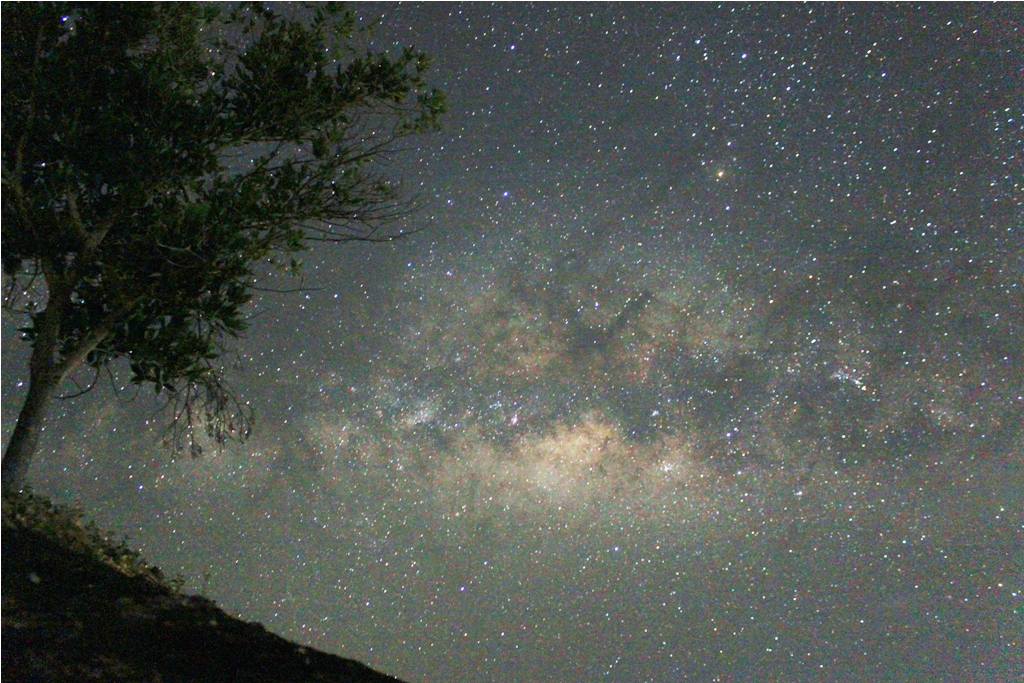
In the Philippines, the Milky Way is most prominent in the sky during months of March to May each year, visible to the unaided eye in the southeastern horizon at around 1 to 3 am.
Milky Way in Coron
Any DSLR camera or smartphone with good camera may be used to photograph the Milky Way. To capture the Milky Way:
Set the lens’ focal length to wide-field (18 mm). Milky way is a large target.
Due to Earth’s rotation, objects in the sky appear to move from east to west. Taking a long-exposure photo of stars using a camera on a non-tracking mount will produce trails. To compensate for the Earth’s rotation, a tracker as simple as a geared stepper motor can be used. This tracker is controller by a simple Arduino-based stepper controller.
Ultra-portable tracker for DSLR cameras
Any geared stepper motor with sufficient torque can be used as a drive mechanism. For this project, I used a stepper motor with a built-in 1:500 gearbox.
I simply attached an aluminum plate to the end shaft of the stepper. A ball head mount was then used to connect a DSLR to the plate. All the components can fit easily in a small camera bag. It is designed to carry only a very light payload such as a DSLR with a wide-field lens.
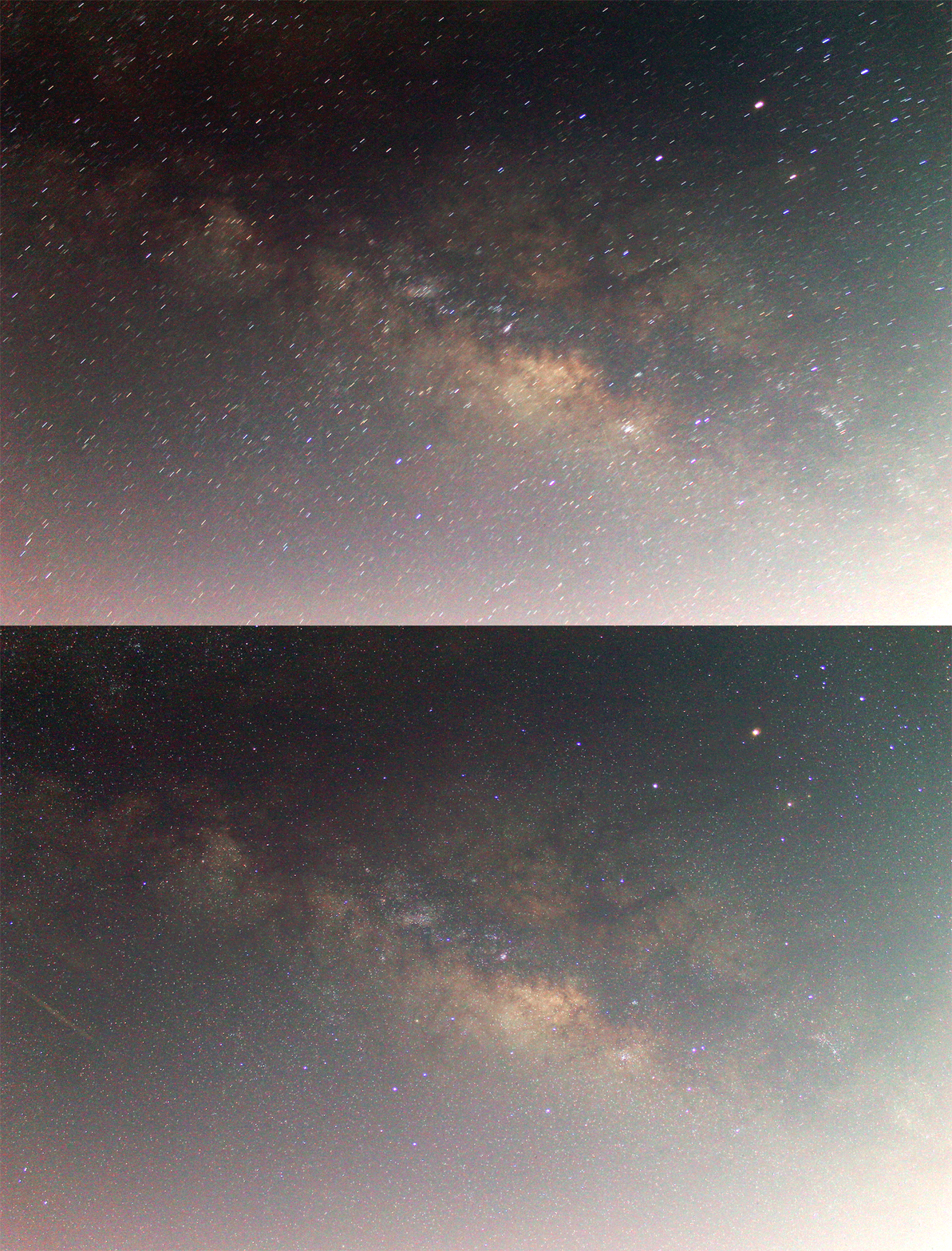
Milky Way imaged with an 18 mm lens at 90 seconds exposure, with and without tracking.
Calibrating the DIY Tracker
The tracker’s ‘tracking speed’ needs to match the actual movement of the sky. Calibrate your own tracker by making sure that the stepper does not rotate a bit too fast nor too slow. Align the tracker’s axis of rotation (or what is called the polar axis, which in this case, the stepper’s main shaft) with the north star Polaris (for observers in the southern hemisphere, point the tracker’s polar axis in the general direction of the Earth’s southern polar axis). Point the camera to any bright star. Turn the tracker on and start tracking the sky. Take a series of shots (with just enough exposure to reveal the position of stars). By looking at the live view images or photos taken, you should be able to tell whether or not the tracker is moving too fast or too slow.
Polar Alignment
Before attempting this method, make sure that you have already calibrated the tracker, that is, you’ve managed to achieve a correct tracking rate. When pointed to a star in the east, minimize the north-south drift by adjusting the polar axis higher or lower (altitude adjustment). When pointed to a star in the celestial equator (near meridian), minimize the north-south drift by adjusting the polar axis to the left or to the right (azimuth adjustment). The east-west drift is corrected by adjusting the tracker’s speed.
Telescope clock drive controller based on L293D and Arduino Uno board
//Simple clock drive controller by Anthony Urbano 06 September 2021. It uses an Arduino Uno and an L293D.

#include <AFMotor.h>                  //Go to SKETCH > INCLUDE LIBRARY > then lookup "Adafruit Motor Shield Library"
AF_Stepper motor1RA(24, 1);           //Initializing motor's steps per one full rotation; Connect the motor to M1 port
void setup()
{
}

void loop()
{
  motor1RA.setSpeed(100);              //Change the value to speed up or slow down the tracker
  motor1RA.step(1, FORWARD, DOUBLE);   //Motor takes 1 step forward; to reverse direction, replace FORWARD with BACKWARD
}
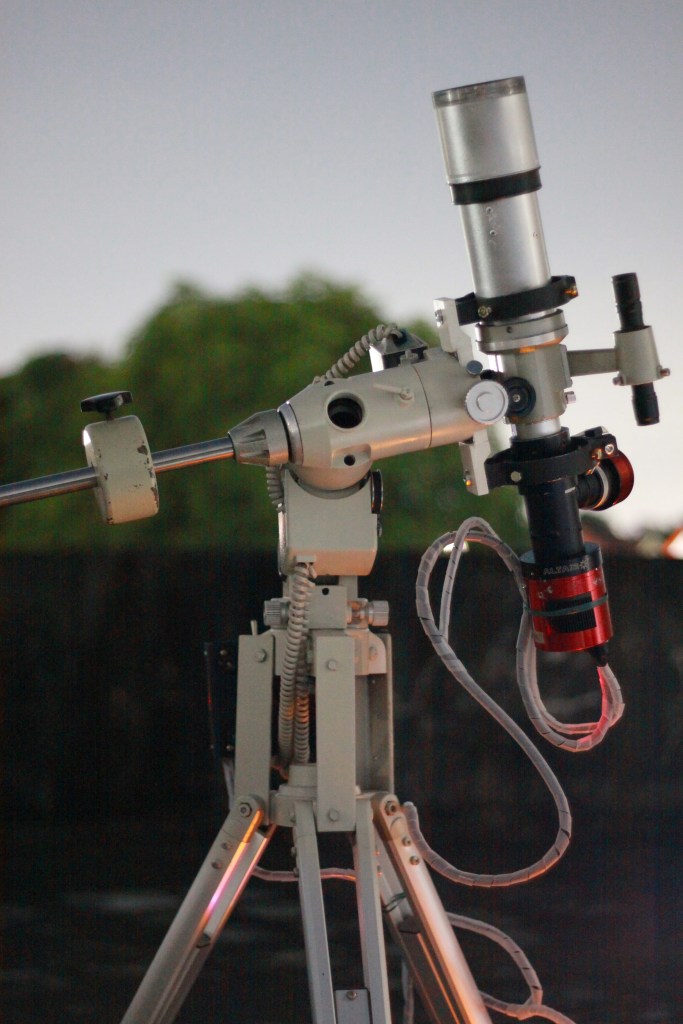
The Celestron Travel Scope 70 has a front lens diameter of 70 mm and a focal length of 400 mm. A telescope with these specifications works well for terrestrials observations, and if mounted on a tracking mount, may produce good results in long exposure imaging. Due to its small aperture and short focal length, it has a very limited use for astronomical observation (only good for low power views). Note that the telescope showed signs of chromatic aberration.
Celestron Travel Scope 70 with modified focuser, ASI 533 astronomy camera, and mounted on a Meade LXD75 tracking mount
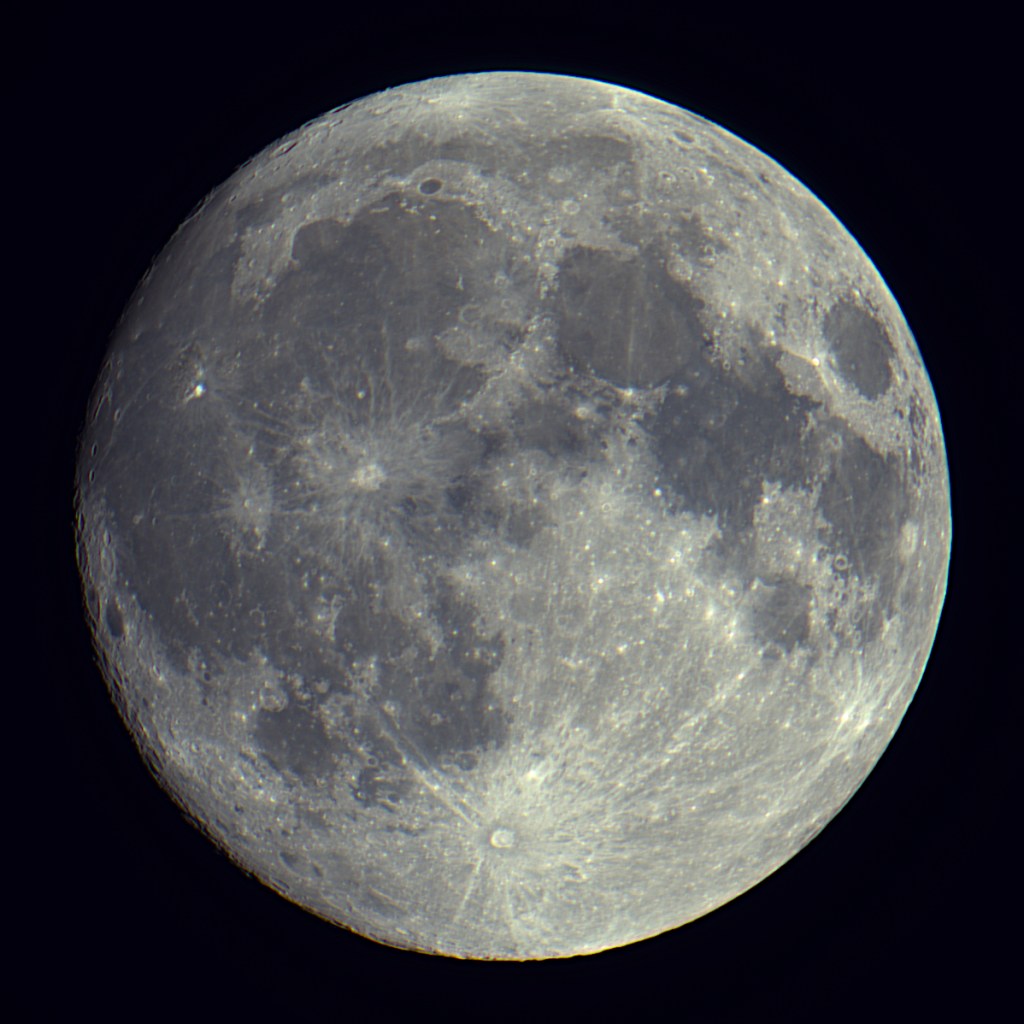
Moon imaged with a Celestron Travel Scope 70, an ASI 533 astronomy camera, and a Vixen GP tracking mount
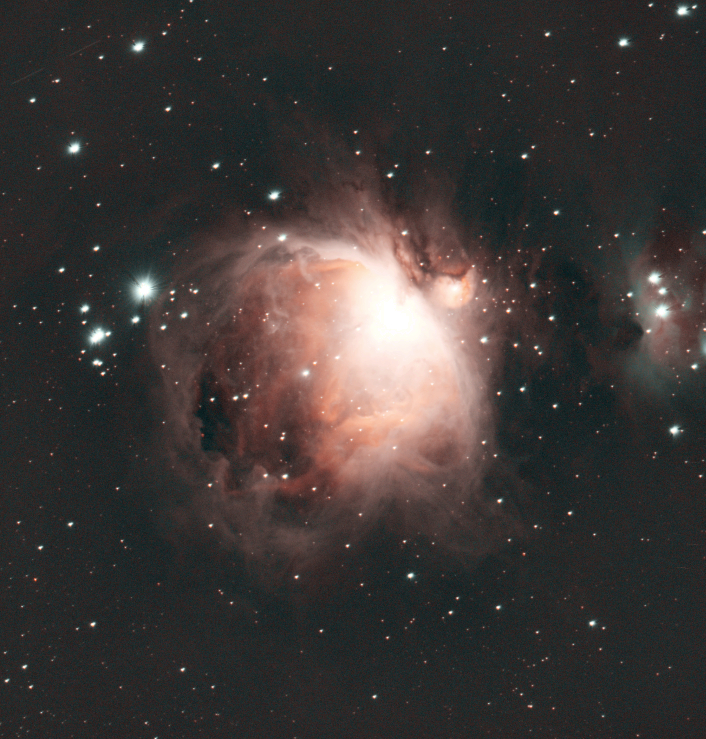
Orion Nebula M42 imaged with a Celestron Travel Scope 70, an ASI 533 astronomy camera, and a Meade LXD75 tracking mount
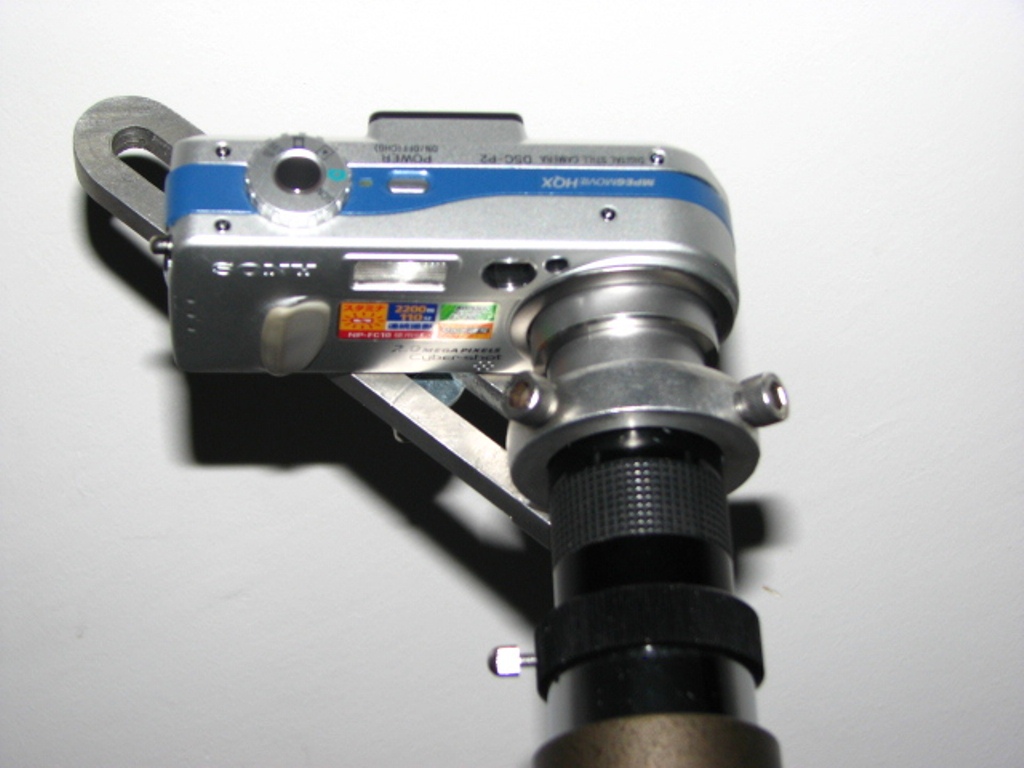
A universal camera adapter allows any camera to be attached to a telescope or binoculars. This imaging method is called afocal imaging, in which a camera with its lens is mounted next to another image-forming optical system such as a telescope or a pair of binoculars. This adapter was built in 2008 and still in use today.
A universal camera adapter for connecting any camera with any telescope
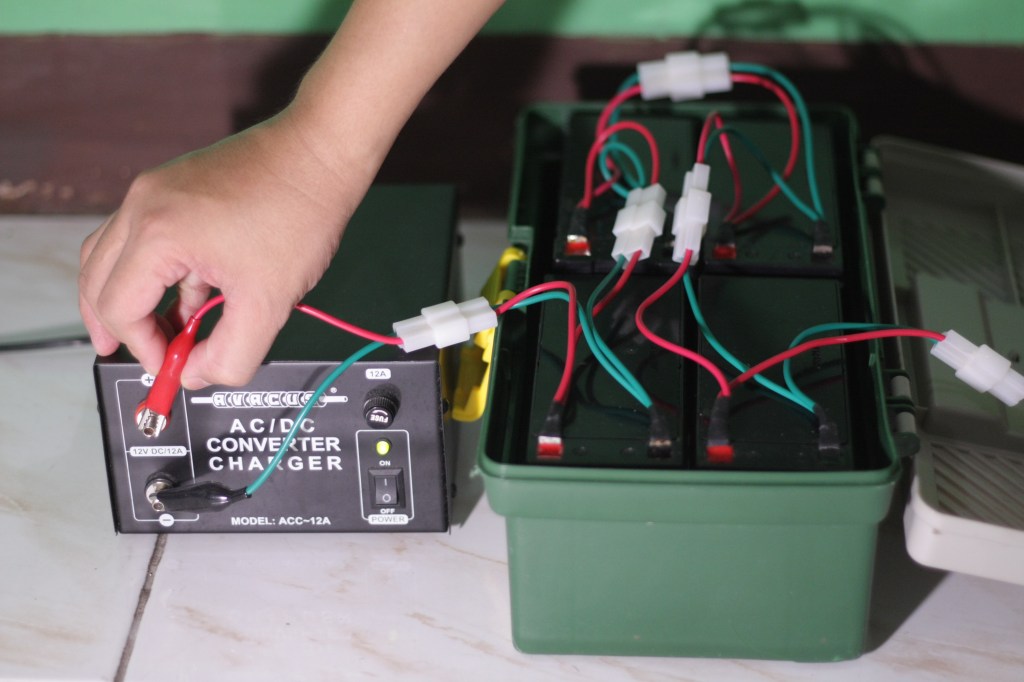
Over the years, I have used various types of batteries, but the one I use most often is the deep-discharge lead-acid type. They are robust, low-cost, can be charged with almost any compatible power supply, and most importantly, can double as a vehicle jump-start kit when not being used in the field. I use four 12V 9Ah deep-discharge lead acid batteries connected in parallel, to power the laptop, and another 12V 9Ah battery for the telescope’s tracker. These batteries remain usable for 2 to 3 years.
A modular field-battery to power my equipment during remote imaging sessions
A moderately-sized field battery has more than enough power to last an overnight imaging session.







 Night Sky in Focus